In today’s fast-paced tech world, programming skills are more crucial than ever. Whether you’re a beginner or an experienced developer, staying updated with the latest skills can make all the difference in your career. In this blog, we’ll discuss the programming skills for developers that every coder should master to excel in the field. These skills not only improve your coding ability but also help you tackle challenges more effectively and collaborate better with teams. Mastering these skills will ensure you’re on the cutting edge of technology and in demand for top-tier roles.
Problem-Solving and Algorithms
Why It’s Important
Being a proficient problem solver is fundamental for any developer. Mastering algorithms helps you to write more efficient code and improve the performance of applications. Whether you’re working on software development, web development, or mobile apps, problem-solving is an indispensable skill.
Key Tips:
- Focus on learning common algorithms like sorting, searching, and dynamic programming.
- Practice with platforms like LeetCode, HackerRank, or Codewars to challenge yourself and strengthen your understanding.
- Work on time complexity and space complexity to optimize your solutions.
Having a strong grasp of algorithms and problem-solving methods will allow you to approach any challenge logically and efficiently. Every developer faces tasks that require creative solutions, and understanding the most optimal way to solve these problems is crucial.

2. Understanding Data Structures
Why It’s Important
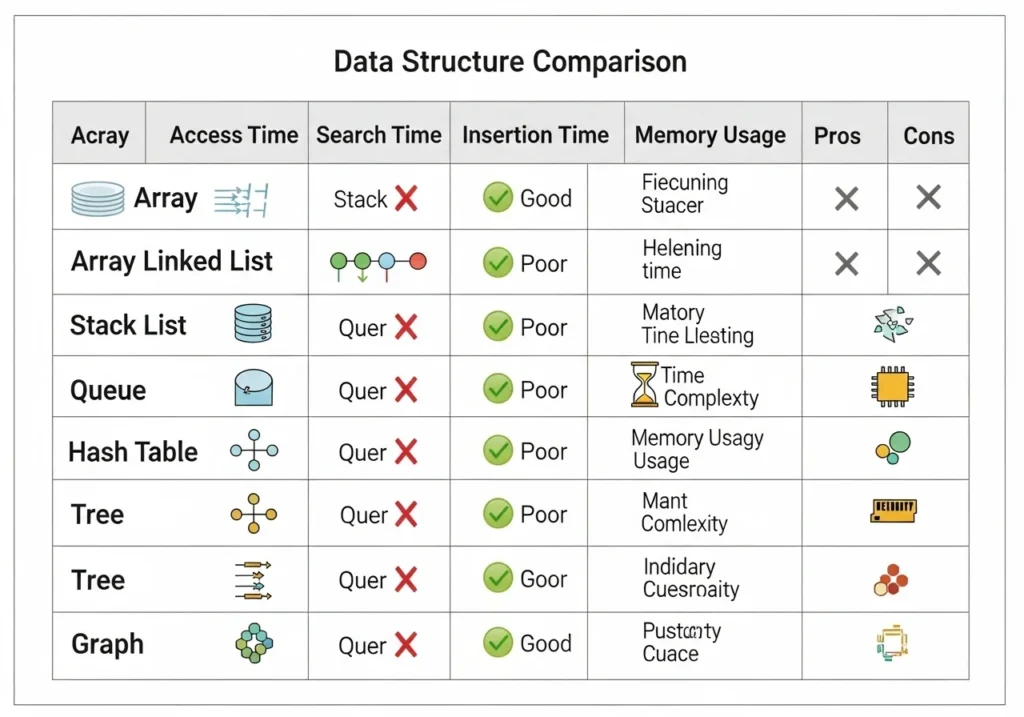
Data structures are the building blocks of efficient software. A deep understanding of structures like arrays, stacks, queues, trees, and graphs allows you to choose the best method to store and access data. Different problems require different data structures to ensure both time and space efficiency.
Key Tips:
- Get familiar with linked lists, binary trees, and hash maps.
- Visualize how these structures work with hands-on coding.
- Don’t just memorize; understand their strengths and weaknesses.
Understanding data structures allows you to handle large datasets effectively and enables you to solve complex problems. It’s essential for optimizing algorithms and performing tasks like data sorting, searching, and management.
3. Proficiency in Version Control Systems (VCS)
Why It’s Important
Version control systems like Git are essential for collaboration. It allows developers to track changes, revert to previous versions, and collaborate seamlessly with teams. Git enables version tracking and collaboration and provides a systematic way to organize codebase changes.
Key Tips:
- Learn Git commands like
git commit,git push,git pull, andgit merge. - Use platforms like GitHub and GitLab for hosting and version control.
- Understand branching and how to use it effectively in team projects.
Version control helps maintain the integrity of the project’s codebase and facilitates a smooth development workflow. Understanding how to use Git and other VCS tools is a must for working in any collaborative coding environment.

4. Web Development Skills (Frontend & Backend)
Why It’s Important
Every developer should understand the basics of web development. Whether you focus on the frontend (HTML, CSS, JavaScript) or backend (Node.js, Python, Ruby), mastering these skills will open up a wide array of opportunities. A full-stack developer, for example, is someone who can work with both the frontend and backend.
Key Tips:
- For frontend, learn frameworks like React or Vue.js for building interactive UIs.
- For backend, focus on server-side languages like Node.js, Python, and Ruby on Rails.
- Learn to work with databases (both relational and NoSQL).
In today’s world, web development skills are a must-have for any developer. Whether you want to develop stunning websites or work on large-scale enterprise applications, these skills will form the core of your programming foundation.
5. Database Management
Why It’s Important
Database management is crucial for storing, retrieving, and manipulating data. As a developer, understanding SQL and NoSQL databases like MySQL, PostgreSQL, and MongoDB will help you design scalable applications. A deep understanding of database systems allows you to efficiently store and retrieve data, which is critical for applications ranging from simple websites to large-scale systems.
Key Tips:
- Learn how to write efficient SQL queries, including joins, subqueries, and indexing.
- Familiarize yourself with database normalization and indexing to improve query performance.
- Understand the differences between SQL and NoSQL databases and know when to use each.
Knowing how to manage and optimize databases is one of the most crucial programming skills. With data being an integral part of all software applications, a solid understanding of databases ensures smooth performance and scalable systems.
6. Mastering Programming Languages
Why It’s Important
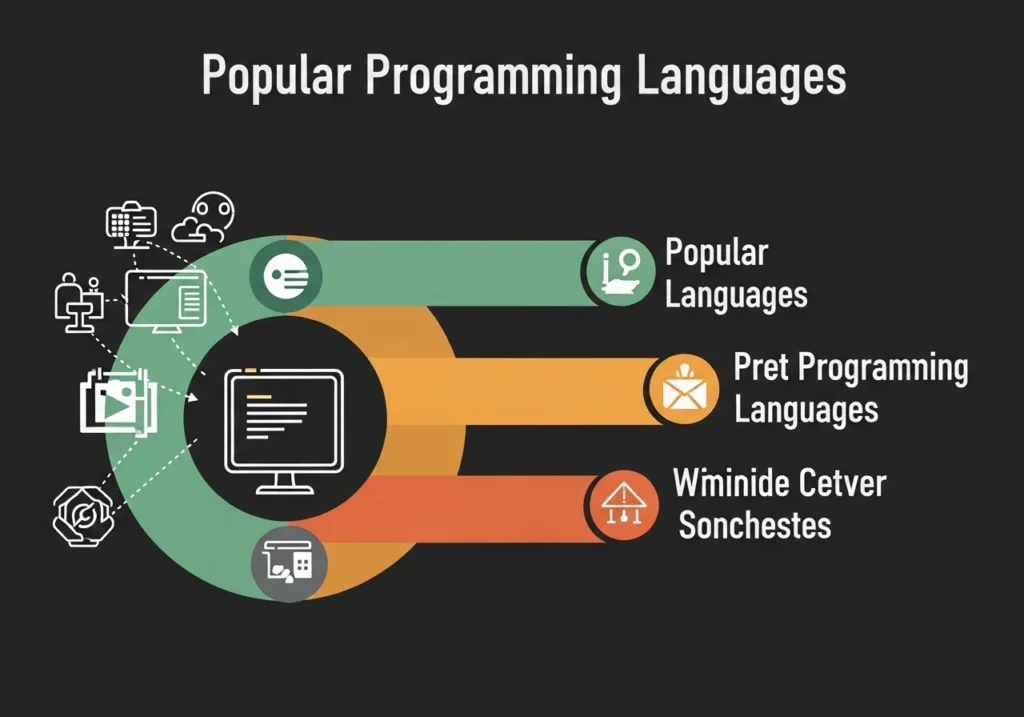
Mastering programming languages is essential for every developer. JavaScript, Python, Java, and C++ are widely used in the industry. Choose a language based on the projects you want to work on. Developers often need to become proficient in at least one language while understanding the syntax and intricacies of others.
Key Tips:
- For web development, focus on JavaScript, HTML, CSS, and TypeScript.
- For general-purpose programming, start with Python, Java, or C++.
- Keep learning the latest language features and libraries.
Programming languages are at the heart of development. The better you know your chosen language, the more efficient you will be as a developer.
7. Understanding APIs (Application Programming Interfaces)
Why It’s Important
APIs allow different software systems to communicate with each other. Mastering APIs is vital for modern web development, especially in a microservices architecture. APIs allow developers to integrate external services and build more complex systems.
Key Tips:
- Learn how to work with RESTful and GraphQL APIs.
- Practice integrating third-party APIs like Google Maps or Stripe for payments.
- Understand OAuth and authentication for secure API access.
Mastering API integration allows you to create more dynamic and feature-rich applications that can talk to other services, whether it’s social media platforms or data providers.
8. Cloud Computing Skills
Why It’s Important
Cloud services like AWS, Google Cloud, and Microsoft Azure are crucial for deploying and maintaining scalable applications. Learning cloud computing will help you build more robust and efficient software. As the industry moves toward serverless architecture and containerization, cloud knowledge becomes a critical skill.
Key Tips:
- Get hands-on experience with cloud storage, serverless functions, and containerization using Docker.
- Understand cloud concepts like load balancing, auto-scaling, and virtual machines.
- Explore DevOps practices for continuous deployment and integration.
The cloud is transforming how software is deployed and maintained. As a developer, knowing how to use cloud computing platforms can significantly enhance your ability to create scalable, cost-effective solutions.
9. Security Best Practices
Why It’s Important
Cybersecurity is more important than ever, and developers need to prioritize security in their code. Ensuring that your application is secure from vulnerabilities will protect user data and build trust. With the increasing number of cyberattacks, developers need to be proactive about security at every stage of development.
Key Tips:
- Learn about encryption, authentication, and secure coding practices.
- Familiarize yourself with security frameworks and libraries like OWASP.
- Understand common vulnerabilities such as SQL injection and cross-site scripting (XSS).
Security is no longer a secondary concern; it’s a primary responsibility. Developers must ensure their code is secure to protect both users and organizations from threats.
10. Debugging and Testing
Why It’s Important
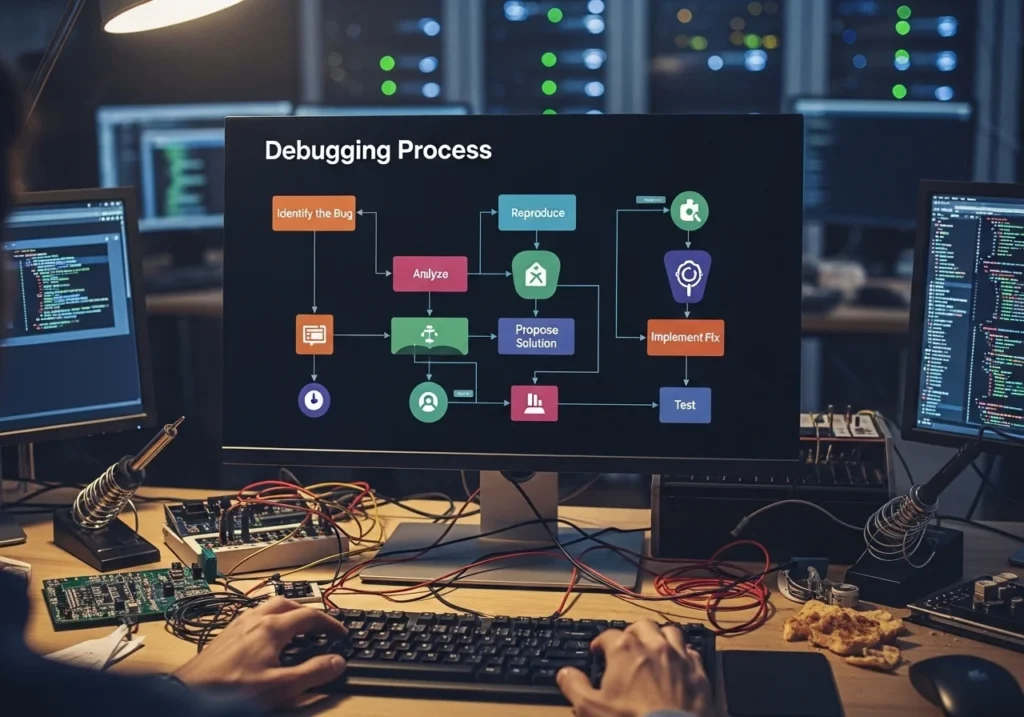
Debugging is an essential part of the development process. Being able to find and fix bugs quickly will improve the quality of your code. Automated testing ensures that your application runs smoothly and reduces the risk of errors in production.
Key Tips:
- Use debugging tools like Chrome DevTools or Xcode to pinpoint errors.
- Implement unit testing and integration testing with frameworks like JUnit and Jest.
- Explore test-driven development (TDD) for building reliable applications.
Learning debugging and testing techniques ensures that you write error-free and robust code, reducing the chances of bugs making it to production.
Conclusion
Mastering the essential programming skills is critical for any developer looking to succeed in the fast-evolving tech landscape. Whether you’re focusing on backend development, security, or cloud computing, keeping up with these skills will help you stay competitive in the field. Keep learning and evolving with new technologies to ensure long-term success in your programming career.
FAQs
1. What programming skills should every developer learn first?
Answer: Every developer should start with problem-solving and basic programming languages like Python or JavaScript. Understanding data structures and algorithms will also build a strong foundation.
2. How can I improve my debugging skills?
Answer: Practice using debugging tools, read error logs carefully, and focus on finding patterns in the code to improve your debugging skills.
3. Why is cloud computing important for developers?
Answer: Cloud computing allows developers to deploy scalable and flexible applications with minimal infrastructure setup. It’s essential for modern software development.
4. What are some good resources to learn programming languages?
Answer: Some great resources include freeCodeCamp, Codecademy, and Udemy courses. Practice coding challenges on platforms like LeetCode and HackerRank.
5. How do I get started with learning APIs?
Answer: Start by understanding the basics of RESTful APIs, then move on to advanced concepts like GraphQL. Use real-world APIs to practice integration.