The Role of Social Media in Digital Marketing: Why It Matters in 2026
Discover the powerful role of social media in digital marketing from brand awareness to lead generation. Learn why social media marketing is no longer optional in 2026.
Imagine running a business in 2026 without social media. That’s like opening a store and locking the front door.
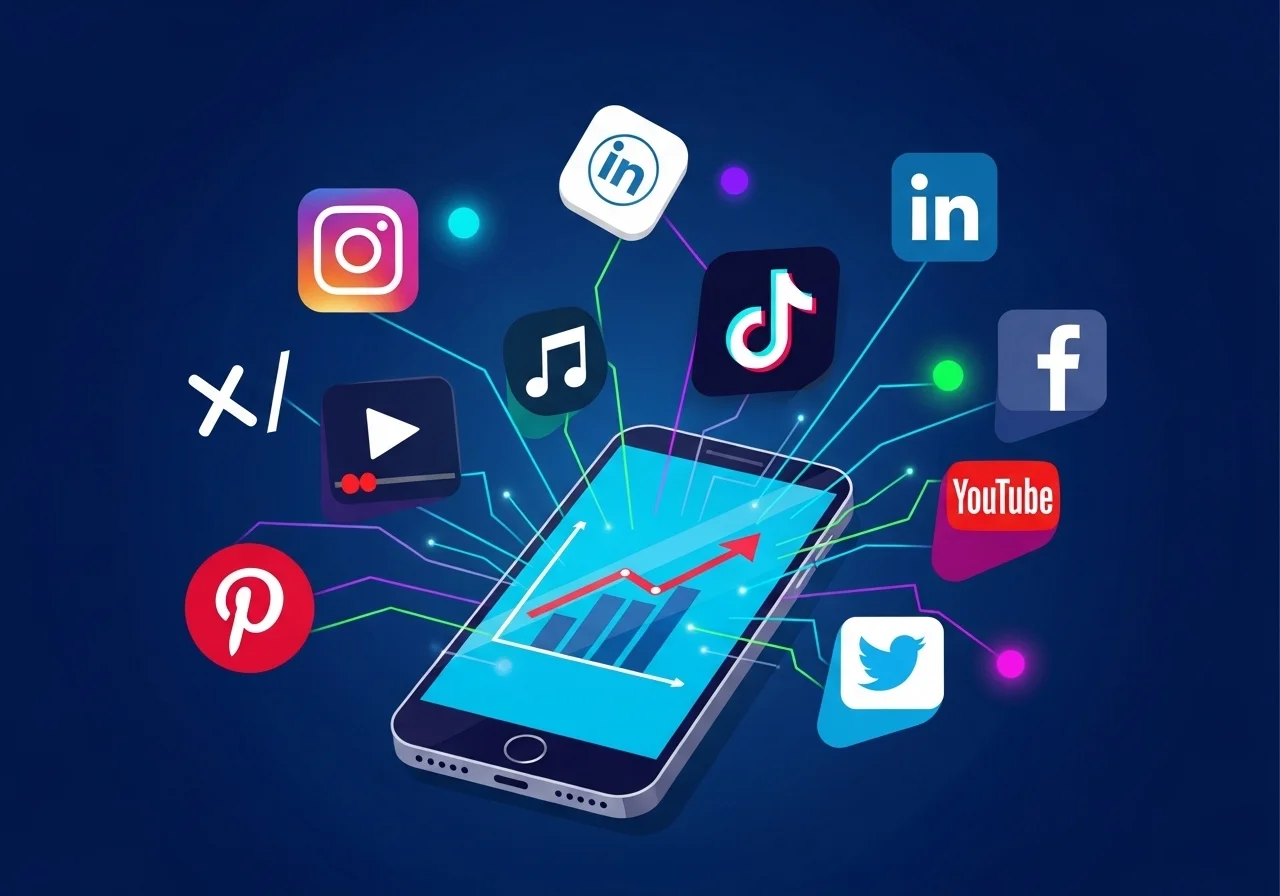
The role of social media in digital marketing has shifted from “nice to have” to an absolute business necessity. With over 5.1 billion active social media users worldwide, the question isn’t should your brand be on social media it’s how well are you using it?
In this guide, we’ll break down exactly how social media fits into your digital marketing strategy, what platforms matter most, and how to use it to grow your brand without wasting time or money.
What Is Social Media Marketing and Why Does It Matter?
Social media marketing is the use of social platforms to promote your brand, connect with your audience, and drive business results whether that’s traffic, leads, or sales.
It’s one of the most powerful pillars of digital marketing today.
Here’s why it matters more than ever:
- 5.1 billion people use social media globally (Statista, 2024)
- 76% of consumers have purchased something they discovered on social media
- 54% of people use social media to research products before buying
- Word-of-mouth has gone digital a single viral post can reach millions overnight
Whether you run a local bakery or a global SaaS company, social media levels the playing field. A smart strategy beats a big budget almost every time.
The Role of Social Media in Digital Marketing: A Full Breakdown
This is where it gets real. Social media doesn’t just sit on its own it connects and amplifies every other part of your digital marketing strategy. Here’s how.
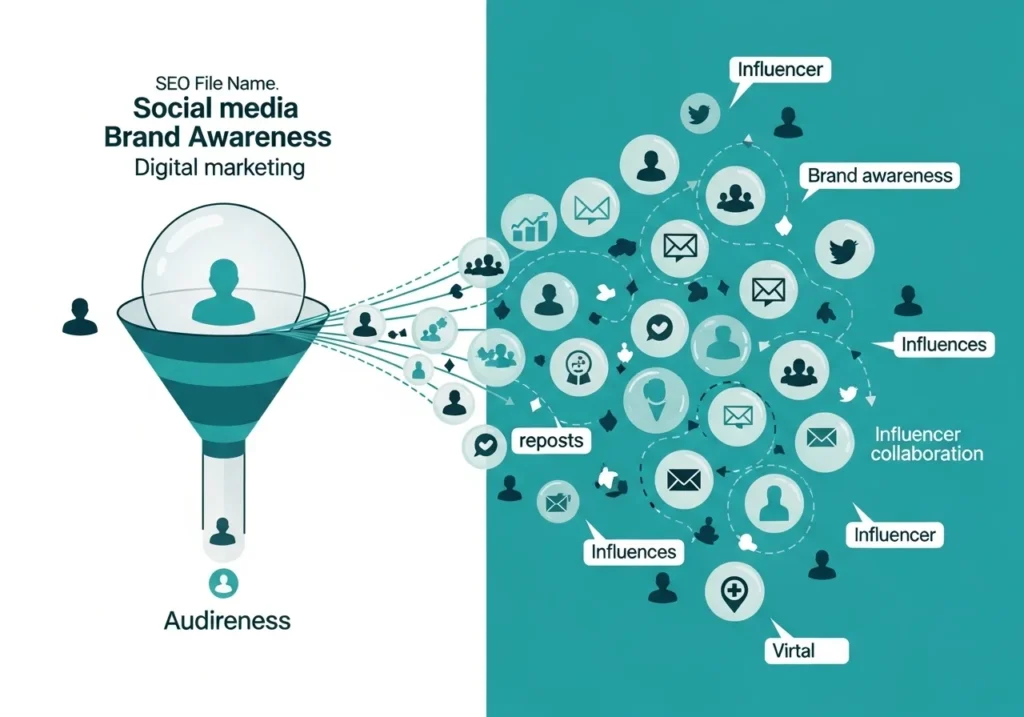
1. Building Brand Awareness at Scale
The first job of social media? Get your brand seen.
Before anyone buys from you, they need to know you exist. Social platforms allow you to reach thousands even millions of people who’ve never heard of your business.
This happens through:
- Organic posts regular content that builds your presence over time
- Paid ads targeted campaigns that put your brand in front of the right people fast
- Collaborations and influencer marketing borrowing someone else’s audience to grow yours
- Viral content one post that takes off and exposes your brand to an entirely new crowd
Example: A skincare brand posts a before-and-after Reel on Instagram. It gets shared 2,000 times. Overnight, 80,000 people who’d never heard of them are watching. That’s brand awareness at zero extra cost.
2. Driving Targeted Website Traffic
Social media is one of the best free traffic sources available if you use it correctly.
Every post, story, bio link, or ad can direct people back to your website, landing page, or blog. The key is giving people a reason to click.
Best practices for driving traffic through social media:
- Add a strong call-to-action (CTA) in every post
- Use link-in-bio tools like Linktree for Instagram
- Share blog posts, product pages, and offers consistently
- Use Pinterest it functions more like a search engine than a social platform, and pins drive traffic for years
3. Generating Leads and Sales
Social media isn’t just for likes and followers. Done right, it’s a serious lead generation machine.
Ways social media drives leads and sales:
- Instagram and Facebook Shops buy directly without leaving the app
- Lead generation ads collect emails without sending people to your website
- DMs and chatbots answer questions and close sales in real time
- Social proof (reviews, UGC) turn happy customers into your best salespeople
Boosting SEO Through Social Signals
Here’s something most people miss: social media and SEO are connected.
While Google hasn’t confirmed social shares as a direct ranking factor, the indirect impact is massive:
- More shares → more backlinks from people who discover your content
- More traffic → stronger engagement signals to Google
- Higher brand searches → increased domain authority over time
- Social profiles rank in Google search results for branded queries
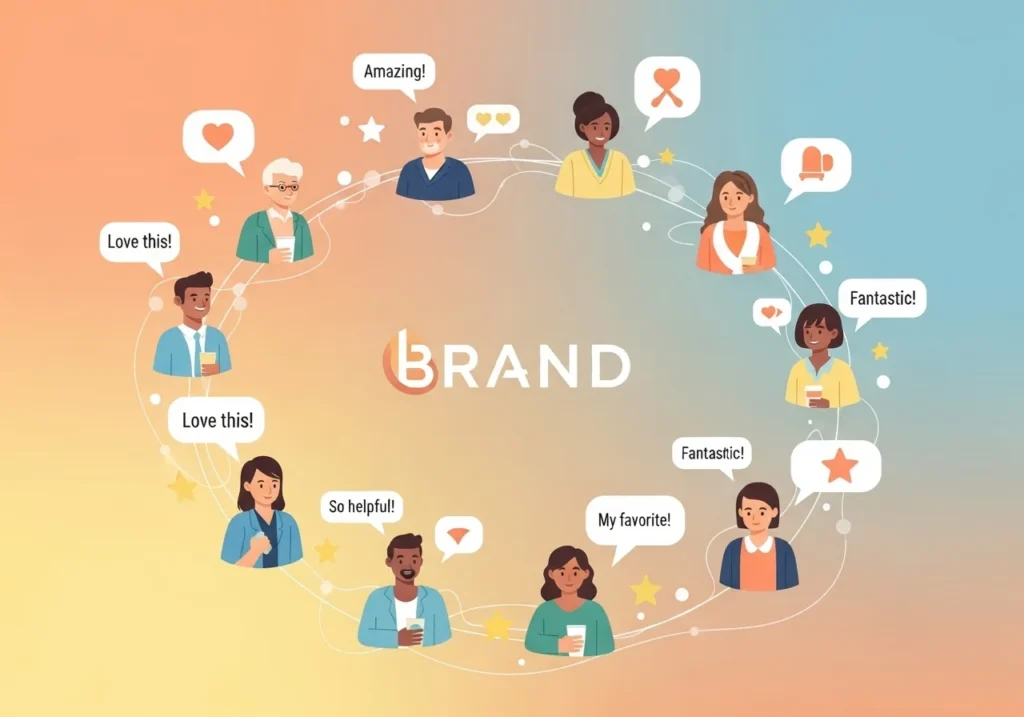
Building Community and Customer Loyalty
The brands that win long-term aren’t just selling they’re building communities.
Social media gives you a direct line to your customers that no other channel offers. You can:
- Respond to comments and DMs personally
- Run polls and Q&As to learn what your audience wants
- Create Facebook Groups or Discord communities around your brand
- Celebrate customer milestones and share their stories
Loyal customers don’t just buy again they tell their friends. That’s the most powerful marketing on earth.
🎯 Example: Glossier, the beauty brand, built their entire empire largely through community-first social media marketing. Their customers became their marketing team.
Supporting Content Marketing and Distribution
You can write the best blog post in the world. If nobody sees it, it doesn’t matter.
Social media is the distribution engine for your content marketing. Every article, video, infographic, or podcast episode gets amplified through social sharing.
How to use social media to distribute content:
- Share each blog post across all relevant platforms
- Break long-form content into bite-sized social posts (carousels, threads, Reels)
- Repurpose YouTube videos into Instagram Reels and TikToks
- Pin your best infographics on Pinterest for evergreen traffic
Running Highly Targeted Paid Advertising
Organic reach is powerful, but social media ads are a superpower especially when you’re ready to scale.
Why social ads are different from traditional ads:
- You can target by age, location, interests, behavior, income even life events
- Retargeting allows you to reach people who already visited your website
- Lookalike audiences let you find new customers who mirror your best existing ones
- Cost-per-click can be as low as $0.10 depending on your niche and platform
Best platforms for paid social advertising:
| Platform | Best For |
|---|---|
| Facebook/Meta Ads | Broad targeting, lead gen, e-commerce |
| Instagram Ads | Visual products, lifestyle brands |
| LinkedIn Ads | B2B, professional services |
| TikTok Ads | Gen Z, viral products, brand discovery |
| Pinterest Ads | Home, fashion, food, DIY products |
Competitor Research and Market Intelligence
Social media isn’t just for broadcasting it’s a goldmine of research.
You can learn an enormous amount about your industry just by watching what’s happening on social platforms:
- Follow competitors to see what content is working for them
- Monitor hashtags to spot trending topics in your niche
- Read comments your audience is literally telling you what they want
- Use social listening tools (like Brandwatch, Sprout Social, or even native platform analytics) to track mentions of your brand
The Importance of Social Media Marketing Across Different Business Types
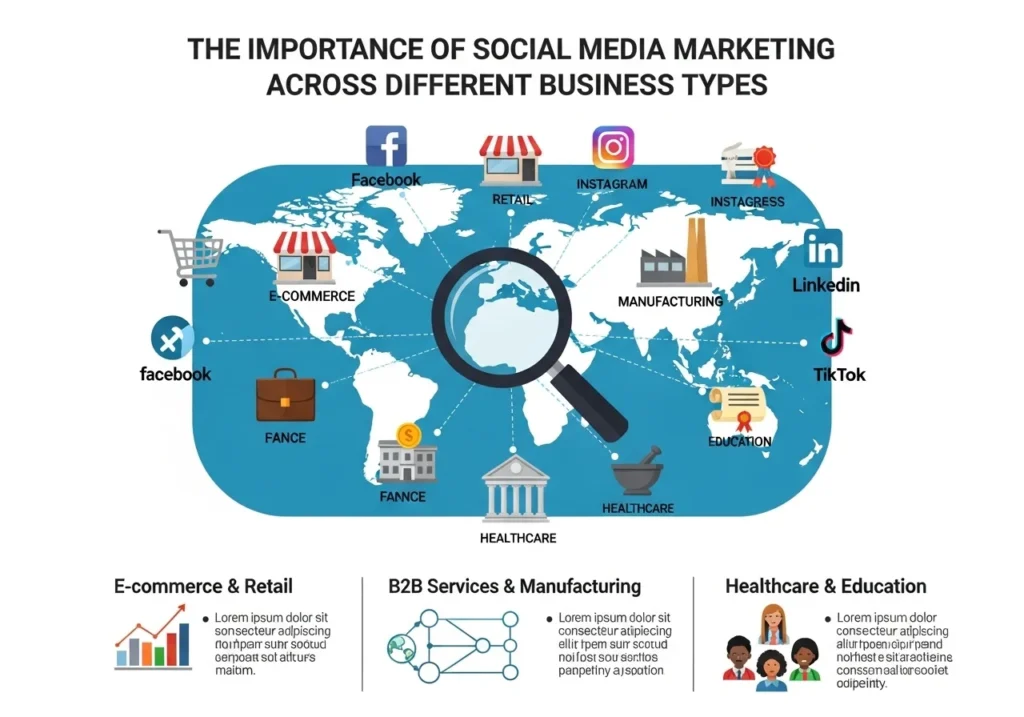
Social media doesn’t work the same for every business but it works for every business. Here’s how:
E-commerce Brands: Instagram Shops, Pinterest boards, and TikTok product demos drive direct sales. Shoppable posts remove friction from the buying journey.
Service-Based Businesses: LinkedIn and Facebook build authority and generate leads. Testimonials and case studies shared on social create powerful trust signals.
Local Businesses: Facebook and Instagram geo-targeted posts + Google Business social integration drive foot traffic and bookings.
B2B Companies: LinkedIn is non-negotiable. Thought leadership content, industry insights, and employee advocacy build massive credibility.
Personal Brands and Creators: Instagram, TikTok, and YouTube are careers. Consistent content creation turns audiences into income streams.
How to Measure Social Media Marketing Success
Posting consistently is great. Knowing what’s working is better.
Key metrics to track:
| Metric | What It Shows |
|---|---|
| Reach & Impressions | How many people see your content |
| Engagement Rate | Are people interacting? (likes, comments, shares) |
| Click-Through Rate (CTR) | Are people taking action? |
| Follower Growth Rate | Is your audience expanding? |
| Conversions | Are social visitors becoming customers? |
| Cost Per Result | Is your paid spend efficient? |
Conclusion
The role of social media in digital marketing is not just significant it’s foundational. It touches every stage of the customer journey, from the first time someone hears your name to the moment they become a loyal repeat buyer.
Here’s what to take away from this guide:
- Social media builds brand awareness at a scale no other free channel can match
- It drives targeted traffic, leads, and direct sales
- It amplifies your SEO and content marketing efforts
- It builds community and long-term customer loyalty
- social ads offer unmatched targeting precision
- Social listening gives you a real-time window into your market
You don’t need to be on every platform. You need to be excellent on the right ones for your audience.
Frequently Asked Questions (FAQs)
What is the role of social media in digital marketing?
Social media plays multiple roles in digital marketing building brand awareness, driving website traffic, generating leads, supporting content distribution, enabling paid advertising, and fostering customer loyalty. It connects and amplifies every other digital marketing channel.
Why is social media marketing important for businesses in 2025?
With over 5 billion active users, social media is where your customers spend their time. It’s one of the most cost-effective ways to reach your target audience, build trust, and drive sales — regardless of your business size or industry.
Which social media platform is best for digital marketing?
It depends on your audience and goals. Instagram and TikTok work best for visual and lifestyle brands. LinkedIn is essential for B2B. Facebook excels for community-building and paid advertising. Pinterest is powerful for evergreen traffic in niches like food, fashion, and home décor.
How does social media affect SEO?
While social signals aren’t a confirmed direct Google ranking factor, social media indirectly boosts SEO by driving traffic, earning backlinks, increasing brand searches, and improving content visibility. A strong social presence supports stronger overall domain authority over time.
How much should a business spend on social media marketing?
There’s no one-size-fits-all answer. Small businesses can start with zero budget using organic content. For paid ads, even $5–$10/day on Facebook or Instagram can generate measurable results when targeting is well-configured. Scale spend based on what’s delivering a positive return.