
Robots aren’t taking over. But they are changing everything.
The future of artificial intelligence isn’t some distant sci-fi storyline it’s unfolding right now, in your phone, your inbox, your doctor’s office, and your car. AI is quietly rewriting the rules of how we work, learn, create, and connect.
And the pace? It’s only getting faster.
Whether you’re a business owner trying to stay ahead, a student curious about tomorrow’s jobs, or someone who just wants to understand what’s really going on this guide breaks it all down in plain English.
No hype. No fear-mongering. Just a clear, honest look at where AI is headed and what it means for you.
What Is the Future of Artificial Intelligence, Really?
When people talk about the future of artificial intelligence, they usually mean one of two things: what AI can do next, and how it will affect our lives. Both questions matter and they’re deeply connected.
Today’s AI is what experts call Narrow AI or Weak AI. It’s incredibly good at specific tasks recognizing faces, translating languages, recommending Netflix shows but it can’t think independently or reason the way humans do.
What comes next is a progression:
| Stage | What It Means |
|---|---|
| Narrow AI (Now) | Excellent at one specific task |
| General AI (Coming) | Can reason across many tasks like a human |
| Superintelligent AI (Far future) | Surpasses human intelligence entirely |
Most researchers agree we’re still years possibly decades away from true General AI. But the gap is closing faster than anyone expected just five years ago.
Why 2026 Feels Like a Turning Point
The last three years have seen more AI breakthroughs than the previous two decades combined.
Large language models, image generators, autonomous vehicles, AI drug discovery these aren’t prototypes anymore. They’re products. Real people use them every day.
The AI development trends we’re seeing now aren’t just tech upgrades. They’re fundamental shifts in what machines can do and what humans will need to do differently as a result.
The Biggest AI Development Trends Shaping the Future
These are the trends you’ll hear about everywhere in the next few years and the ones that will actually change your daily life.
Generative AI Goes Mainstream
You’ve probably already used generative AI even if you didn’t call it that.
ChatGPT, Google Gemini, Midjourney, Sora these tools generate text, images, video, code, and music from simple prompts. In 2025, generative AI moved from “cool experiment” to “everyday tool” for millions of people.
What’s next:
- AI that generates entire marketing campaigns from a brief
- Video creation tools that produce broadcast-quality content from a text prompt
- Personalized AI tutors that adapt to each student’s learning style
- AI co-writers that help authors draft, edit, and refine books
The creative industries are being transformed. The key shift: humans become directors, not doers. You guide the AI; it executes.
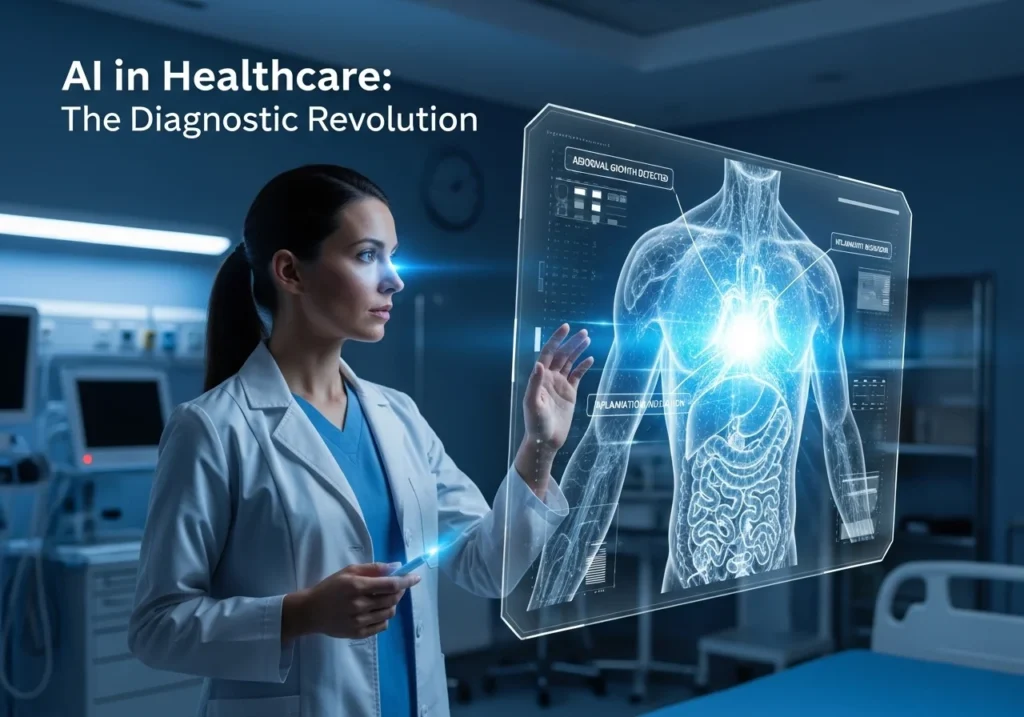
AI in Healthcare Saving Lives at Scale
This is the area where the future of artificial intelligence has the most exciting and most important potential.
AI is already:
- Detecting cancers in medical scans earlier than human radiologists
- Predicting patient deterioration in hospitals before symptoms become critical
- Accelerating drug discovery from decades to months
- Personalizing treatment plans based on individual genetic data
In 2026, Google’s DeepMind AI system AlphaFold solved one of biology’s greatest mysteries predicting the 3D structure of proteins and released the data for free to researchers worldwide. Scientists call it a breakthrough that could reshape medicine for generations.
What’s coming: AI systems that work as a first-line diagnostic tool, helping doctors in rural or under-resourced areas deliver world-class care without world-class resources.
AI in Healthcare
Autonomous Systems and Self-Driving Everything
Self-driving cars get most of the attention, but autonomy in AI goes way beyond vehicles.
The autonomous AI wave includes:
- Self-driving trucks Already operating on highways in the US and China, moving freight without human drivers
- Autonomous drones Delivering packages, monitoring crops, inspecting infrastructure
- Robot warehouses Amazon, Alibaba, and others already run warehouses where robots do most of the physical work
- AI pilots Not replacing pilots, but handling routine flight tasks so humans can focus on exceptions
The biggest shift happening right now: AI agents. These are AI systems that don’t just answer questions they take actions. They browse the web, book appointments, write and run code, and complete multi-step tasks on your behalf.
Tools like OpenAI’s Operator, Anthropic’s Claude, and Google’s Project Mariner are early versions of what will become a new category of AI-powered personal assistant one that actually does things for you.
AI and the Job Market The Real Story
Let’s address the elephant in the room.
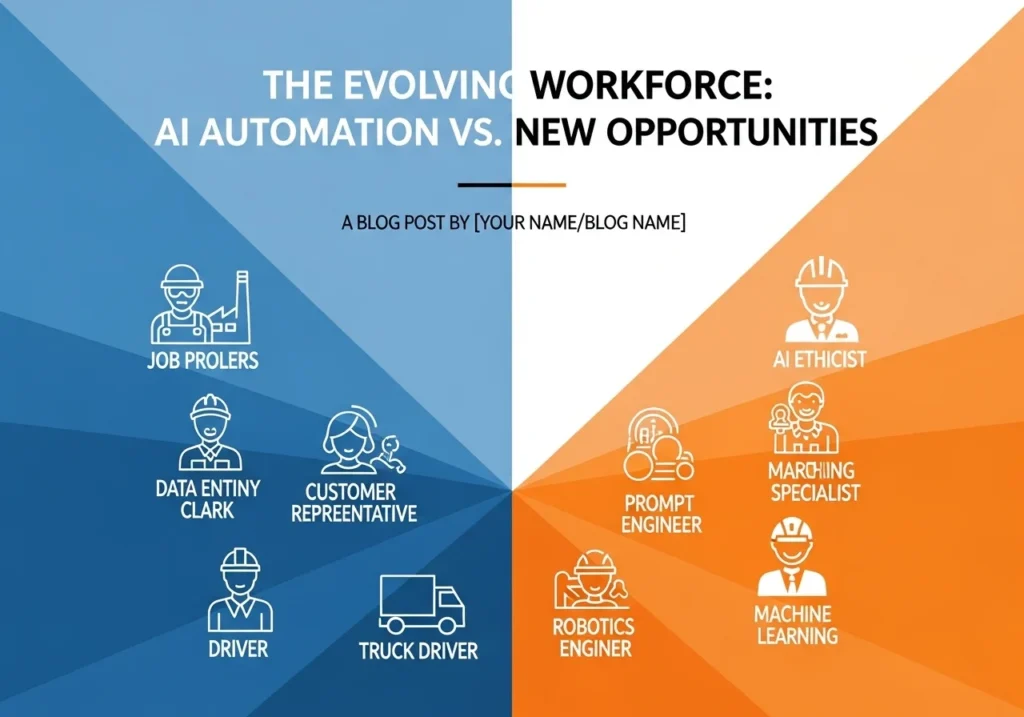
Yes, AI will automate many tasks. Some jobs will disappear. But the history of technology tells a more nuanced story: automation eliminates tasks, not necessarily jobs.
The steam engine didn’t eliminate human workers it changed what they did. The same pattern is likely with AI.
Jobs most at risk from automation:
- Repetitive data entry and processing
- Basic customer service and FAQ responses
- Simple content writing and summarization
- Routine legal and financial document review
Jobs growing because of AI:
- AI trainers and prompt engineers
- AI ethics and governance specialists
- Data scientists and ML engineers
- Human-AI collaboration roles across every industry
AI and Jobs Infographic
Multimodal AI Understanding the World Like Humans Do
Early AI systems handled one type of data at a time text OR images OR audio. Multimodal AI handles all of them at once.
GPT-4o, Google Gemini Ultra, and other leading models can now:
- Look at a photo and describe what’s in it
- Listen to speech and respond in real time
- Read a document and answer questions about its contents
- Watch a video and summarize the key moments
This is a massive step toward AI that perceives the world more like humans do. Combined with better reasoning capabilities, multimodal AI makes systems dramatically more useful in real-world applications.
Real example: A contractor could photograph a damaged building and ask an AI: “What repairs are needed, estimate the cost, and draft a client proposal.” All from one conversation.
AI Regulation and Ethics The Guardrails Are Coming
The future of artificial intelligence isn’t just about capability. It’s about responsibility.
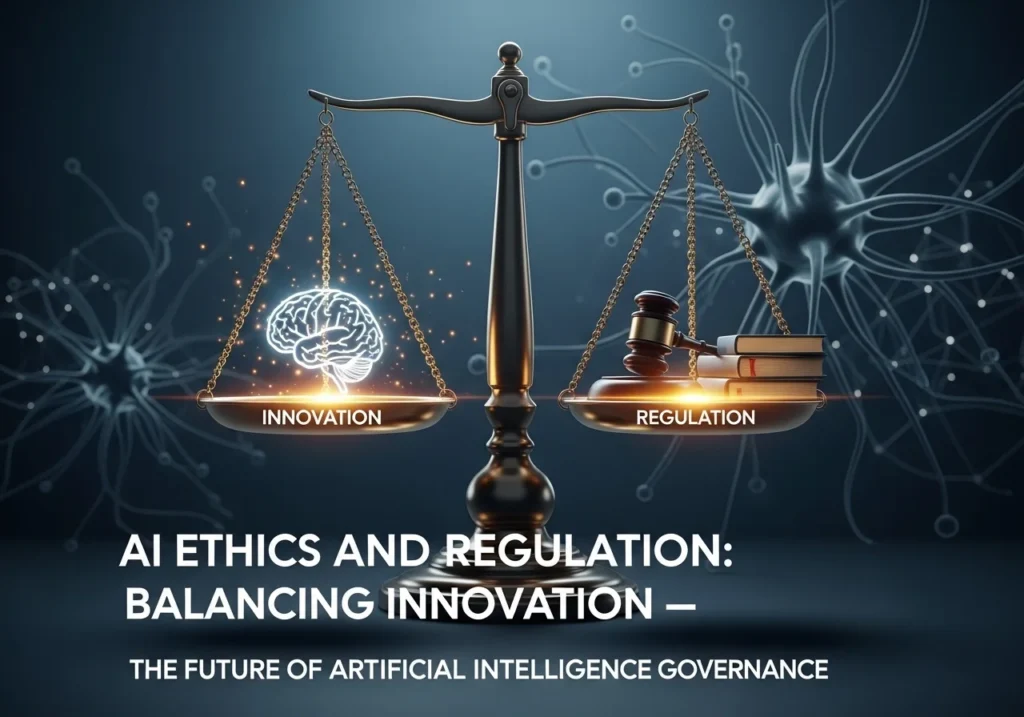
Governments around the world are racing to build regulations before AI outpaces their ability to manage it.
What’s already happening:
- The EU AI Act (2026) the world’s first comprehensive AI law, classifying AI systems by risk level
- US Executive Orders on AI safety and standards
- China’s strict rules on generative AI content and training data
- International frameworks being developed through the UN and G7
Beyond regulation, there’s a growing field of AI ethics asking harder questions about bias, transparency, privacy, and the long-term impact on society.
Key ethical questions being debated right now:
- Who is responsible when an AI makes a harmful mistake?
- How do we prevent AI systems from amplifying social biases?
- Should AI-generated content always be labeled?
- What rights, if any, should highly intelligent AI systems eventually have?
These aren’t abstract philosophy questions. They’re policy decisions being made right now that will shape the AI landscape for decades.
AI Ethics and Regulation
Edge AI Intelligence Without the Internet
Most AI today runs “in the cloud” your data gets sent to a massive server farm, processed, and sent back to you. Edge AI flips this model.
Edge AI means AI that runs directly on the device your phone, your smart watch, your car, your home thermostat without needing an internet connection.
Why this matters:
- Faster responses (no round trip to a server)
- Better privacy (your data never leaves your device)
- Works offline or in low-connectivity areas
- Lower costs for cloud computing
Apple’s on-device AI features in iPhone 16, Samsung’s Galaxy AI, and Qualcomm’s AI chips are early examples of this shift. By 2027, most flagship devices will have dedicated AI chips running powerful models entirely locally.
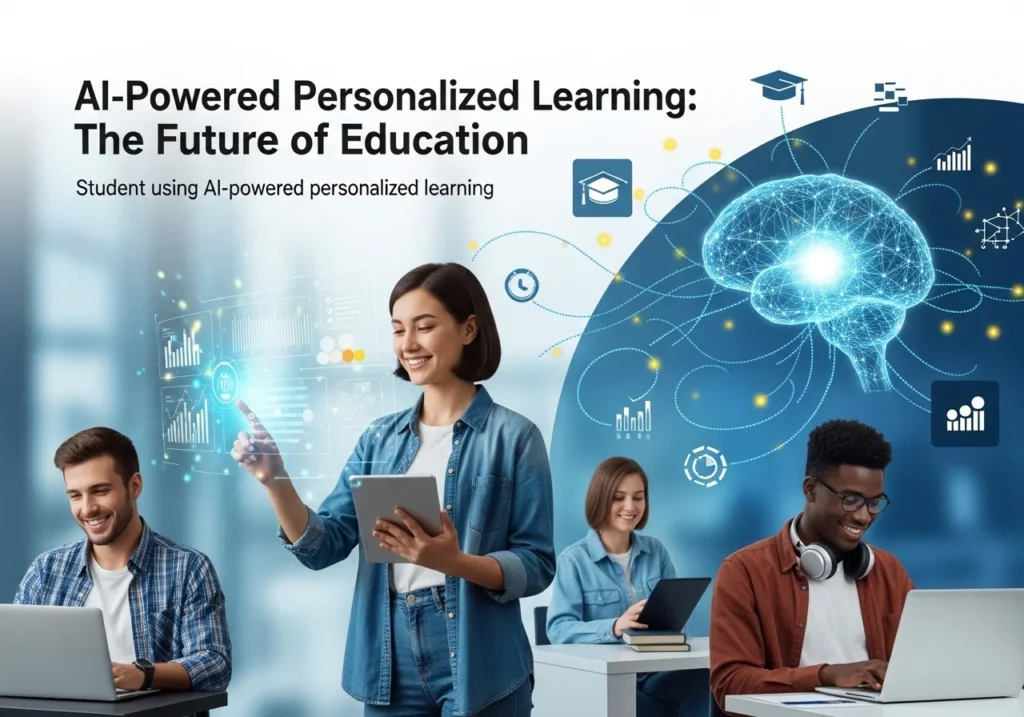
AI-Powered Education Personalized Learning for Everyone
Traditional education gives every student the same lesson at the same pace. AI changes that completely.
What AI-powered education looks like:
- Adaptive learning platforms that adjust difficulty in real time based on student performance
- AI tutors available 24/7 in any language
- Automated essay feedback that explains why something needs improving, not just that it does
- Early identification of students who are falling behind before teachers even notice
Khan Academy’s Khanmigo and Duolingo’s AI features are early examples of this in action. The potential for global education equity giving a student in a rural village access to the same quality instruction as a student in a top private school is genuinely transformative.
AI in Education
What Does the Future of Artificial Intelligence Mean for You?
This is the question that actually matters.
Not “what can AI do” but “what should I do about it?”
Here’s a practical framework, regardless of your age, industry, or background:
Stay Curious, Not Anxious
Fear of AI usually comes from not understanding it. The more you learn about how these systems actually work their capabilities and their very real limitations the less scary it becomes.
AI makes mistakes. It hallucinates facts. It can’t feel or truly understand context. Knowing this helps you use it wisely.
Start Using AI Tools Now
The best way to prepare for an AI-powered world is to start living in it. Experiment with tools in your field:
- Writers: Try AI for brainstorming, outlining, and first drafts
- Marketers: Use AI for campaign ideation, copy variants, and data analysis
- Developers: Use AI code assistants to speed up routine coding tasks
- Teachers: Explore AI tools for lesson planning and differentiated instruction
- Healthcare workers: Look at AI diagnostic tools being deployed in your specialty
You don’t need to become an AI expert. You just need enough fluency to work alongside these tools effectively.
Think About What Makes You Uniquely Human
AI can process information faster than any human. What it can’t replicate at least not yet is genuine human judgment, empathy, creativity rooted in lived experience, and the ability to build trust with other people.
These are your competitive advantages. Invest in them.
Human and AI Working Together
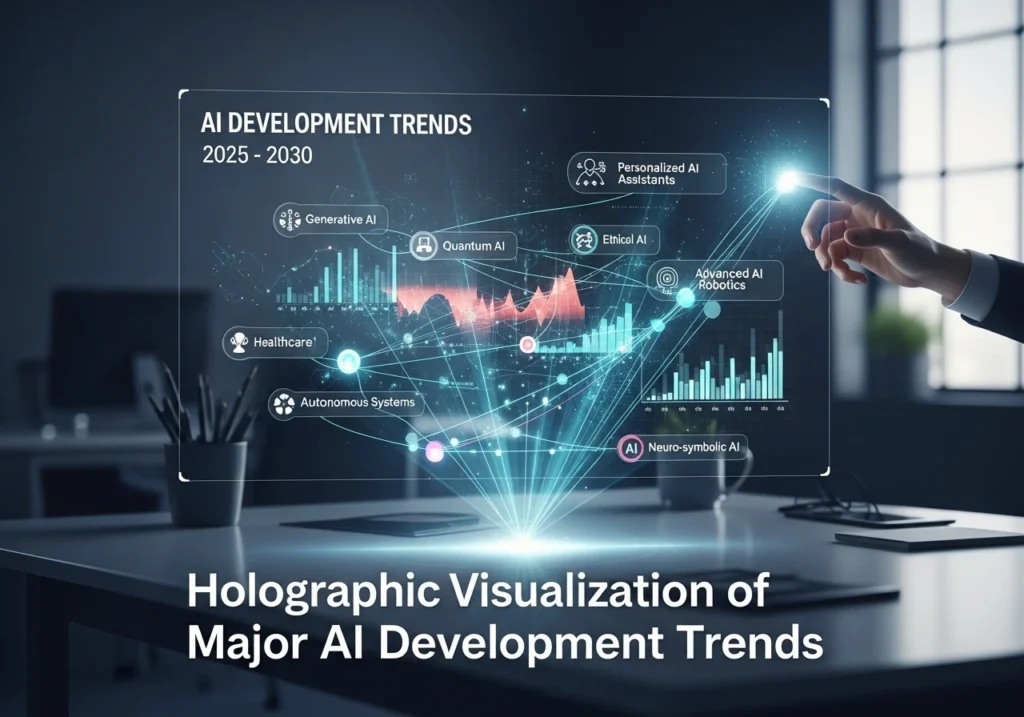
AI Development Trends to Watch in the Next 5 Years
If you want to track where things are headed, these are the developments worth paying close attention to:
- Reasoning AI: Models that don’t just predict text but actually think through problems step by step (OpenAI’s o1 and o3 series are early examples)
- AI agents: Systems that autonomously complete multi-step tasks browsing, coding, emailing, scheduling on your behalf
- Smaller, more efficient models: AI that runs on a laptop or phone with minimal energy consumption
- AI in science: Accelerated breakthroughs in climate science, materials science, and drug development driven by AI research tools
- Regulation maturation: Clearer global frameworks that balance innovation with protection
- Brain-computer interfaces: Companies like Neuralink pushing the boundary between human cognition and AI systems
The AI development trends moving fastest right now are agents and reasoning. By 2027, having an AI assistant that can actually complete tasks not just chat will likely be as common as having a search engine.
Future AI Trends Visualization
Conclusion: The Future Is Already Here
The future of artificial intelligence isn’t a single moment that arrives one day. It’s a thousand small changes, happening right now, in industries and everyday lives around the world.
Here’s what we covered:
- Generative AI is transforming creative work
- Healthcare AI is saving lives and accelerating discovery
- Autonomous systems and AI agents are changing how tasks get done
- The job market is shifting not disappearing
- Multimodal and Edge AI are making systems smarter and more accessible
- Ethics and regulation are catching up slowly but surely
- Education is being personalized at scale
- The key AI development trends to watch: reasoning, agents, and efficient models
You don’t have to be a technologist to navigate this. You just have to stay informed, stay curious, and stay human.
Thinking about integrating AI into your work or business? Start small. Pick one tool. Spend 30 minutes exploring it this week. That’s how fluency begins.
FAQs About the Future of Artificial Intelligence
Q1: What is the future of artificial intelligence in simple terms?
The future of AI involves machines becoming increasingly capable of performing complex tasks — reasoning, creating, diagnosing, teaching that were previously only possible for humans. In the near term, we’ll see smarter AI assistants, more autonomous systems, and AI deeply integrated into healthcare, education, and business. In the longer term, researchers aim for General AI that can reason across domains the way humans do.
Q2: Will AI replace human jobs?
AI will automate many specific tasks, but it’s unlikely to fully replace most jobs in the near term. History shows that technology shifts the nature of work rather than eliminating it entirely. Jobs heavy in repetitive, rule-based tasks face the most disruption. Jobs requiring creativity, empathy, complex judgment, and human connection are more resilient. The most future-proof strategy is learning to work alongside AI tools effectively.
Q3: What are the biggest AI development trends right now?
The most significant AI development trends in 2025 include: the rise of generative AI (text, image, video, code), multimodal AI that processes multiple data types simultaneously, AI agents that autonomously complete multi-step tasks, on-device Edge AI, AI’s expanding role in healthcare and science, and growing government regulation of AI systems. Reasoning models AI that thinks through problems step by step are also advancing rapidly.
Q4: Is the future of artificial intelligence dangerous?
AI does carry real risks including misuse for disinformation, algorithmic bias, privacy violations, and potential long-term existential concerns raised by leading researchers. These risks are taken seriously by AI safety organizations, governments, and major AI companies. However, most experts believe the near-term benefits in health, education, productivity, and scientific discovery are enormous. The key is developing AI responsibly, with appropriate safeguards and oversight.
Q5: How can I prepare for an AI-powered future?
The most practical steps: start using AI tools in your daily work today, develop skills that complement rather than compete with AI (critical thinking, creativity, emotional intelligence), stay informed about developments in your industry, and don’t fear the technology understand it. AI fluency is quickly becoming as fundamental as digital literacy was in the 2000s.