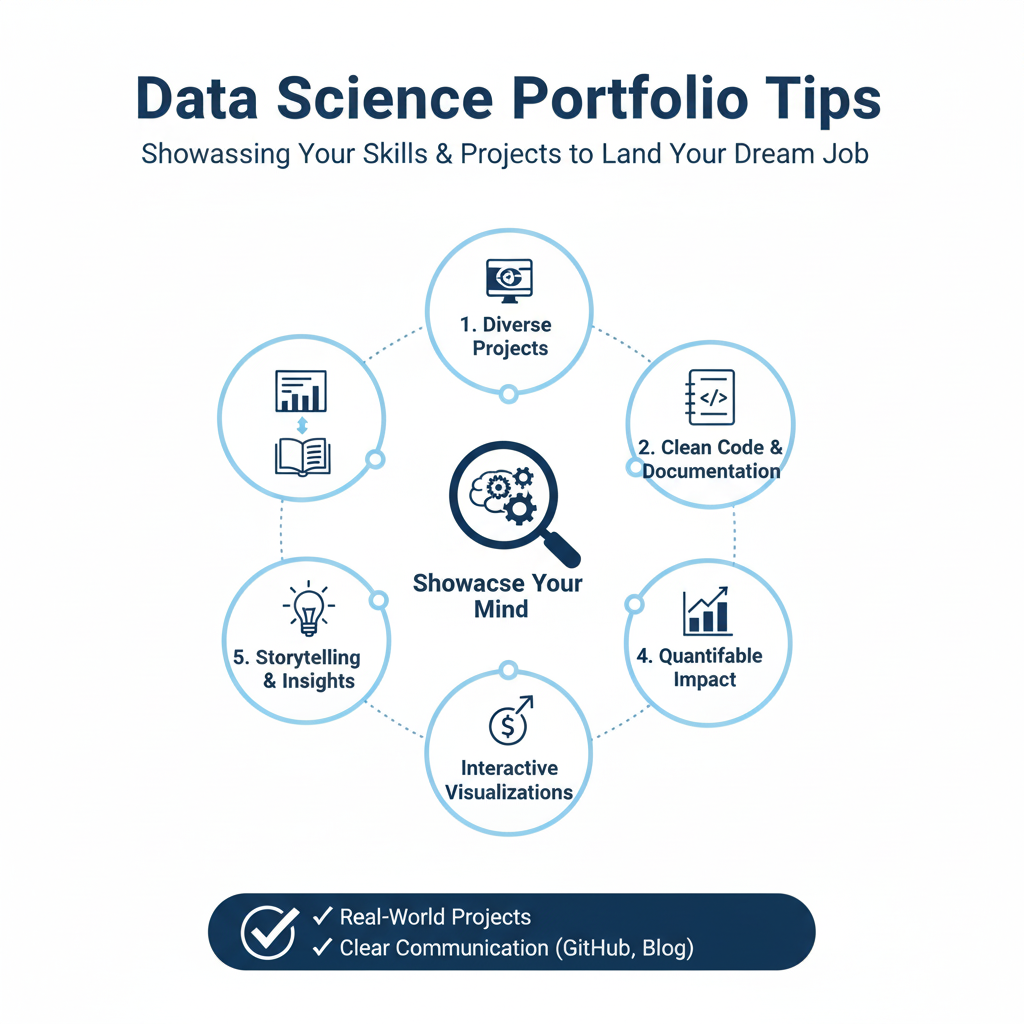
Discover proven portfolio tips strategies to accelerate your data science career in 2025. Learn project selection, storytelling techniques, deployment best practices, and metrics-driven approaches to create a portfolio that stands out to employers and advances your career
Introduction: The Evolving Role of Data Science Portfolios in Career Advancement
In the competitive landscape of data science, a well-crafted portfolio has transformed from a nice-to-have accessory to an essential career accelerator. As we navigate through 2025, the expectations for data science portfolios have evolved dramatically, reflecting the maturation of the field and the increasing sophistication of hiring processes. These essential portfolio tips will help you create a strategic portfolio that serves as your professional signature, demonstrating not just technical competence but also business acumen, communication skills, and problem-solving methodology.
The modern data science portfolio has become a multidimensional showcase that goes beyond GitHub repositories to include interactive demonstrations, case studies with measurable impact, and evidence of continuous learning. In an era where AI tools can generate basic code, portfolios that highlight unique human insights, strategic thinking, and business impact stand out significantly. This comprehensive guide explores proven portfolio tips and strategies for building a portfolio that not only demonstrates your technical skills but also tells a compelling story about your approach to solving real-world problems with data.
Understanding the evolution of portfolio expectations is crucial for career advancement in 2025. One of the most critical portfolio tips is recognizing that recruiters and hiring managers now look for evidence of deployed impact, cross-functional collaboration, and ethical considerations alongside technical prowess. Your portfolio is no longer just a collection of projects—it’s a strategic tool that positions you for the specific roles and opportunities you want to pursue in your data science career, and these portfolio tips will help you maximize its impact.
1. Strategic Project Selection: Quality Over Quantity
The Four-Quadrant Project Framework
In 2025, successful data science portfolios follow a strategic approach to project selection rather than simply accumulating numerous examples. The most effective portfolio tips suggest demonstrating breadth and depth through carefully chosen projects that showcase different skills and contexts. Implement the four-quadrant framework: include one project demonstrating data engineering and preprocessing capabilities, another focusing on traditional machine learning with strong business metrics, a third showcasing deep learning or advanced AI techniques, and finally a project highlighting deployment and MLOps skills.
Each project should serve a specific purpose in your narrative, which is one of the most valuable portfolio tips for creating a cohesive story. For example, your data engineering project might demonstrate handling messy real-world data with complex preprocessing pipelines. Your traditional machine learning project should emphasize feature engineering, model selection, and most importantly, business impact measurement. The deep learning project showcases your ability to work with modern architectures, while the deployment project proves you can bring models to production. These strategic portfolio tips ensure you demonstrate the full spectrum of data science capabilities rather than overlapping skills across multiple similar projects.
Industry Alignment and Specialization
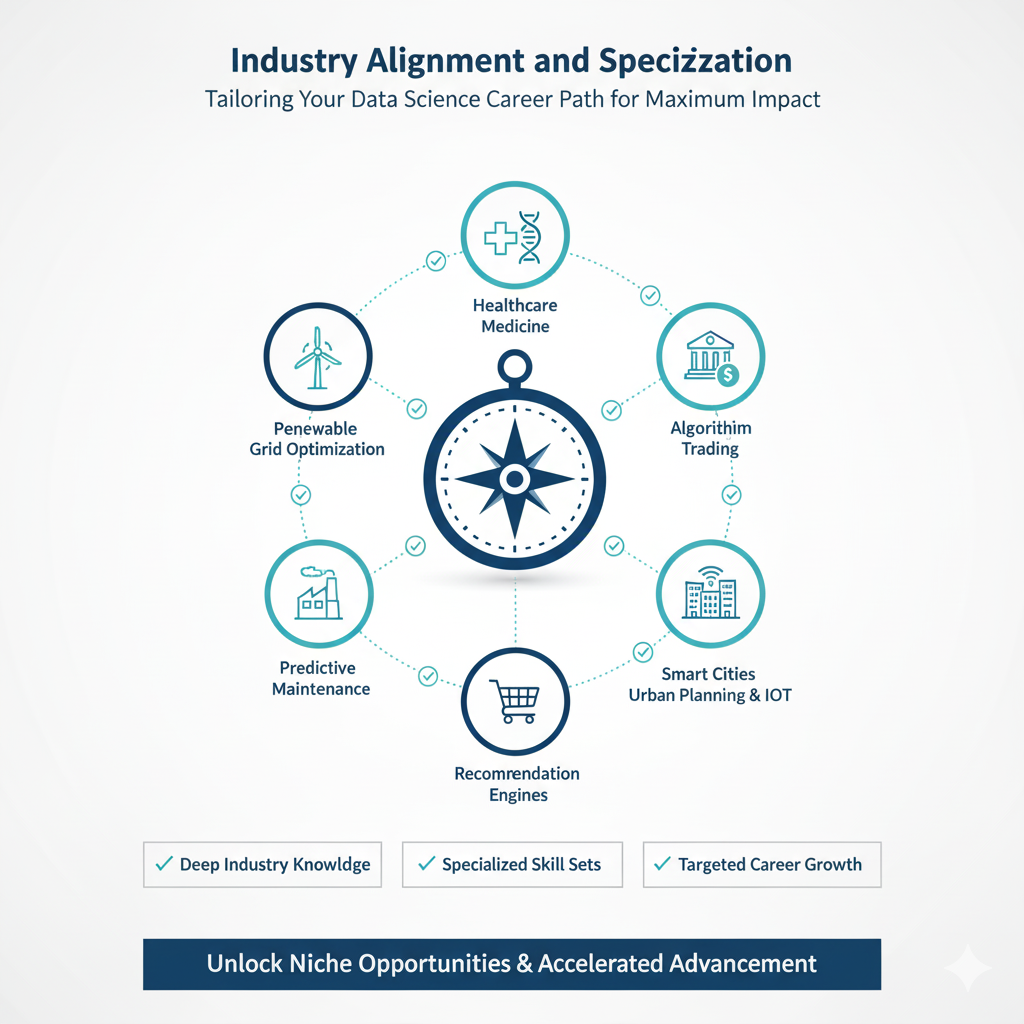
Align your project selection with your target industry or domain, one of the most crucial portfolio tips for targeted job applications. If you’re pursuing healthcare data science roles, include projects using medical datasets, demonstrating understanding of HIPAA considerations, and showing familiarity with healthcare-specific metrics. For finance roles, showcase projects involving time-series analysis, risk modeling, or fraud detection with appropriate attention to regulatory considerations. These industry-specific portfolio tips demonstrate not only technical skills but also domain knowledge that significantly increases your value to potential employers.
Specialization projects have become increasingly valuable in 2025, and these portfolio tips will help you stand out. Rather than being a generalist across all data science domains, develop deep expertise in 2-3 specific areas such as natural language processing, computer vision, or reinforcement learning. Your portfolio should include at least one project that demonstrates cutting-edge work in your specialization area, using recent techniques and addressing current challenges in that domain. These specialization portfolio tips make you memorable to recruiters and position you as an expert rather than just another general data scientist.
2. The Art of Storytelling with Data
Structured Problem-Solution Narratives
Transform your projects from technical demonstrations into compelling stories by implementing a consistent narrative structure, one of the most effective portfolio tips for engagement. Each portfolio project should follow the Problem-Approach-Solution-Impact framework. Start by clearly defining the business problem in non-technical terms, explaining why it matters and to whom. Detail your approach, including why you selected specific methodologies over alternatives. Present your solution with appropriate visualizations and explanations, then crucially, quantify the impact in business-relevant terms—these narrative portfolio tips create compelling case studies.
Develop your narrative with multiple audience types in mind, following these versatile portfolio tips. Create an “executive summary” section that conveys the core value proposition in 30 seconds of reading, a “technical deep dive” for fellow data scientists, and a “business impact” section for hiring managers. This multi-layered approach ensures your portfolio resonates with different stakeholders in the hiring process. Use before-and-after comparisons, cost savings calculations, or efficiency improvements to make your impact tangible and memorable—these practical portfolio tips bridge the gap between technical and business audiences.
Visual Storytelling and Interactive Elements
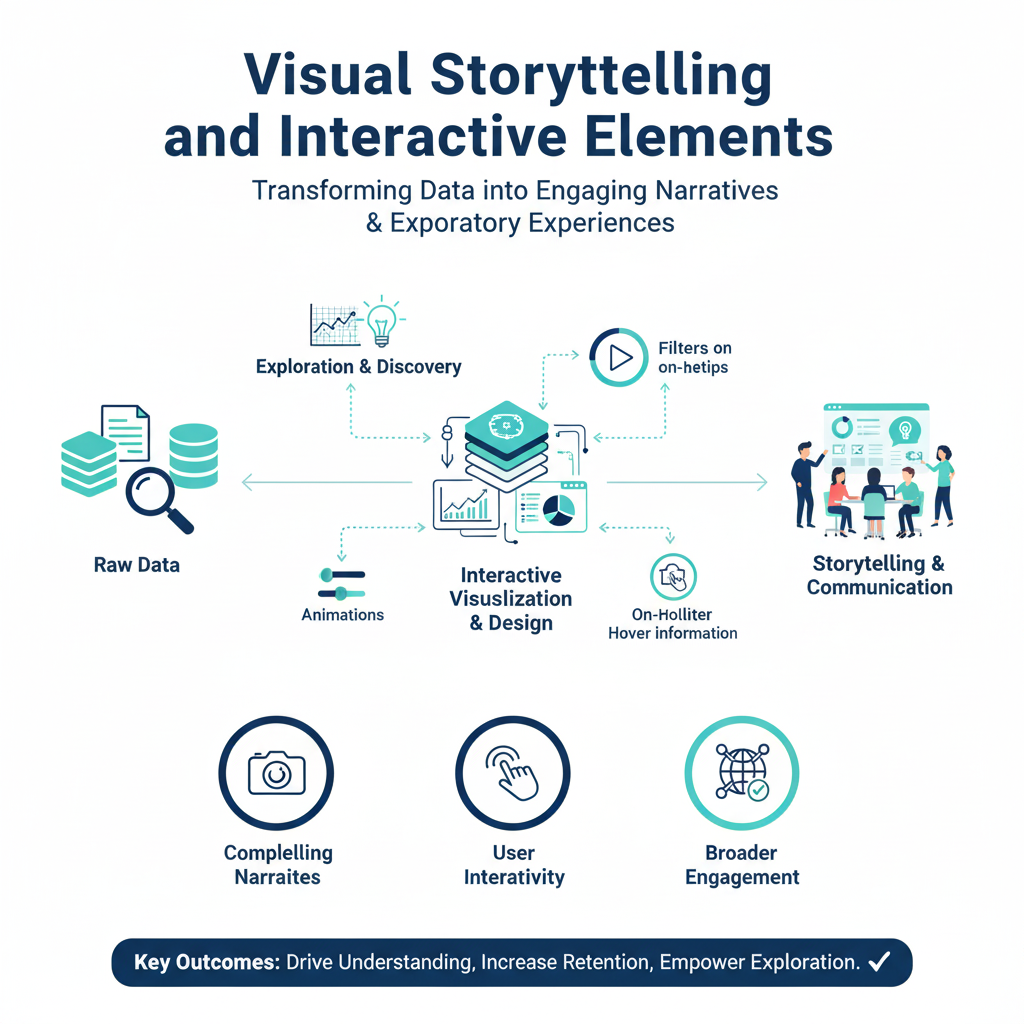
Leverage modern visualization tools to create engaging, interactive narratives using these technical portfolio tips. Instead of static charts, use Plotly or Streamlit to create interactive visualizations that allow viewers to explore the data themselves. Implement scrolling narratives that reveal insights progressively, similar to the style used in major data journalism pieces. These interactive elements not only demonstrate your technical skills but also significantly increase engagement with your portfolio, making these among the most valuable portfolio tips for standing out.
Incorporate video explanations or audio commentary for key projects, following these multimedia portfolio tips. A 2-3 minute video walking through your most impressive project provides personal connection and demonstrates communication skills that static text cannot convey. Use screen recordings with voiceover to demonstrate working applications or to walk through complex analytical processes. These multimedia portfolio tips make your portfolio stand out and give hiring managers a sense of working with you before even scheduling an interview.
3. Production-Ready Project Demonstration
End-to-End Project Implementation
In 2025, the bar for portfolio projects has elevated from proof-of-concept to production-ready demonstrations, making these deployment portfolio tips essential. Showcase your ability to handle the complete data science lifecycle by including projects with robust data pipelines, proper error handling, logging, and monitoring. Implement continuous integration/continuous deployment (CI/CD) pipelines for your projects, demonstrating familiarity with modern software engineering practices that are essential in professional data science roles—these technical portfolio tips show you understand real-world constraints.
Build projects that solve real problems rather than using clean, pre-processed datasets from competitions, following these practical portfolio tips. Source your own data through APIs, web scraping (ethically and legally), or public datasets that require significant cleaning and preprocessing. Document the entire process, including challenges faced and how you overcame them. This authenticity demonstrates problem-solving skills and resilience that are highly valued in professional settings, making these among the most important portfolio tips for showing professional readiness.
Deployment and User Experience Focus
Go beyond Jupyter notebooks by deploying your models as functional applications using these implementation portfolio tips. Use platforms like Heroku, AWS, or Google Cloud to host web applications built with Streamlit, Flask, or FastAPI. Ensure these applications have clean user interfaces, proper documentation, and handle edge cases gracefully. The ability to create user-friendly interfaces for your models demonstrates product thinking and understanding of how data science creates value in real-world applications—these user-focused portfolio tips differentiate you from purely technical candidates.
Implement proper MLOps practices in your deployed projects following these operational portfolio tips. Include model versioning, performance monitoring, data drift detection, and automated retraining pipelines. Document these practices clearly in your project descriptions, as they demonstrate understanding of the full model lifecycle beyond initial development. This production mindset significantly differentiates your portfolio from those focused solely on model development, making these among the most valuable portfolio tips for senior roles.
4. Technical Depth and Cutting-Edge Methodologies
Advanced Technique Demonstration
While fundamental skills remain important, 2025 portfolios must demonstrate awareness and implementation of current methodologies using these advanced portfolio tips. Include projects utilizing transformer architectures, graph neural networks, or reinforcement learning where appropriate for the problem. Showcase your understanding of emerging areas like explainable AI, federated learning, or synthetic data generation through dedicated projects or project components—these forward-looking portfolio tips position you as staying current with industry trends.
Demonstrate technical depth by going beyond standard library implementations using these sophisticated portfolio tips. Modify existing algorithms to address specific problem constraints, implement custom loss functions, or develop novel evaluation metrics tailored to business objectives. These custom implementations show deeper understanding than simply applying pre-built solutions from popular libraries. Include ablation studies or sensitivity analyses to demonstrate rigorous experimental methodology—these methodological portfolio tips show scientific thinking beyond basic implementation.
Performance Optimization and Scalability
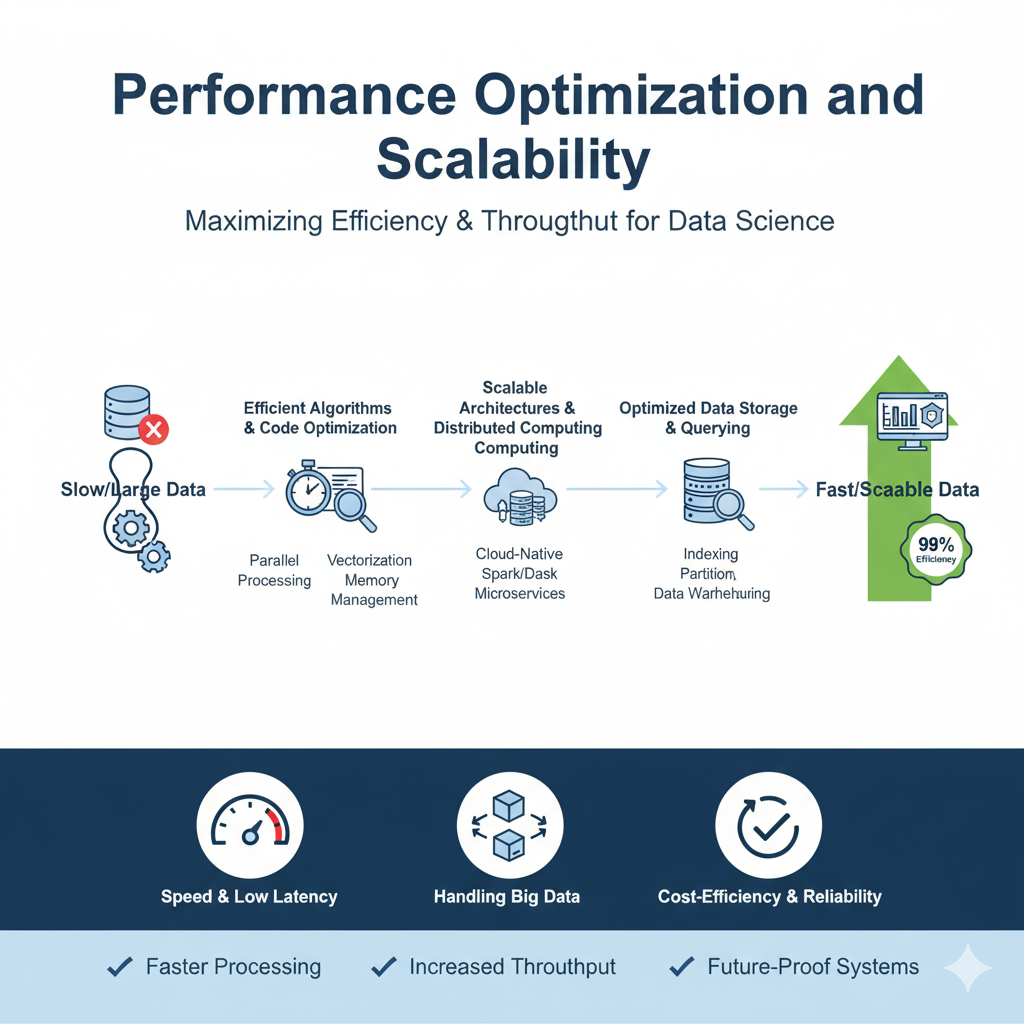
Showcase your ability to work with large-scale data by including projects that demonstrate performance optimization techniques using these scalability portfolio tips. Implement data processing pipelines using Dask or Spark, optimize model training through techniques like mixed-precision training or distributed computing, and demonstrate memory-efficient data handling. These skills are increasingly important as datasets continue growing in size and complexity, making these performance-focused portfolio tips crucial for modern data roles.
Include benchmarking comparisons in your projects using these analytical portfolio tips, showing how your implementation compares to baseline approaches or how different optimization techniques affect performance. Document your optimization process, including failed attempts and lessons learned. This demonstrates systematic problem-solving approach and resilience in tackling challenging technical problems—these process-oriented portfolio tips provide insight into your working methodology.
5. Business Impact and Metric-Driven Results
Quantifiable Value Demonstration
Transform your projects from technical exercises to business assets by rigorously quantifying impact using these business-focused portfolio tips. Instead of reporting only technical metrics like accuracy or F1-score, translate these into business terms. Calculate cost savings, revenue increases, time reductions, or risk mitigation in concrete terms. For example, “Improved fraud detection by 15%, preventing an estimated $250,000 in monthly losses” is far more impactful than “Achieved 95% accuracy”—these translation portfolio tips bridge technical and business worlds.
Develop business cases for your projects using these strategic portfolio tips, including ROI calculations where possible. Estimate the costs of implementation (compute resources, development time) against the benefits achieved. This business-minded approach demonstrates understanding of how data science creates value in organizational contexts, a crucial skill for senior roles. These value-focused portfolio tips show you understand the business context of data science work.
A/B Testing and Validation
Where possible, implement and document A/B tests or other validation methods to prove your solutions work in practice using these empirical portfolio tips. If direct testing isn’t feasible, create realistic simulation environments to demonstrate potential impact. This empirical validation approach shows scientific rigor and understanding of how data science solutions are evaluated in business settings—these validation portfolio tips demonstrate professional methodology.
Include monitoring of deployed models with business metrics using these operational portfolio tips, not just technical performance. Show how you would track whether your model continues delivering business value over time and what steps you would take if performance degraded. This forward-thinking approach demonstrates understanding of the ongoing responsibility for data science solutions beyond initial deployment—these maintenance portfolio tips show long-term thinking.
6. Collaboration and Communication Evidence
Cross-Functional Project Work
Showcase your ability to work in team environments by including projects completed in collaboration with others using these collaborative portfolio tips. These could be hackathon projects, open-source contributions, or group academic projects. Clearly document your specific contributions while demonstrating how you integrated with the team. This evidence of collaboration skills is increasingly important as data science becomes more integrated with other business functions—these teamwork portfolio tips demonstrate essential soft skills.
Include projects where you’ve worked with domain experts or stakeholders from non-technical backgrounds using these cross-functional portfolio tips. Document how you translated business requirements into technical solutions and how you communicated complex results to different audiences. This demonstrates the crucial soft skills that distinguish outstanding data scientists from merely competent ones. These communication portfolio tips show your ability to work across organizational boundaries.
Documentation and Knowledge Sharing
Implement professional-grade documentation for all your projects using these clarity portfolio tips. Include clear README files with setup instructions, architecture diagrams, API documentation where applicable, and user guides for interactive applications. This level of documentation demonstrates your ability to create maintainable, shareable work that others can understand and build upon—these documentation portfolio tips show consideration for your audience.
Showcase your thought process through technical blog posts or project post-mortems using these reflective portfolio tips. Write about challenges faced, decisions made, and lessons learned during project development. This not only demonstrates communication skills but also provides insight into your problem-solving methodology and ability to learn from experience. These reflective portfolio tips give depth to your portfolio beyond just final results.
7. Continuous Learning and Skill Demonstration
Learning Journey Documentation
In the rapidly evolving field of data science, demonstrating continuous learning is crucial, and these growth-oriented portfolio tips will help you showcase this. Document your learning journey through your portfolio by including projects that show progression in your skills. For example, you might revisit an earlier project with more advanced techniques, demonstrating how your approach has evolved as your skills developed—these evolutionary portfolio tips show your growth trajectory.
Create “skill demonstration” projects specifically designed to showcase new technologies or methodologies you’re learning using these educational portfolio tips. These focused projects allow you to demonstrate cutting-edge skills even if you haven’t had opportunity to apply them in professional contexts yet. Frame them as learning experiments with clear objectives and honest assessments of your current proficiency level—these experimental portfolio tips demonstrate intellectual curiosity.
Certification and Course Integration
Strategically integrate relevant certifications and courses into your portfolio narrative using these credential portfolio tips. Rather than simply listing certifications, create projects that apply the concepts from these courses to novel problems. This demonstrates practical application rather than just theoretical knowledge. Include reflections on what you learned and how it changed your approach to data science problems—these application portfolio tips bridge theory and practice.
Participate in competitive platforms like Kaggle, but go beyond simply submitting solutions using these competitive portfolio tips. Document your approach, learnings, and how you would adapt the techniques to real-world business problems. This contextualization of competition participation demonstrates practical thinking beyond optimizing for competition metrics. These adaptation portfolio tips show business relevance in competitive achievements.
8. Portfolio Presentation and Technical Infrastructure
Professional Platform Selection
Choose your portfolio platform strategically based on your target roles using these platform portfolio tips. GitHub remains essential for technical roles, but consider complementing it with a personal website for broader audiences. Use modern, clean designs that focus on content rather than flashy visuals. Ensure your portfolio is mobile-responsive and loads quickly, as hiring managers often review candidates on various devices—these accessibility portfolio tips ensure your work reaches its audience.
Implement proper project organization on GitHub using these technical portfolio tips, with consistent repository structures, comprehensive README files, and appropriate use of GitHub features like Issues, Projects, and Wiki for larger projects. This demonstrates your ability to work professionally with version control and project management tools. These organizational portfolio tips show your professionalism and attention to detail.
Technical Implementation Quality
Treat your portfolio itself as a demonstration of your skills using these meta portfolio tips. Implement best practices in code quality, including proper documentation, testing, and modular design. Use tools like pre-commit hooks, continuous integration, and code quality metrics to demonstrate professional development practices. This meta-demonstration of skills can be as impressive as the projects themselves—these quality portfolio tips elevate your entire portfolio.
Ensure all code is production-quality using these reliability portfolio tips, with proper error handling, logging, and configuration management. Include environment setup scripts (Docker, requirements.txt) that make it easy for others to run your projects. This attention to usability demonstrates consideration for others who might work with your code. These usability portfolio tips show you’re a team player who values collaboration.
9. Specialization and Niche Development
Domain Expertise Demonstration
Develop and showcase specialized expertise in specific domains or techniques using these niche portfolio tips. Create a series of projects that build on each other to demonstrate deep knowledge in your chosen specialty. For example, if specializing in natural language processing, include projects demonstrating text classification, named entity recognition, sentiment analysis, and more advanced topics like language generation or cross-lingual transfer learning—these progressive portfolio tips demonstrate depth.
Develop original research or analysis in your specialty area using these innovative portfolio tips. This could include reproducing and extending published papers, conducting original experiments, or analyzing novel datasets. This demonstration of research capability positions you as a thought leader in your specialty rather than just an implementer of existing techniques. These research portfolio tips differentiate you from purely applied practitioners.
Open Source Contributions and Thought Leadership
Contribute to open-source projects relevant to your specialization using these community portfolio tips. These contributions demonstrate technical skill, collaboration ability, and commitment to the data science community. Document your contributions clearly, explaining the problem you solved and how your solution works—these contribution portfolio tips show your engagement with the wider community.
Establish thought leadership through technical blog posts, conference presentations, or workshop facilitation using these leadership portfolio tips. Include these activities in your portfolio with links to recordings, slides, or written content. This demonstration of communication skill and expertise significantly enhances your professional profile. These visibility portfolio tips help establish your professional reputation.
10. Metrics and Iteration Framework
Portfolio Performance Tracking
Implement analytics to track engagement with your portfolio using these data-driven portfolio tips. Use tools like Google Analytics to understand which projects attract the most attention, how long visitors spend on different sections, and what content leads to contact or interview requests. Use these insights to continuously refine your portfolio based on actual engagement data—these analytical portfolio tips ensure your portfolio evolves based on evidence.
Set specific, measurable goals for your portfolio and track progress against them using these goal-oriented portfolio tips. For example, you might aim to increase time-on-page by 25% or double the number of project forks each quarter. This data-driven approach to portfolio management itself demonstrates valuable data science skills. These measurement portfolio tips show you practice what you preach.
Continuous Improvement Process
Establish a regular review and update schedule for your portfolio using these maintenance . Quarterly, assess which projects are becoming outdated, what new skills you need to demonstrate, and how the portfolio aligns with your evolving career goals. Remove or update projects that no longer represent your best work or current interests—these curation keep your portfolio current and relevant.
Solicit and incorporate feedback on your portfolio from mentors, peers, and hiring managers using these feedback portfolio tips. Create a structured process for collecting this feedback and systematically implementing improvements. This demonstrates humility and commitment to continuous improvement that employers value highly. These improvement portfolio tips show your growth mindset and responsiveness to input.
Conclusion: Strategic Portfolio Management for Career Growth
Your data science portfolio in 2025 is a dynamic, evolving representation of your professional identity rather than a static collection of projects. The most successful portfolios tell a compelling story about your journey, skills, and unique value proposition while demonstrating tangible impact and continuous growth. By implementing these proven portfolio tips and strategies, you transform your portfolio from a simple credential verification tool into a powerful career accelerator that opens doors to exciting opportunities.
Remember that your portfolio should evolve along with your career goals using these evolutionary. Early-career professionals might emphasize technical breadth and learning capability, while experienced practitioners should focus on business impact and specialized expertise. Regularly revisit your portfolio strategy to ensure alignment with your current objectives and the evolving expectations of the data science job market—these strategic portfolio tips ensure ongoing relevance.
In the competitive landscape of 2025 data science careers, a strategically crafted portfolio doesn’t just demonstrate your skills—it actively creates opportunities. By treating your portfolio as a product that serves your career goals using these proactive portfolio , you take control of your professional narrative and position yourself for the roles and opportunities that align with your aspirations. The investment in building and maintaining an outstanding portfolio using these comprehensive tips pays dividends throughout your data science career journey, helping you achieve your professional goals and make meaningful impact through your work.