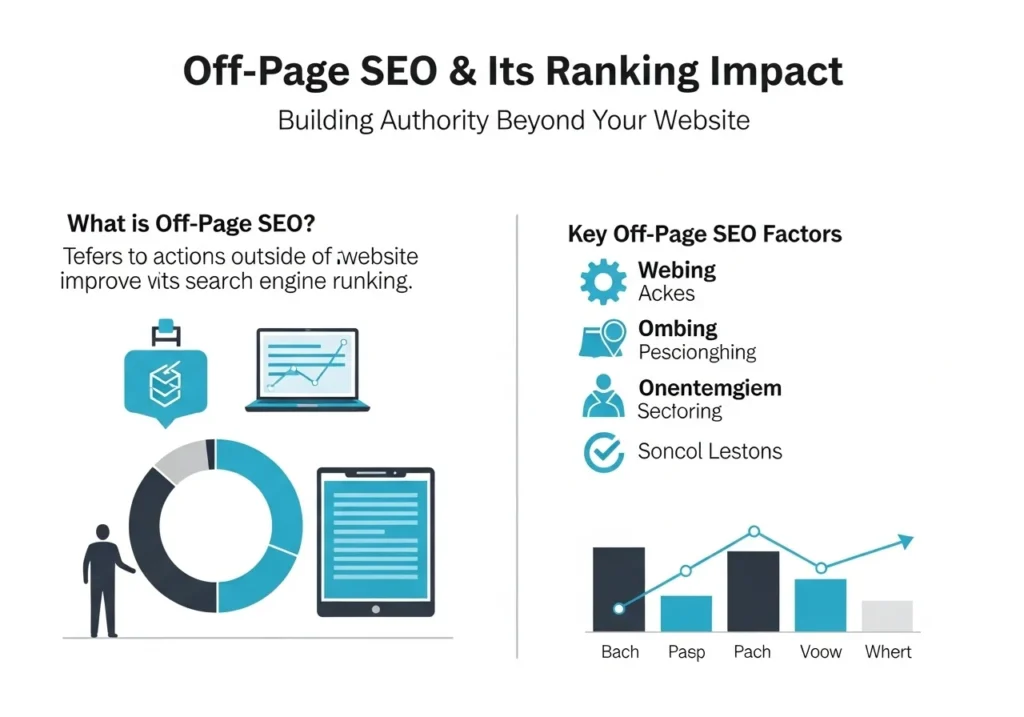
When it comes to improving your website’s visibility and ranking on search engines like Google, many website owners focus on on-page SEO. On-page SEO refers to the tactics you can use within your website like using the right keywords, optimizing meta tags, and improving user experience. But what about off-page SEO?
Off-page SEO is equally important and plays a huge role in determining your site’s ranking in search engine results pages (SERPs). If you want to rank higher, you’ll need to focus not only on optimizing your website content but also on the actions taken outside of it. This article will explain what off-page SEO is, how it impacts your ranking, and provide strategies to improve it.
What is Off-Page SEO?
Off-page SEO refers to any action that is taken outside your website to improve its position on search engine results pages (SERPs). While on-page SEO focuses on the content and structure of your website, off-page SEO works on increasing the credibility, authority, and trustworthiness of your site using external signals.
Examples of Off-Page SEO
- Backlinks: Links from other websites that point to your pages.
- Social Media Engagement: Interaction on platforms like Facebook, Twitter, Instagram, etc.
- Brand Mentions: When your brand is mentioned online, even if no link is provided.
- Guest Blogging: Writing blog posts for other websites and including a link to your own site.
- Influencer Marketing: Collaborating with influencers who promote your site or content.
These external factors signal to search engines that your website is a reputable source of information. The more these signals align with your website, the higher you’ll rank.
Why Does Off-Page SEO Matter?
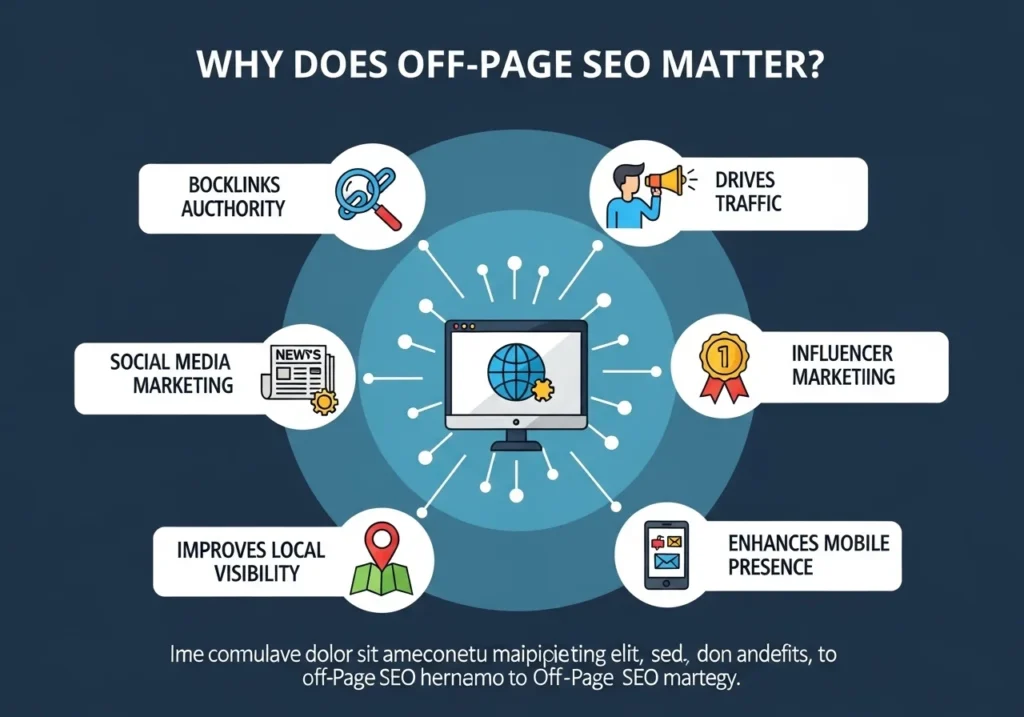
Off-page SEO is one of the primary ways that Google and other search engines evaluate your site. By analyzing external factors, Google can assess the authority and relevance of your website, even if it’s not directly involved in the site’s content.
1. Building Authority with Backlinks
One of the most important off-page SEO factors is acquiring high-quality backlinks. Backlinks are essentially votes of confidence from other websites. When another reputable website links to yours, it’s like they are saying, “This content is valuable.” The more high-quality backlinks you have, the more Google sees your site as a trustworthy, authoritative source.
Example:
Imagine you run a blog about fitness, and a well-known health magazine writes an article that links to one of your fitness guides. That backlink from a reputable site acts as a powerful endorsement of your content and can significantly improve your ranking.
However, it’s not just the quantity of backlinks that matters; quality is crucial. A backlink from a well-established and relevant website is far more valuable than one from a less-known site. In fact, Google considers the authority and relevance of the sites linking to you.
2. Social Media Signals
Though social signals (such as likes, shares, and comments on social platforms) are not a direct ranking factor for Google, they still play a role in driving traffic and engagement. When your content is shared on social media, it gains more exposure, potentially reaching new audiences. This increased visibility can lead to more organic backlinks as other websites may find your content and link to it.
For example, if you post a blog article on Facebook and it receives hundreds of shares, the increased traffic to your website signals to Google that people find your content valuable, which can indirectly boost your ranking.
3. Brand Mentions and Reputation Management
Even if other websites don’t link to you, simply being mentioned online can have a positive impact on your SEO. Brand mentions, which occur when your business name, website, or products are mentioned on other websites, can contribute to your online reputation. Google uses brand mentions as a way to gauge the authority and relevance of your brand.
Example:
If someone writes a review of your product on a popular review site, even without linking to your website, it counts as a brand mention. This helps build credibility and trust with search engines.
4. Guest Blogging and Content Outreach
Guest blogging is a tried-and-true method of earning high-quality backlinks while also providing valuable content to other websites. When you write guest posts for other blogs in your niche, you’re not only increasing your exposure, but you’re also earning backlinks that help improve your authority in the eyes of Google.
For example, if you write a guest post on a fitness site and include a link back to your own blog, you gain a valuable backlink and more visibility. It’s a win-win situation: the host blog benefits from your expertise, and you benefit from the link and increased traffic.
5. Influencer Marketing
Influencer marketing has gained tremendous popularity, especially in the digital marketing world. Collaborating with influencers allows you to tap into their established audiences. When an influencer shares or promotes your website, product, or content, it can lead to a large influx of traffic and social signals, both of which can improve your SEO.
Example:
If an influencer in your industry posts about your brand or product, they might include a link to your website. This not only brings in traffic but also helps build brand credibility, which can help improve rankings over time.
How Does Off-Page SEO Affect Your Search Rankings?
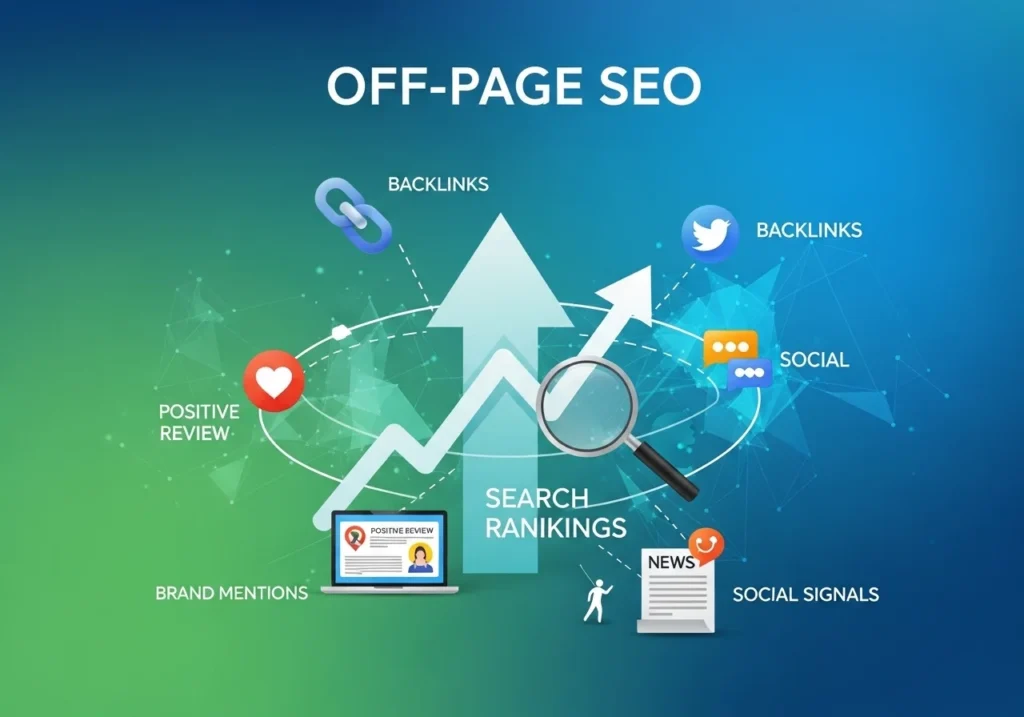
Off-page SEO works as a validation tool for search engines. Search engines like Google rely on external signals to gauge your website’s trustworthiness and authority. Here’s a closer look at how off-page SEO directly impacts your ranking:
1. Improving Domain Authority
One of the most important factors in off-page SEO is improving your domain authority (DA). DA is a metric developed by Moz that predicts how well a website will rank on search engines. This is determined by several factors, including the quality and quantity of backlinks pointing to your website.
When you acquire high-quality backlinks, you improve your DA, which increases the likelihood of your site ranking higher in SERPs. The higher your DA, the more likely you are to outrank your competitors.
2. Building Trust and Credibility
Google wants to provide users with the most credible and trustworthy results. If your website is linked to and mentioned by reputable sources, it signals to Google that your content is reliable. A solid reputation both online and offline can significantly improve your rankings.
3. Generating Organic Traffic
The more backlinks and social signals you have, the more likely it is that people will visit your site. This organic traffic is crucial for improving your rankings. High-quality backlinks act as recommendations, driving traffic from other websites and increasing your exposure.
4. Establishing Your Brand’s Online Presence
By engaging in off-page SEO tactics like guest blogging, influencer marketing, and social media, you establish your brand’s presence across the web. This visibility makes it easier for new users to discover your website, and it also signals to Google that your site is popular and relevant.
How to Improve Your Off-Page SEO?
Improving your off-page SEO takes time and effort, but it’s well worth the investment. Here are some effective strategies to enhance your off-page SEO:
1. Create Link-Worthy Content
Before you can attract backlinks, you need content worth linking to. Focus on creating high-quality, informative, and engaging content that others in your industry would find valuable. This could include in-depth guides, case studies, research articles, or infographics.
2. Build Relationships with Industry Influencers
Networking with influencers, bloggers, and other content creators in your industry is crucial. These relationships can lead to valuable backlinks, collaborations, and even brand mentions that help improve your SEO.
3. Leverage Social Media
Being active on social media platforms helps build awareness around your brand and content. Share your blog posts, engage with followers, and encourage users to share your content. The more your content is shared, the greater the exposure, leading to more backlinks and traffic.
4. Focus on Quality Over Quantity for Backlinks
It’s essential to focus on getting backlinks from high-authority, relevant websites. A few quality backlinks from authoritative websites are much more valuable than dozens of low-quality links.
5. Monitor Your Backlinks
Keep track of the backlinks pointing to your site. Use tools like Google Search Console, Ahrefs, or SEMrush to regularly monitor your backlink profile. Disavow any spammy or low-quality links that could harm your SEO efforts.
Common Off-Page SEO Mistakes to Avoid
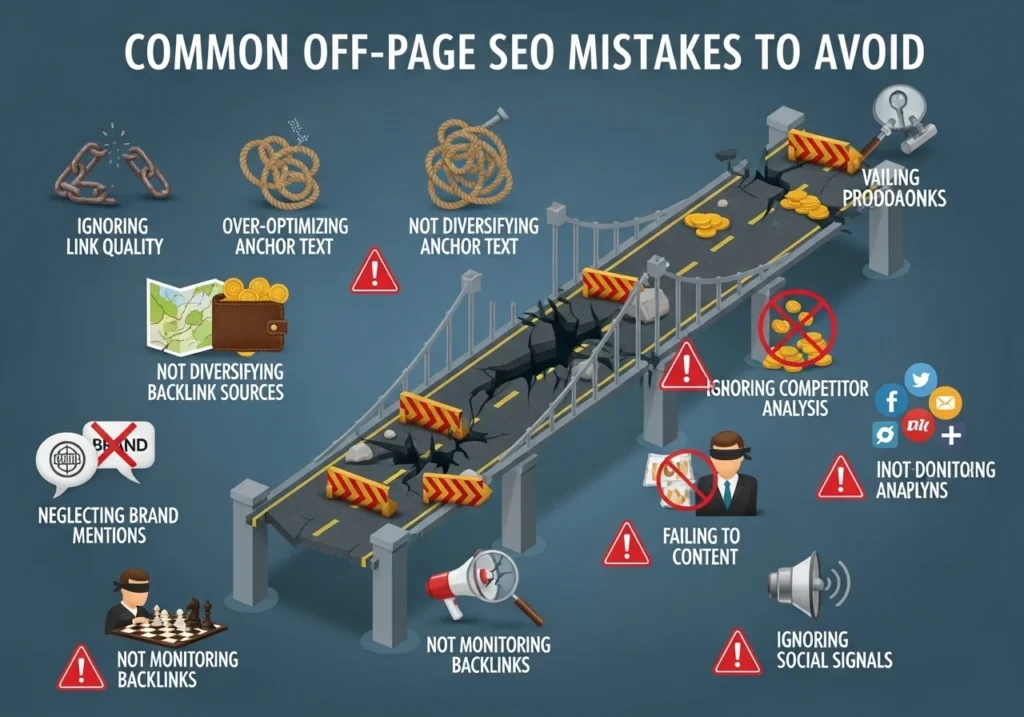
While improving your off-page SEO, avoid these common mistakes:
- Buying Backlinks: Buying links from low-quality websites or link farms can result in penalties from Google.
- Ignoring Social Media: Social media is an important off-page factor, so neglecting it can hurt your SEO efforts.
- Not Monitoring Brand Mentions: Track mentions of your brand and engage with them, even if there’s no link included.
- Focusing Only on Backlinks: Off-page SEO is about more than just backlinks. Brand mentions, social engagement, and influencer partnerships are also important.
Frequently Asked Questions (FAQs)
What is the difference between on-page and off-page SEO?
On-page SEO refers to optimizing the content, structure, and HTML of your website, while off-page SEO focuses on external factors, such as backlinks, social media engagement, and brand mentions.
How long does it take to see the effects of off-page SEO?
The impact of off-page SEO can take several months to become noticeable. However, the benefits, such as improved rankings and increased traffic, can last for a long time.
Can social media help improve my SEO?
Yes, social media signals can indirectly affect your SEO by driving traffic to your website and generating brand mentions and backlinks.
What are backlinks, and why are they important?
Backlinks are links from other websites that point to your site. They are important because they signal to search engines that your content is trustworthy and valuable, which can improve your rankings.
Conclusion
Off-page SEO is an essential part of any successful digital marketing strategy. While on-page SEO helps you optimize your website, off-page SEO works to build your site’s reputation, authority, and trust with search engines. By focusing on acquiring high-quality backlinks, leveraging social media, and building relationships with influencers, you can significantly improve your search engine rankings and drive more traffic to your site.
If you want to rank higher, don’t ignore off-page SEO. Start implementing these strategies today and see your rankings grow!