Ready to future-proof your career? Learn cloud computing in 2026: discover top benefits, best platforms, free resources, and a step-by-step beginner roadmap.
The cloud isn’t coming; it’s already here, and it’s running almost everything.
From Netflix streaming your favorite show to your bank processing transactions in milliseconds, cloud computing powers the modern world. And companies are desperately hiring people who understand it.
If you’ve been thinking about whether to learn cloud computing, stop thinking and start doing. This guide breaks down exactly why it matters in 2026, what the real benefits of cloud computing are for your career, and how to get started even with zero experience.
Let’s get into it.
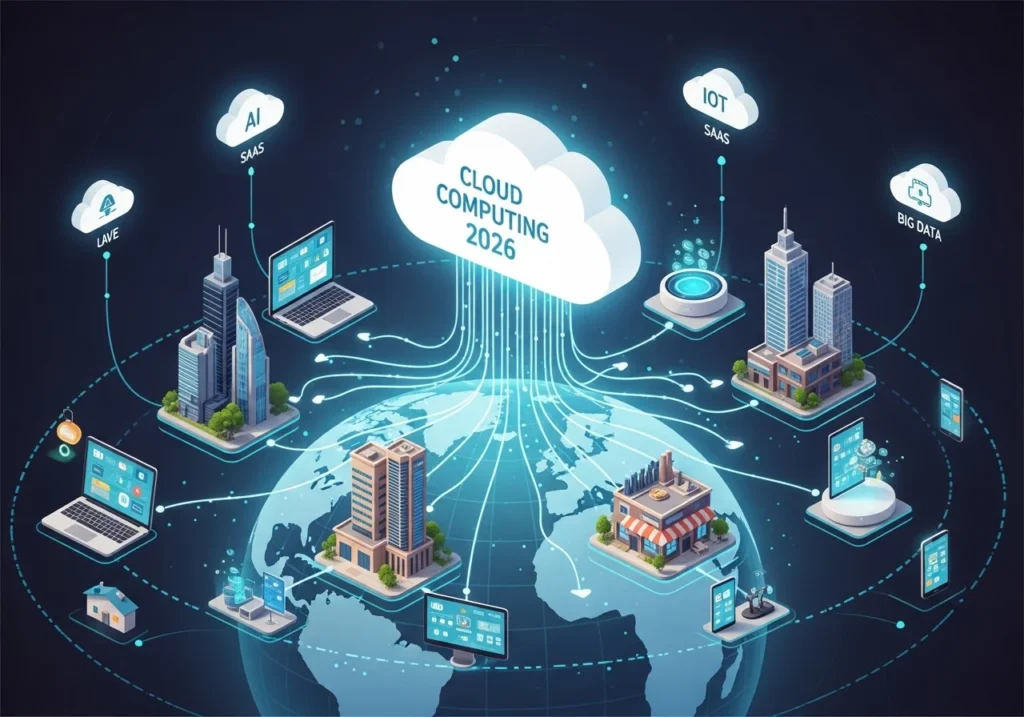
What Is Cloud Computing? (Simple Explanation)
Before diving into why you should learn it, let’s quickly clarify what it actually is.
Cloud computing means delivering computing services, servers, storage, databases, networking, software, and more over the internet (“the cloud”) instead of on a physical computer or local server.
Instead of buying your own servers, you rent computing power from giants like the following:
- Amazon Web Services (AWS)
- Microsoft Azure
- Google Cloud Platform (GCP)
Think of it like electricity. You don’t build your own power plant; you plug into the grid and pay for what you use. Cloud computing works the same way.
Why You Should Learn Cloud Computing in 2025
The timing couldn’t be better. Here’s the honest truth about where the industry stands right now.
The market is exploding.
The global cloud computing market was valued at over $670 billion in 2024 and is projected to exceed $1.2 trillion by 2028. That’s not a niche trend; that’s a fundamental shift in how every business operates.
Every startup, mid-size company, and Fortune 500 corporation is either already on the cloud or actively migrating to it. They all need skilled people to help.
The Job Market Is Hungry for Cloud Talent
Cloud roles consistently rank among the highest-paid and most in-demand tech jobs globally.
Here’s a quick look at average annual salaries in the US:
| Role | Average Salary (USD) |
|---|---|
| Cloud Engineer | $120,000 – $160,000 |
| Cloud Architect | $150,000 – $200,000 |
| DevOps Engineer | $110,000 – $155,000 |
| Cloud Security Engineer | $130,000 – $175,000 |
| Solutions Architect (AWS) | $140,000 – $190,000 |
And the best part? These roles exist in every industry: healthcare, finance, retail, government, and education. You’re not limited to Silicon Valley.
Top Benefits of Cloud Computing You Need to Know
Understanding the benefits of cloud computing isn’t just useful for interviews; it helps you understand why the world runs on it and where the real value lies.
Massive Cost Savings
Businesses no longer need to spend millions on physical servers, maintenance, and IT staff to manage hardware. They pay only for what they use, like a utility bill.
For individuals learning it: cloud labs and free tiers from AWS, Azure, and GCP mean you can practice on real infrastructure without spending a dime.
Flexibility and Scalability
Need more computing power for a big product launch? Scale up in minutes. After the rush? Scale back down and stop paying for unused resources.
This kind of elasticity was impossible with traditional infrastructure and is one of the most compelling benefits of cloud computing for modern businesses.
Remote Access and Collaboration
Work from anywhere, on any device. Cloud-based tools (Google Workspace, Microsoft 365, Slack, and Zoom) have made remote work mainstream, and all of it runs on cloud infrastructure.
Security and Reliability
Major cloud providers invest billions in cybersecurity. Their infrastructure has better uptime, disaster recovery, and data protection than most companies could ever build themselves.
Speed to Innovation
Cloud services give developers and teams access to AI tools, machine learning platforms, databases, and analytics in a few clicks. Building products that used to take years now takes weeks.
How to Learn Cloud Computing: A Step-by-Step Beginner Roadmap
Now the real question is, where do you actually start?
Here’s a clear, no-overwhelm roadmap for beginners.
Understand Core Cloud Concepts
Before touching any platform, build a foundation of core concepts.
Learn the basics of:
- IaaS, PaaS, SaaS: the three service models
- Public, private, and Hybrid cloud deployment models
- Virtualization, the technology that makes cloud possible
- Regions and Availability Zones: how cloud infrastructure is distributed
- Storage, compute, networking: the three pillars of cloud services
Free resources:
- AWS Cloud Practitioner Essentials (free on AWS Skill Builder)
- Microsoft Azure Fundamentals (free learning paths on Microsoft Learn)
- Google Cloud Skills Boost (free introductory courses)
Choose Your Cloud Platform
You can’t (and shouldn’t) learn all three platforms at once. Pick one and go deep.
Which one should you choose?
- AWS market share (~32%), largest job market, best for most beginners
- Azure Strong in enterprise and Microsoft-heavy environments; it’s great if you’re already in a Windows/Microsoft ecosystem
- GCP Best for data engineering, machine learning, and AI-focused roles
Get Hands-On Practice (Not Just Theory)
This is the step most beginners skip, and it’s the most important one.
Free ways to practice:
- AWS Free Tier 12 months of free access to 100+ services
- Google Cloud Free Tier $300 credit for new users
- Azure Free Account $200 credit + 12 months of popular free services
- A Cloud Guru / Whizlabs affordable lab with guided sandboxes
- Kaggle for data + cloud combo practice
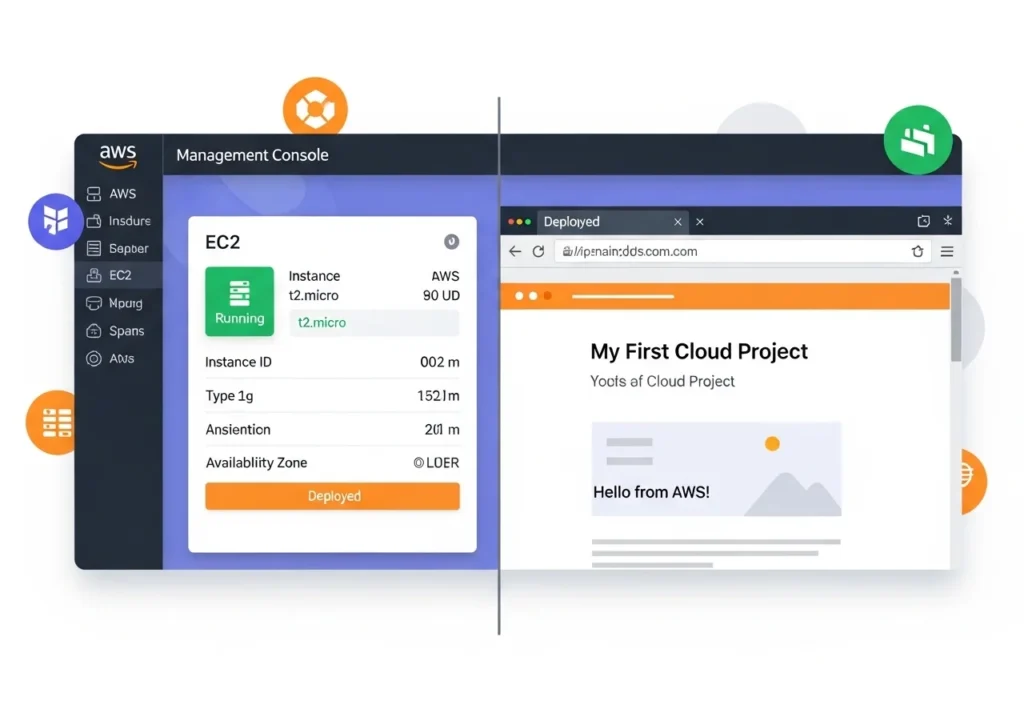
Earn a cloud certification.
Certifications are the fastest way to signal your skills to employers, especially when you don’t have years of experience yet.
Best entry-level cloud certifications:
| Certification | Provider | Difficulty | Cost |
|---|---|---|---|
| AWS Cloud Practitioner | Amazon | Beginner | $100 |
| Azure Fundamentals (AZ-900) | Microsoft | Beginner | $165 |
| Google Associate Cloud Engineer | Intermediate | $200 | |
| CompTIA Cloud+ | CompTIA | Intermediate | $338 |
Build Projects and a Portfolio
Certifications open doors. Projects close them.
Beginner cloud project ideas:
- Host a personal portfolio website on AWS S3 + CloudFront
- Build a serverless data dashboard using Lambda + DynamoDB
- Deploy a simple chatbot using Azure Bot Service
- Create an automated file backup system using cloud storage
- Set up IAM roles and security policies for a multi-user environment
Specialize and Go Deeper
Once you have the fundamentals down, pick a specialization that matches your interests and market demand.
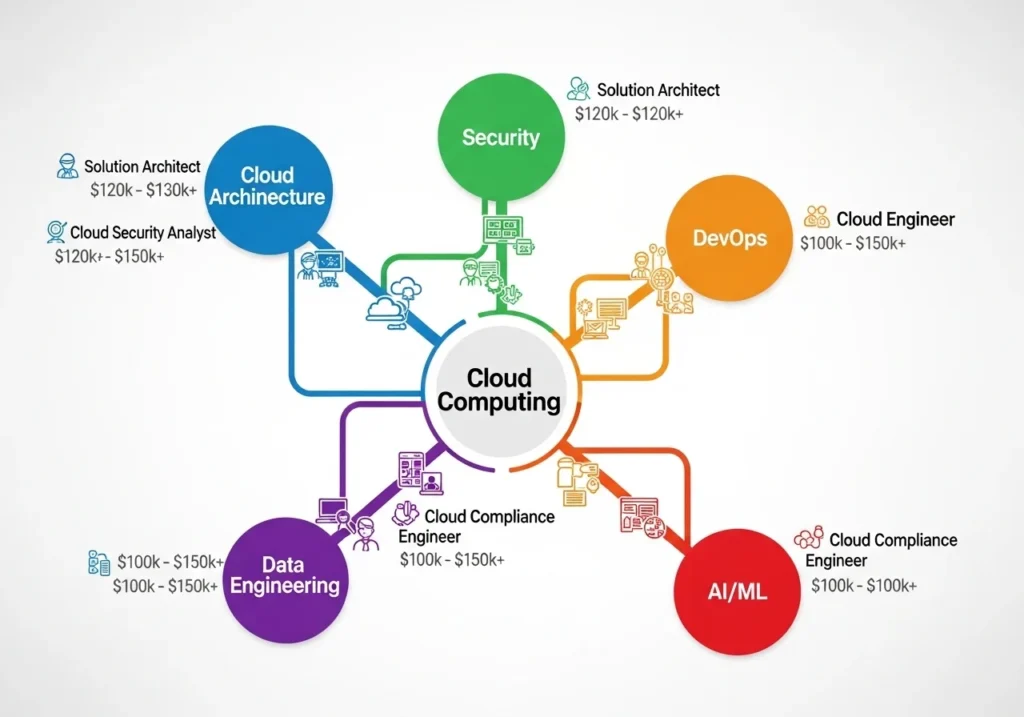
High-demand cloud specializations:
- Cloud Architecture: designing large-scale cloud systems
- Cloud security is one of the fastest-growing and highest-paid niches
- DevOps / Cloud Automation CI/CD pipelines, Terraform, Kubernetes
- Cloud Data Engineering data pipelines, warehouses, and analytics
- Cloud + AI/ML: Building and deploying machine learning models in the cloud
Best Free Resources to Learn Cloud Computing in 2025
You don’t need to spend thousands on bootcamps. Here are the best free (and affordable) resources:
Free Platforms:
- AWS Skill Builder: official AWS training, tons of free courses
- Microsoft Learn complete Azure learning paths, free
- Google Cloud Skills Boost hands-on labs with free credits
- freeCodeCamp (YouTube) full cloud computing courses for beginners
- TechWorld with Nana (YouTube): best DevOps + cloud tutorials on the internet
Affordable Paid Platforms:
- A Cloud Guru (~$35/month): best overall for structured cloud learning
- Udemy individual courses from $12–$20 during sales
- Linux Foundation excellent for Kubernetes and open-source cloud tools
Who Should Learn Cloud Computing?
Cloud computing isn’t just for hardcore developers. It’s valuable for:
- Software developers who want to deploy and scale their apps
- Data analysts working with large datasets in the cloud
- IT/cybersecurity professionals moving into cloud security
- Business analysts who work with cloud-based BI tools
- Students and career changers looking for high-paying tech roles
- Business owners who want to understand the infrastructure running their products
No matter your background, there’s a cloud path that fits.
Conclusion
Here’s the bottom line: cloud computing is not a trend; it’s the infrastructure of the modern economy.
Every company that builds software, stores data, or uses any digital tool relies on the cloud. The people who understand, manage, and build that infrastructure are among the most valuable professionals in the world right now.
Here’s your recap roadmap:
- Learn core cloud concepts and terminology
- Choose one platform. AWS is the safest starting point
- Get hands-on with free tiers and sandbox labs
- Earn an entry-level certification (start with AWS Cloud Practitioner)
- Build real projects and document them on GitHub
- Specialize in a high-demand niche (security, DevOps, or data)
You don’t need a computer science degree. You don’t need years of experience. You need a plan, consistency, and the willingness to start.
Frequently Asked Questions (FAQs)
Is cloud computing hard to learn for beginners?
Not at all. Cloud computing has a learning curve, but major providers like AWS and Microsoft offer beginner-friendly free courses that require no prior experience. Start with core concepts and free-tier hands-on practice, and you’ll be comfortable within a few weeks.
What are the main benefits of cloud computing for businesses?
The top benefits of cloud computing include significant cost savings (no hardware investment), instant scalability, remote accessibility, enterprise-grade security, and faster product development. These advantages are why over 94% of enterprises now use cloud services in some form.
How long does it take to learn cloud computing?
With consistent study (1–2 hours/day), most beginners can pass an entry-level certification like AWS Cloud Practitioner within 4–8 weeks. Becoming job-ready as a junior cloud engineer typically takes 6–12 months of learning and project-building.
Do I need to know coding to learn cloud computing?
Basic coding knowledge is helpful but not required to start. Roles like Cloud Architect and Solutions Architect are more focused on design than coding. However, learning basic scripting (Python, Bash) and understanding infrastructure-as-code tools like Terraform will significantly expand your career options.
Which cloud certification should I get first?
For most beginners, the AWS Certified Cloud Practitioner is the best first certification. It covers fundamental cloud concepts across all major service areas, is widely recognized by employers, and costs only $100. It’s the perfect foundation before pursuing more advanced certifications.