Email is not dead. In fact, it’s one of the highest-ROI marketing channels alive today.
For every $1 spent on email marketing, the average return is $36. No social media platform comes close to that. But here’s the truth: most emails get deleted in under 3 seconds. The difference between an email that converts and one that gets trashed? A proper email marketing campaign strategy.
This guide breaks it all down. Whether you’re starting from zero or fixing a broken strategy, you’ll walk away with a real plan that works.
What Is an Email Marketing Campaign?
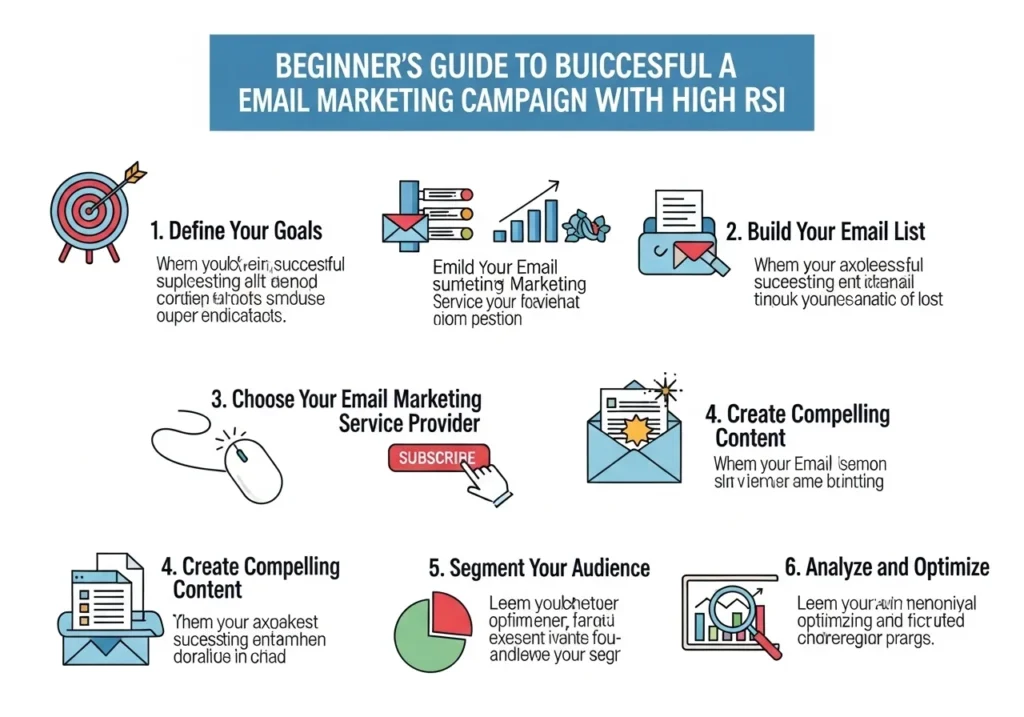
An email marketing campaign is a series of targeted emails sent to a specific audience with a clear goal—whether that’s driving sales, nurturing leads, building loyalty, or sharing valuable content.
It’s not just blasting your list with promotions. Done right, it’s a personalized conversation that happens at scale.
Types of email marketing campaigns:
- Welcome series onboard new subscribers
- Promotional campaigns announce offers and deals
- Newsletter campaigns build authority with regular value
- Re-engagement campaigns win back inactive subscribers
- Drip campaigns: automated, educational email sequences
- Abandoned cart emails recover lost sales (e-commerce gold)
How to Build a Successful Email Marketing Campaign
Here’s the step-by-step blueprint. Follow this and your emails will actually get read.
Define Your Campaign Goal
Every email campaign needs ONE clear goal. Not two. Not five. One.
Ask yourself: What do I want the reader to do after reading this email?
Common email campaign goals:
- Click through to a blog post or landing page
- Purchase a product or service
- Download a free resource (lead magnet)
- Register for a webinar or event
- Reply and start a conversation
Build and Segment Your Email List
An email campaign is only as good as the list it’s sent to. A small, engaged list always outperforms a large, cold one.
How to grow your list organically:
- Offer a lead magnet (free guide, checklist, template, discount)
- Add sign-up forms to your website header, footer, blog sidebar, exit-intent pop-up
- Promote your newsletter on social media
- Run a giveaway that requires email entry
- Add a sign-up CTA to your email signature
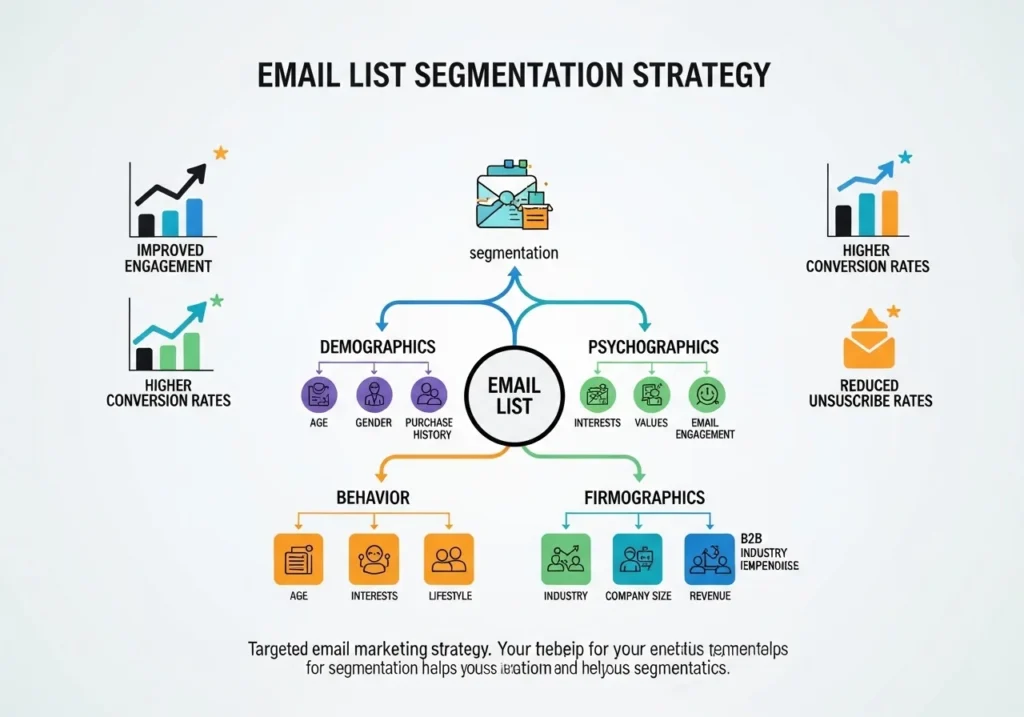
Segmentation is the secret weapon.
Instead of sending the same email to everyone, segment your list by:
- New subscribers vs. long-time followers
- Past purchasers vs. non-buyers
- Location, industry, or interest
- Behavior (opened last 3 emails vs. never opened)
Choose the Right Email Marketing Platform
Don’t try to manage campaigns from your personal Gmail. You need a proper tool.
Top email marketing platforms compared:
| Platform | Best For | Free Plan |
|---|---|---|
| Mailchimp | Beginners and small businesses | Up to 500 contacts |
| ConvertKit | Creators and bloggers | Up to 1,000 subscribers |
| Klaviyo | E-commerce brands | Up to 250 contacts |
| ActiveCampaign | Automation-heavy businesses | Trial only |
| Brevo (Sendinblue) | Budget-conscious teams | 300 emails/day |
Look for platforms that offer:
- Drag-and-drop email builder
- Automation and sequences
- A/B testing
- Analytics dashboard
- List segmentation
Write Emails People Actually Want to Read
This is where most campaigns live or die. Great copy = great results.
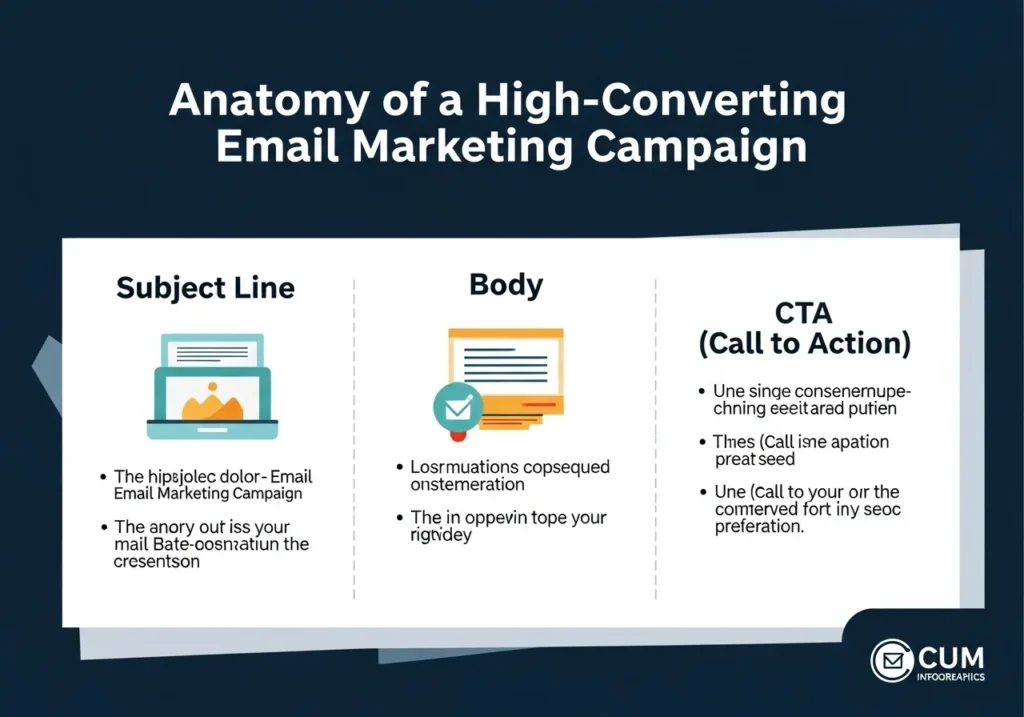
Anatomy of a high-performing email:
Subject Line (Make or Break)
- Keep it under 50 characters
- Create curiosity or communicate clear value
- Avoid spam trigger words: FREE, CLICK NOW, LIMITED TIME (in all caps)
- A/B test two versions whenever possible
Examples of strong subject lines:
Preview Text
The short snippet that appears after the subject line in the inbox. Treat it like a second subject line—not an afterthought.
Email Body
- Open with a hook; make the first sentence pull them in
- Write like a human, not a robot
- Keep paragraphs to 1_2 lines
- Use subheadings and whitespace for scannability
- Focus on ONE message per email
Call-to-Action (CTA)
- One primary CTA per email
- Make it obvious and action-oriented: “Download Now,” “Grab My Spot,” “Shop the Sale.”
- Use a button, not just a text link
Design Your Email for Maximum Impact
You don’t need to be a designer. But your emails do need to look professional and be easy to read.
Email design best practices:
- Use a single-column layout (mobile-friendly)
- Keep your brand colors and logo consistent
- Use images sparingly; don’t make emails image-heavy (spam filters hate it)
- Make CTA buttons at least 44px tall (thumb-friendly on mobile)
- Include a plain-text version of every email
- Always test on mobile before sending; 60%+ of emails are opened on phones
Set Up Automation and Sequences
This is where email marketing gets genuinely powerful. Automation lets you send the right message to the right person at the right time without lifting a finger every time.
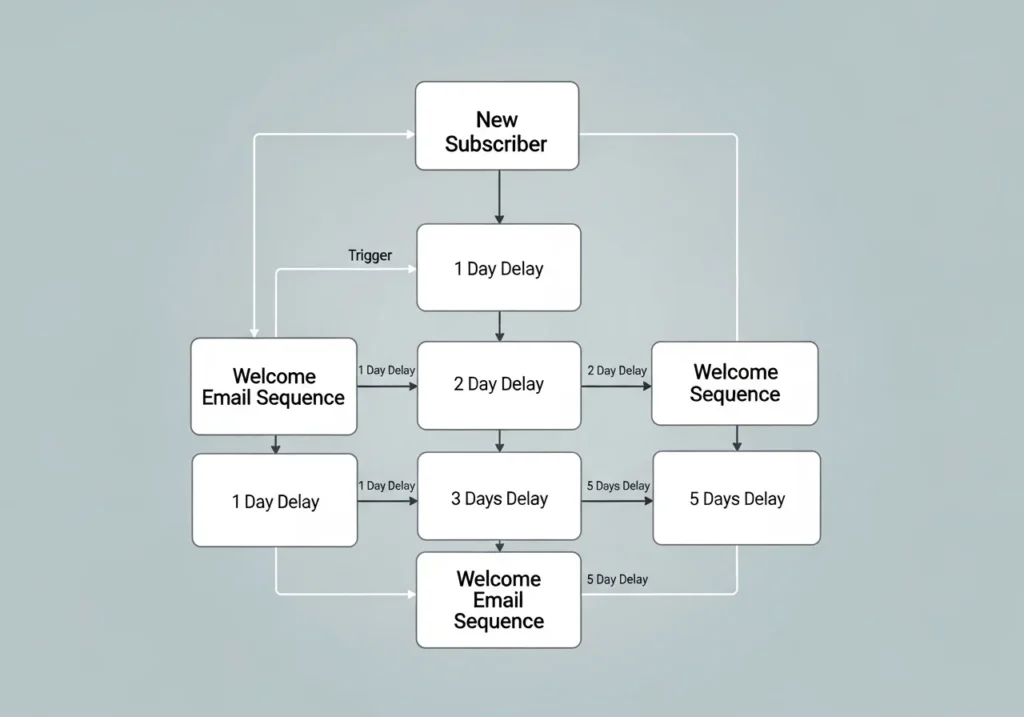
Essential automated email sequences:
1. Welcome Sequence (3–5 emails)
- Email 1: Deliver the lead magnet + warm welcome
- Email 2: Your story / brand values
- Email 3: Your best content or resources
- Email 4: Social proof (testimonials, case studies)
- Email 5: Soft pitch / offer
2. Abandoned Cart Sequence (e-commerce)
- Email 1 (1 hour after): “Did you forget something?”
- Email 2 (24 hours after): Remind + address objections
- Email 3 (48 hours after): Final nudge + small incentive
3. Re-engagement Sequence
- Email 1: “We’ve missed you. Here’s what’s new.”
- Email 2: Offer an incentive to come back
- Email 3: “Should we say goodbye?” (sunset email)
Test, Send, and Optimize
Never send a campaign without testing it first. One broken link or a subject line that triggers spam filters can tank an entire campaign.
Pre-send checklist:
- [ ] Proofread the body copy
- [ ] Test all links
- [ ] Check rendering on desktop and mobile
- [ ] Verify sender name and reply-to address
- [ ] Confirm list segment is correct
- [ ] Review subject line and preview text
- [ ] Send a test email to yourself
After sending metrics to track:
| Metric | Benchmark to Aim For |
|---|---|
| Open rate | 20–30%+ |
| Click-through rate (CTR) | 2–5%+ |
| Unsubscribe rate | Below 0.5% |
| Bounce rate | Below 2% |
| Conversion rate | It depends on the goal. |
Email Marketing Campaign Mistakes to Avoid
Even experienced marketers make these. Don’t let them sabotage your results.
- Buying email lists These leads don’t know you, and spam complaints will destroy your sender reputation
- No clear CTA: one email, one action. Don’t confuse your reader with multiple asks
- Emailing too rarely If you disappear for months, subscribers forget who you are
- Emailing too frequently Daily emails without value = unsubscribes and spam reports
- Ignoring mobile optimization Over 60% of emails are opened on phones
- Not cleaning your list Remove hard bounces and inactive subscribers every 90 days
- Generic, non-personalized content “Hey [First Name]” is better than “Hey there.”
Conclusion
Building a successful email marketing campaign isn’t complicated, but it does require intention, consistency, and a willingness to test and improve.
Here’s your complete action checklist:
- Set a clear, single goal for your campaign
- Build and segment a quality email list
- Choose the right email platform for your needs
- Write compelling subject lines and human-sounding copy
- Design clean, mobile-first emails
- Set up automation sequences that work while you sleep
- Test before sending and track results after
The beauty of email marketing? It gets better over time. Every campaign teaches you something new about your audience: what they love, what they ignore, and what makes them click.
Frequently Asked Questions (FAQs)
How often should I send email marketing campaigns?
It depends on your audience and content type. For most businesses, 1–2 emails per week is a safe starting point. Newsletters often do well weekly; promotional campaigns should be spaced out to avoid list fatigue. Always prioritize quality over frequency.
What is a good open rate for email marketing?
Industry averages vary, but a 20–30% open rate is generally considered healthy. Rates above 30% indicate strong subject lines and a highly engaged list. Anything below 15% suggests your subject lines or sender reputation needs work.
How do I avoid my emails going to spam?
Use a verified sending domain, avoid spam trigger words in subject lines, maintain a clean list (remove hard bounces regularly), always include an unsubscribe link, and encourage subscribers to add you to their contacts after sign-up.
What’s the best email marketing tool for beginners?
Mailchimp is the most beginner-friendly for general businesses. ConvertKit is excellent for bloggers and creators. If you run an e-commerce store, Klaviyo is worth the investment. All three have free tiers to get started.
Can email marketing work for a small business with a tiny list?
Absolutely and often better than for big businesses. A small, engaged list of 500 real fans who trust you will outperform a cold list of 50,000 any day. Focus on relationship quality, not list size, especially early on.