Most businesses create content. Very few create content that actually works.
The difference? A solid content marketing strategy. Without one, you’re just throwing words into the void and hoping someone notices. With one, every blog post, video, and social media caption has a purpose and a payoff.
In this guide, you’ll learn exactly how to create a content marketing strategy from scratch even if you’re a total beginner. No jargon, no fluff. Just a real, actionable roadmap.
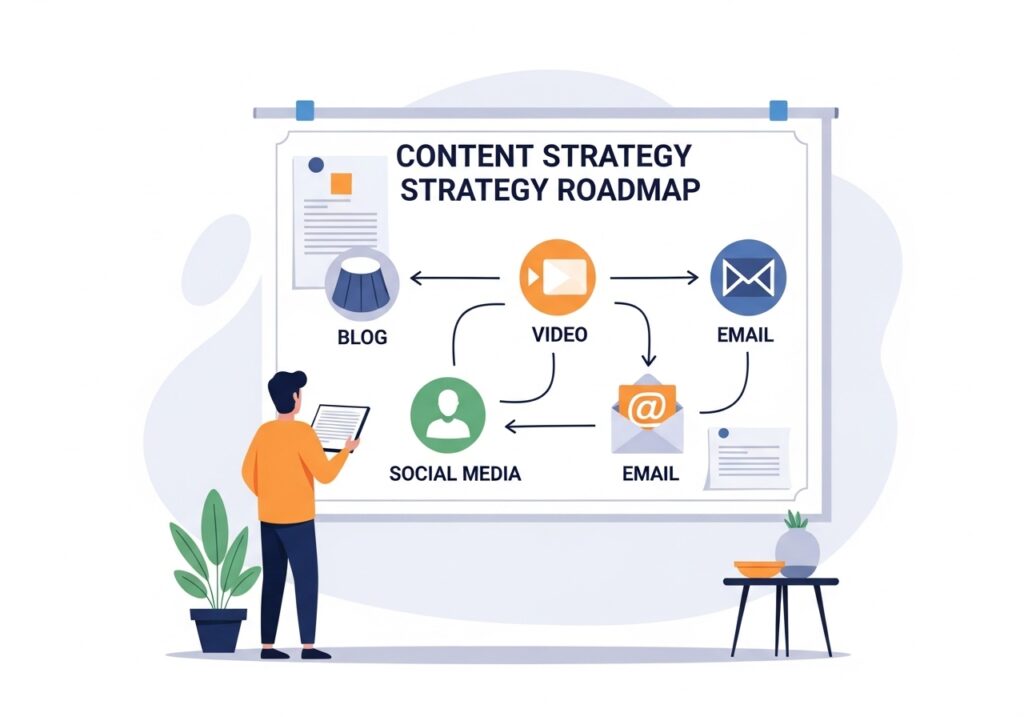
What Is a Content Marketing Strategy (And Why You Need One)?
A content marketing strategy is a plan for creating, publishing, and distributing valuable content to attract and retain a specific audience and ultimately drive profitable action.
Think of it like GPS for your marketing. Without it, you might be moving but probably in the wrong direction.
Here’s what a good strategy does for you:
- Brings the right people to your website
- Builds trust before anyone pulls out their wallet
- Compounds over time: old content keeps earning traffic
- Reduces ad spend by creating organic reach
How to Create a Content Marketing Strategy: Step-by-Step
Let’s get into the actual blueprint. Follow these steps in order and you’ll have a strategy most businesses never bother building.
Define Your Goals
Before you write a single word, ask yourself: What am I trying to achieve?
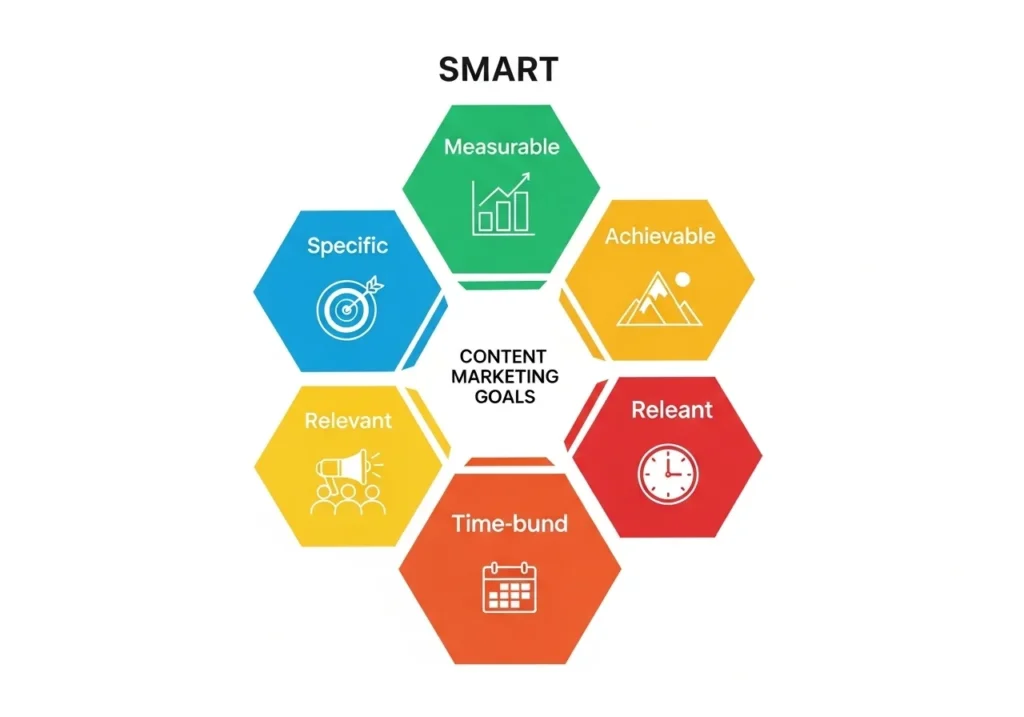
Your goals will shape every content decision you make. Common content marketing goals include:
- Brand awareness getting more people to know you exist
- Lead generation: collecting emails and inquiries
- Sales and conversions turning readers into buyers
- Customer retention: keeping existing customers engaged
- SEO and organic traffic ranking higher on Google
Know Your Target Audience
Great content doesn’t try to speak to everyone. It speaks directly to one person, your ideal reader.
Build a simple audience persona that includes:
- Age, location, and profession
- Biggest challenges and pain points
- Questions they Google at 2am
- Platforms they hang out on
- What kind of content they actually consume
Example Persona:
Sarah, 32, small business owner. She’s overwhelmed by marketing, has a tight budget, and wants practical, no-BS advice she can implement today.”
Every piece of content you create should feel like it was written just for Sarah.
Audit Your Existing Content
If you’ve already been creating content, don’t start from zero. Do a quick content audit first.
Ask these questions about each piece of existing content:
- Is it still accurate and up to date?
- Is it getting any traffic or engagement?
- Can it be improved, repurposed, or expanded?
- Does it align with your current goals?
Categorize everything into:
- Keep and optimize
- Update and republish
- Delete or redirect (thin, outdated, or irrelevant content)
Choose Your Content Types and Channels
Not all content is created equal, and not every platform suits every business. Focus on what works for your audience.
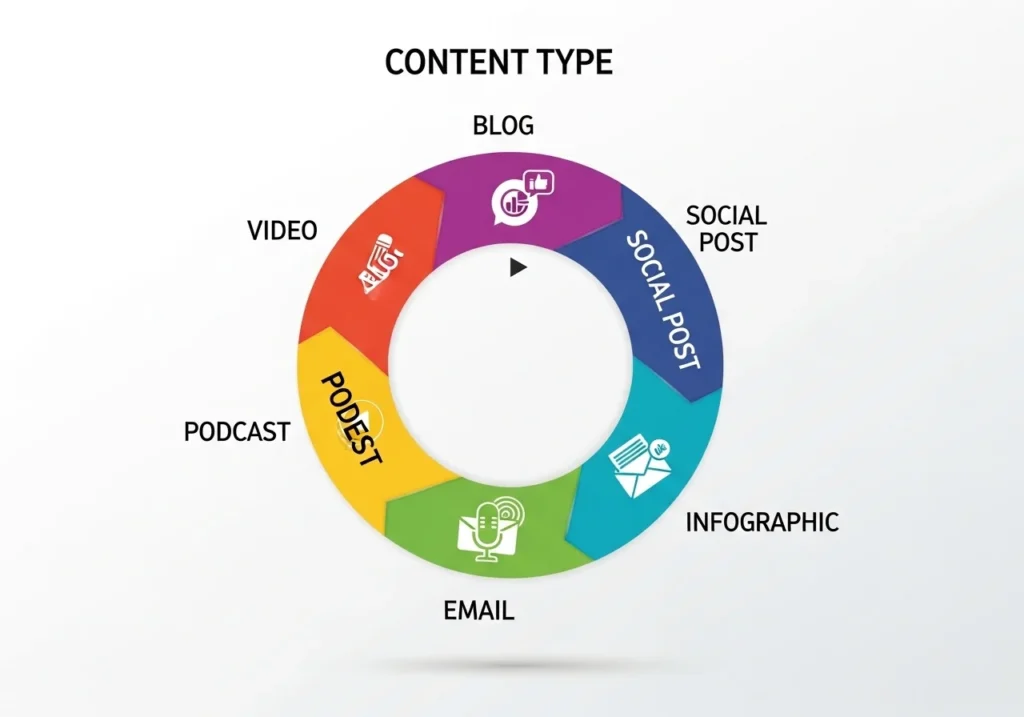
Popular content types:
| Content Type | Best For |
|---|---|
| Blog posts | SEO, long-form education |
| Short-form video | Social reach, engagement |
| Email newsletters | Retention, nurturing leads |
| Infographics | Pinterest, visual sharing |
| Podcasts | Authority, loyal audience building |
| Case studies | B2B trust and conversion |
| Social media posts | Brand awareness, community |
Do Keyword Research
This step is what separates content that gets found from content that gets ignored.
Keyword research basics:
- Head keywords short and high-volume (e.g., “content marketing”)
- Long-tail keywords specific and have lower competition (e.g., “how to create a content marketing strategy for small business”)
- Question keywords perfect for FAQs and featured snippets (e.g., “what is content marketing?”)
Free tools to use:
- Google Search (autocomplete + “People Also Ask”)
- Google Keyword Planner
- Ubersuggest
- AnswerThePublic
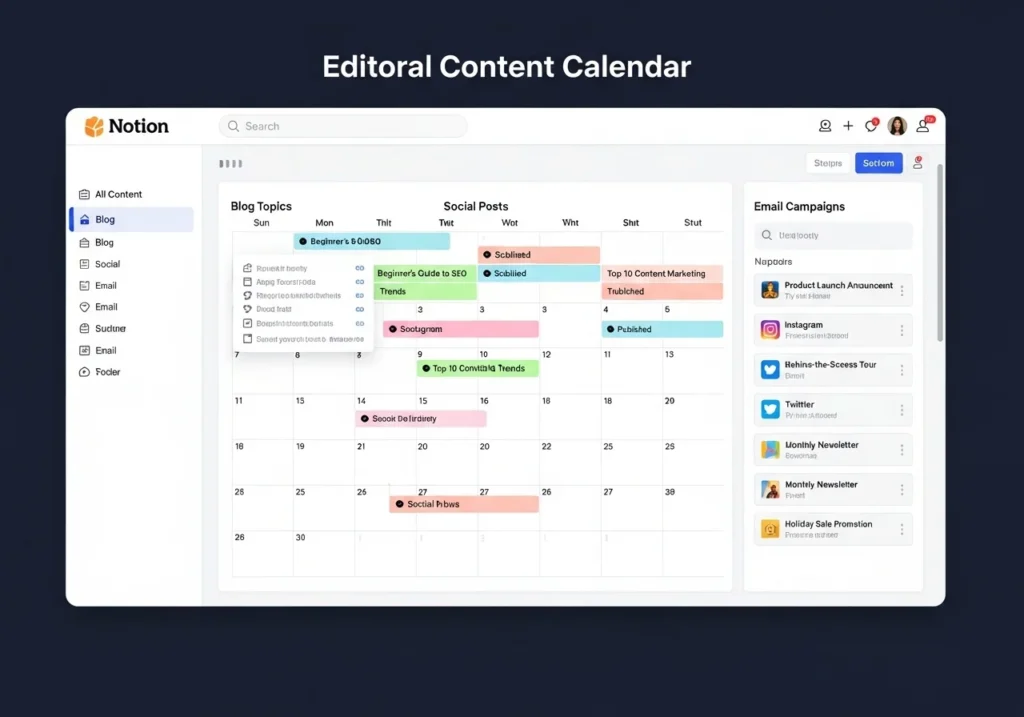
Build a content calendar.
Without a calendar, content marketing becomes reactive and inconsistent. Consistency is what builds an audience.
Your content calendar should include:
- Publish date
- Content title and format
- Target keyword
- Distribution channels
- Person responsible
Tools to manage your calendar:
- Notion (free, flexible)
- Trello (visual board-style)
- Google Sheets (simple and shareable)
- CoSchedule (paid, more powerful)
Create, Distribute, and Repurpose
Creating content is only half the battle. Distribution is where most people drop the ball.
The 80/20 rule of content: Spend 20% of your time creating and 80% distributing and promoting.
Distribution checklist for every piece of content:
- Share on all relevant social platforms
- Send to your email list
- Post in relevant online communities (Reddit, Facebook Groups, LinkedIn)
- Repurpose into other formats (blog → infographic → carousel → Reel)
- Reach out for backlinks or collaborations
Repurposing example:
One blog post → Twitter thread → LinkedIn carousel → Pinterest infographic → YouTube short → email newsletter snippet
Measure, Analyze, and Improve
A strategy without measurement is just guessing. Track what’s working and ruthlessly cut what isn’t.
Key metrics to monitor:
| Metric | What It Tells You |
|---|---|
| Organic traffic | How well your SEO is working |
| Time on page | Is your content engaging? |
| Bounce rate | Are readers finding what they need? |
| Leads generated | Is content driving business value? |
| Social shares | Is content resonating enough to share? |
| Email open rate | Is your subject line + content compelling? |
Best free tools:
- Google Analytics 4 (GA4)
- Google Search Console
- Meta Business Suite (for social)
Content Marketing Strategy: Common Mistakes to Avoid
Even smart marketers fall into these traps. Watch out for:
- Creating content without a goal: every piece needs a purpose
- Ignoring SEO, beautiful content no one finds is wasted effort
- Publishing inconsistently sporadic posting kills audience growth
- Never repurposing; you’re leaving massive reach on the table
- Chasing trends blindly stay on-brand and on-strategy
- Not building an email list: Social platforms can disappear; your list can’t
- Skipping the distribution step “publish and pray” is not a strategy
Real-World Content Marketing Strategy Example
Let’s make this tangible. Here’s how a fictional small business, a healthy meal prep service, might build their strategy:
- Goal: Generate 200 new leads/month through organic search
- Audience: Busy working parents aged 28 to 45 who want to eat healthy but have no time
- Content types: SEO blog posts, Pinterest infographics, Instagram Reels, weekly email newsletter
- Keywords: “easy meal prep ideas,” “healthy meal prep for beginners,” “meal prep for weight loss”
- Publish frequency: 2 blog posts/week + 5 social posts/week + 1 email/week
- Repurposing: Each blog → Pinterest pin + Instagram carousel
- Measure: Monthly GA4 review + email list growth tracking
Simple. Focused. Repeatable. That’s what a good strategy looks like.
Conclusion
A great content marketing strategy isn’t about doing everything; it’s about doing the right things consistently for the right audience, with a clear goal in mind.
Here’s your quick action checklist:
- Set clear, SMART goals
- Define your ideal audience persona
- Audit existing content
- Choose 2–3 channels to focus on
- Research your target keywords
- Build and maintain a content calendar
- Distribute and repurpose every piece
- Track metrics and refine monthly
You don’t need a massive team or a huge budget. You need a plan, and now you have one.
Frequently Asked Questions (FAQs)
What is a content marketing strategy?
A content marketing strategy is a documented plan that outlines what content you’ll create, who it’s for, how you’ll distribute it, and how you’ll measure success. It aligns your content efforts with specific business goals.
How long does it take to see results from content marketing?
Content marketing is a long-term game. Most businesses start seeing meaningful organic traffic results within 3–6 months of consistent publishing. SEO-focused content can compound and grow traffic for years after publishing.
How do I create a content marketing strategy on a small budget?
Start with free tools: Google Keyword Planner for research, Google Docs for writing, Canva for visuals, Buffer for scheduling, and GA4 for analytics. Focus on one or two channels and blog SEO, which has the best long-term ROI for small budgets.
How often should I publish content?
Consistency matters more than frequency. One high-quality, well-optimized blog post per week beats five rushed, thin posts. Choose a pace you can maintain for at least 6 months without burning out.
What’s the difference between content marketing and social media marketing?
Social media marketing is one channel within a broader content marketing strategy. Content marketing encompasses all formats: blogs, videos, podcasts, email, and infographics, while social media marketing focuses specifically on social platforms for distribution and engagement.