You’ve heard the buzz. Data scientist, the “sexiest job of the 21st century.” But where do you actually begin?
If you’ve Googled “how to learn data science” and ended up more confused than when you started, you’re not alone. The good news? It’s simpler than the internet makes it look as long as you follow the right path.
This guide cuts through the noise and gives you a realistic, step-by-step roadmap. Whether you’re a student, a career switcher, or just curious, you’ll walk away knowing exactly what to learn, in what order, and how long it takes.
Let’s get into it.
What Is Data Science (And Why Does It Matter)?
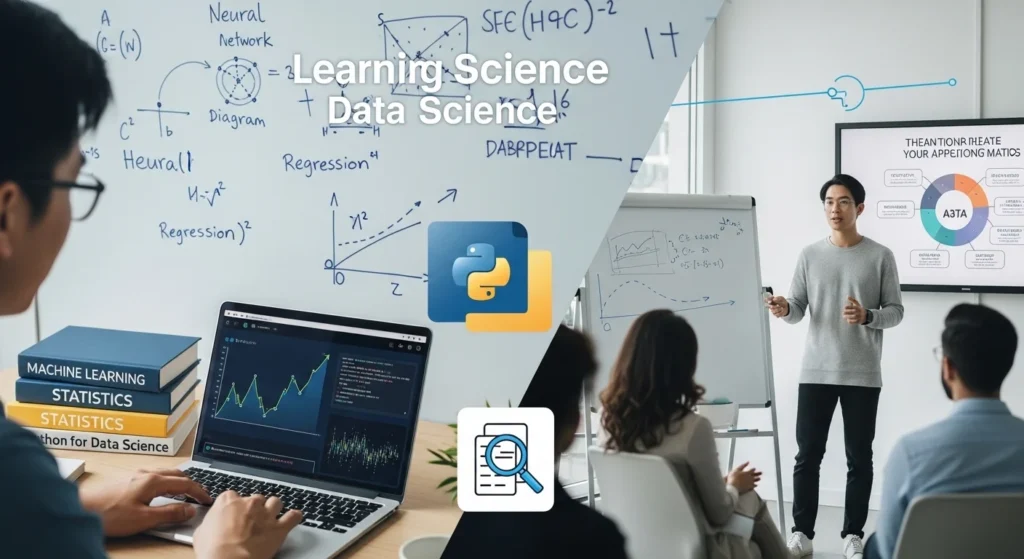
Data science is the practice of extracting useful insights from raw data using math, code, and domain knowledge. Think of it as detective work, but instead of solving crimes, you’re solving business problems.
Companies like Netflix, Spotify, and Amazon run on data science. It’s how Netflix knows what to recommend next. It’s how Spotify builds your Discover Weekly playlist.
Here’s why it’s worth learning right now:
- High salary potential $95K–$150K+ annually in the US
- Global demand needed in healthcare, finance, tech, retail, and more
- Job security data roles are recession-resistant and growing
- Creative and analytical, a rare blend that keeps work interesting
How to Learn Data Science: Your Step-by-Step Roadmap
This is the section that matters most. Follow these steps in order; don’t jump ahead, and don’t skip steps.
Learn Python Programming First
Python is the backbone of modern data science. It’s readable, beginner-friendly, and the most used language in the field by a wide margin.
What to learn:
- Variables, data types, and operators
- Lists, dictionaries, tuples
- Loops (for, while) and conditionals (if/else)
- Functions and basic OOP (object-oriented programming)
- File reading and writing
Best free resources:
- CS50P (Harvard) free on edX and excellent for absolute beginners
- freeCodeCamp Python Tutorial (YouTube, 4 hours)
- Kaggle’s Python Micro-Course: hands-on, completely free
Build Your Math Foundation (Without Losing Your Mind)
Here’s the honest truth: you don’t need a math degree. But you do need the fundamentals.
Focus on these three areas:
Statistics & Probability
- Mean, median, mode
- Standard deviation and variance
- Normal distribution and probability basics
- Hypothesis testing and p-values
Linear Algebra (Basics Only)
- Vectors and matrices
- Dot products and matrix multiplication
- Used heavily in machine learning models
Calculus (Just the Concept)
- Understanding derivatives (how things change)
- Gradient descent: how ML models “learn”
- You won’t code it from scratch, so conceptual understanding is enough
Best resources:
- Khan Academy Statistics & Probability (100% free, excellent explanations)
- StatQuest with Josh Starmer (YouTube): the clearest ML math explanations on the internet
- 3Blue1Brown’s Essence of Linear Algebra (YouTube): visual and beautiful
Master Data Analysis with Pandas and NumPy
This is where you start actually working with data. And it’s incredibly satisfying.
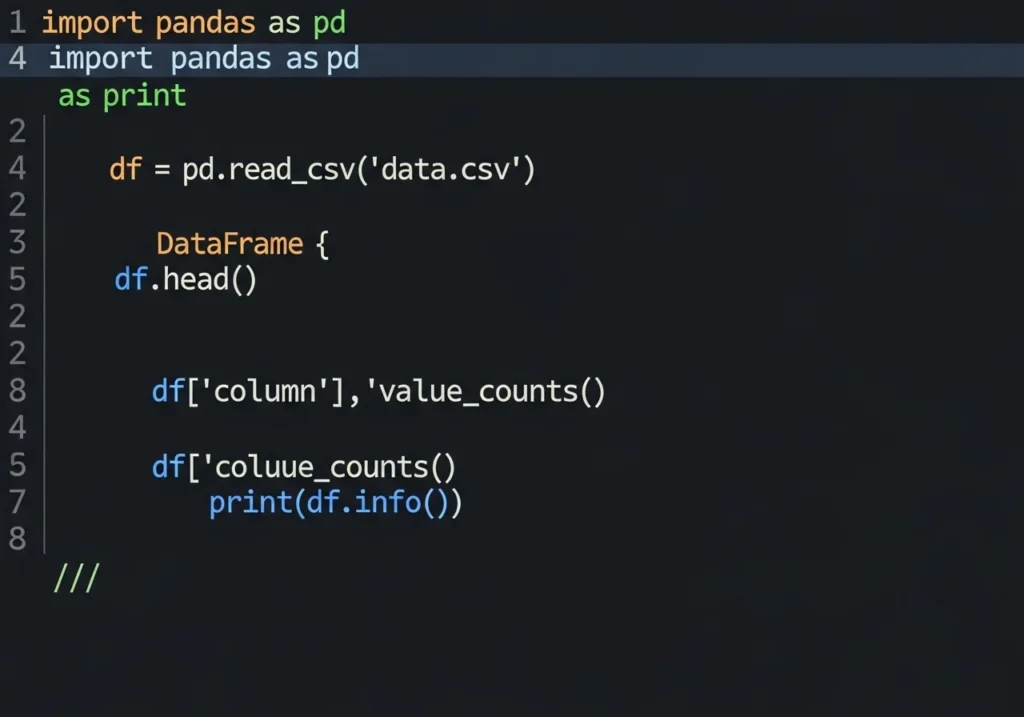
NumPy numerical computing
- Arrays and matrix operations
- Mathematical functions
- Foundation for every other data science library
Pandas data manipulation
- Loading CSV, Excel, and JSON files
- Cleaning messy data (missing values, duplicates)
- Filtering, grouping, and transforming data
- Merging and joining datasets
Practice datasets to use:
- Titanic Dataset (Kaggle)
- Netflix Movies Dataset (Kaggle)
- World Population Data (Our World in Data)
- COVID-19 Statistics (Johns Hopkins GitHub)
Learn SQL: Don’t Skip This
This is the most skipped skill by beginners. And it’s the one that costs them jobs.
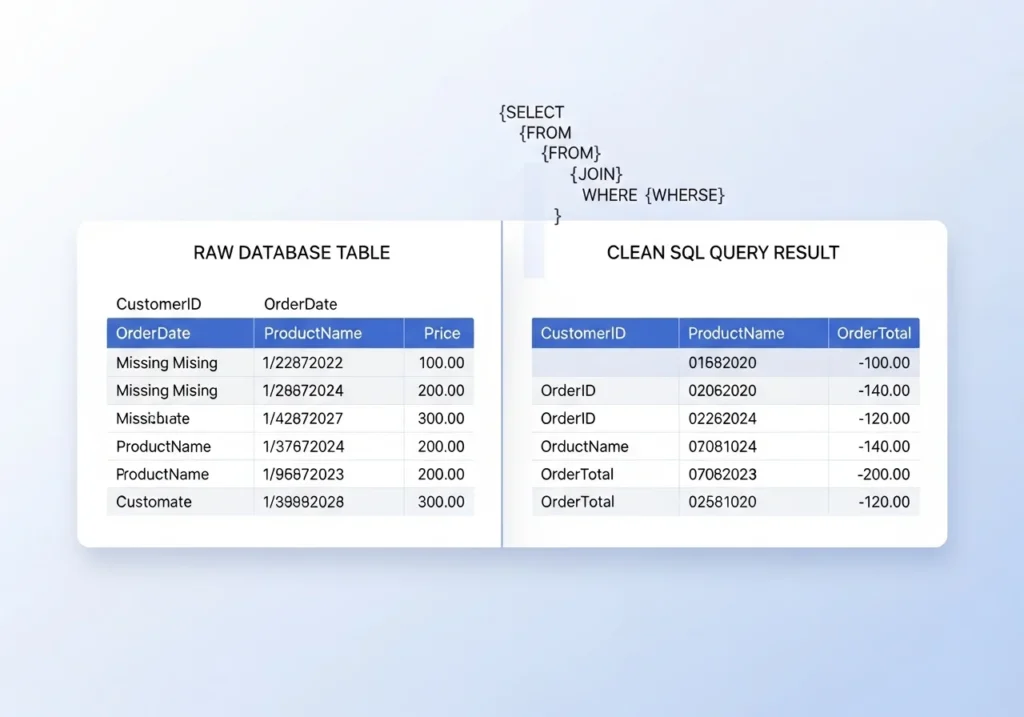
Nearly every data science role requires SQL. It’s how you query databases, pull reports, and interact with company data.
Key SQL topics:
- SELECT, WHERE, ORDER BY, GROUP BY
- Joins (INNER, LEFT, RIGHT, FULL)
- Subqueries and CTEs (Common Table Expressions)
- Window functions (for advanced analysis)
Free learning resources:
- Mode Analytics SQL Tutorial: practical, real-world focused
- SQLZoo interactive exercises in the browser
- Kaggle SQL Micro-Course project-based learning
Create Stunning Data Visualizations
Numbers alone don’t persuade people. A well-designed chart does.
Python visualization libraries:
| Library | Best For |
|---|---|
| Matplotlib | Basic, customizable charts |
| Seaborn | Statistical plots and heatmaps |
| Plotly | Interactive, web-ready visuals |
| Altair | Declarative, elegant grammar |
Dashboard tools (no code required):
- Tableau Public free version, industry standard
- Power BI Desktop free and part of Microsoft ecosystem
- Google Looker Studio free, web-based
Dive Into Machine Learning
Here’s where data science becomes genuinely powerful and genuinely fun.
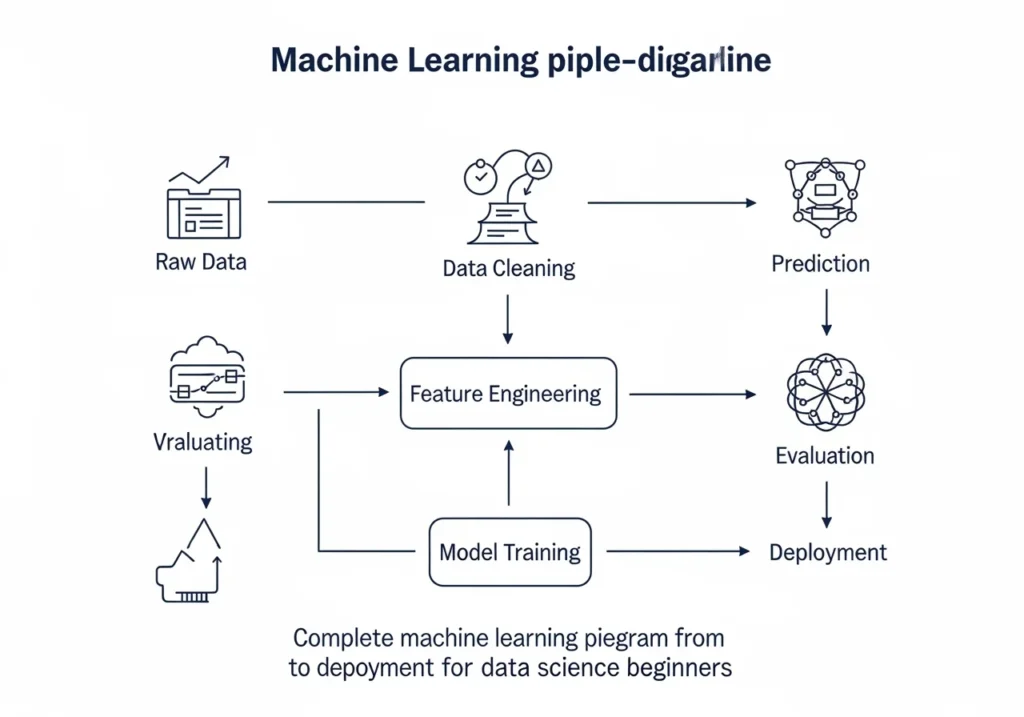
Machine learning (ML) teaches computers to find patterns and make predictions on their own.
Start with Scikit-learn (sklearn):
Supervised Learning (labeled data):
- Linear regression predicts continuous values (house prices)
- Logistic regression classifies categories (spam/not spam)
- Decision Trees and Random Forests
- Support Vector Machines (SVM)
Unsupervised Learning (no labels):
- K-Means Clustering
- Principal Component Analysis (PCA)
Model Evaluation:
- Train/test split
- Cross-validation
- Accuracy, precision, recall, F1-score
- Confusion matrix
Best course: Andrew Ng’s Machine Learning Specialization on Coursera is free to audit, the gold standard for beginners worldwide.
Build Real Projects and a Portfolio
This is the step that actually gets you hired. Not certificates. Not course completions. Projects.
5 beginner-friendly project ideas:
- Titanic Survival Prediction classic binary classification project
- House Price Predictor regression with real estate data
- Customer churn analysis is a favorite in banking and telecom
- Movie Recommendation System collaborative filtering basics
- COVID-19 Data Dashboard data visualization + storytelling
Where to publish your work:
- GitHub create a clean README for every project
- Kaggle notebooks are great for community visibility
- A personal portfolio website, even a simple one stands out
How Long Does It Take to Learn Data Science?
Let’s be honest: not 30 days, despite what some YouTube thumbnails claim.
Here’s a realistic timeline based on 1–2 hours of daily study:
| Timeline | Milestone |
|---|---|
| Month 1–2 | Python basics + Pandas + NumPy |
| Month 3 | SQL and statistics fundamentals |
| Month 4–5 | Data visualization + first projects |
| Month 6–8 | Machine learning basics + Scikit-learn |
| Month 9–12 | Advanced projects + portfolio + job applications |
The people who succeed aren’t the smartest; they’re the most consistent. One hour every day beats a 10-hour weekend marathon.
Best Free Platforms to Learn Data Science in 2025
You don’t need to spend a rupee (or dollar) to get started. These platforms are genuinely world-class:
- Kaggle free courses, datasets, competitions, and community
- Google’s Machine Learning Crash Course: free, practical, well-structured
- fast.ai project-first approach to deep learning (intermediate)
- edX / Coursera audit courses for free (pay only for certificates)
- YouTube StatQuest, sentdex, Corey Schafer, 3Blue1Brown
- DataCamp has a limited free tier but very beginner-friendly structure
Common Mistakes That Slow Beginners Down
Avoid these; they cost months of wasted time:
- Tutorial hell watching videos without building anything. Fix code along, then rebuild from scratch.
- Skip SQL; it’s in almost every job description. Don’t ignore it.
- Over-collecting resources: You don’t need 10 courses. You need one good one, completed.
- Not using GitHub: Your portfolio is invisible without it.
- Waiting until you’re “ready” to apply: apply after 3–4 solid projects.
Conclusion
Learning data science is a journey, but it’s one of the most rewarding ones you can take.
Here’s your complete roadmap one more time:
- Python your primary tool
- Math foundations: statistics, linear algebra, basic calculus
- Pandas & NumPy data analysis essentials
- SQL non-negotiable for any data role
- Data visualization turn numbers into stories
- Machine learning Scikit-learn, and the core algorithms
- Real projects and a GitHub portfolio your ticket to the job market
You don’t need to learn everything at once. Start with Python today, just 30 minutes. That one decision, made consistently, will change your career.
Frequently Asked Questions
Can I learn data science on my own without a degree?
Yes, and thousands of people do it every year. Self-taught data scientists are highly competitive in the job market when they have a strong portfolio of real projects. A degree is helpful but not required.
How long does it realistically take to learn data science from scratch?
With consistent effort of 1–2 hours per day, most beginners reach a job-ready level within 9–12 months. If you already know basic programming, this timeline shortens to 6–8 months.
Do I need advanced math to learn data science?
Not advanced math, but foundational math matters. Focus on statistics, basic linear algebra, and understanding (not coding) calculus concepts. Khan Academy and StatQuest make all of this accessible even if you haven’t studied math in years.
Is Python or R better for learning data science?
Python is the better choice for most beginners in 2026. It’s more versatile, widely used in industry, and has a larger community. R is still used heavily in academia and specialized statistical research, but Python opens more doors.
What is the best first data science project for beginners?
The Titanic Survival Prediction dataset on Kaggle is the most recommended first project. It teaches data cleaning, exploratory analysis, and binary classification, all core data science skills in one self-contained, well-documented project.