Every blog post that ranks on Google Page 1 has one thing in common
Someone did their keyword research right.
Keyword research for SEO is the foundation of every successful
digital marketing strategy. It tells you exactly what your audience
is searching for, how competitive those searches are, and how to
Position your content to win. Skip this step and you’re essentially
publishing content into the void hoping someone stumbles across it.
In this guide, you’ll learn what keyword research really is, why
It’s absolutely crucial for SEO, and here’s how to do it step by step.
even if you’re starting from scratch.

What Is Keyword Research for SEO?
Keyword research is the process of finding and analyzing the
words and phrases people type into search engines like Google,
Bing, or YouTube.
The goal is simple: understand what your target audience is
searching for then create content that matches those searches
better than anyone else.
Think of it like this. You’re opening a pizza shop. Before you
print the menu; you’d want to know what people in your area
actually want to eat. Keyword research does exactly that.
but for your website content.
What Information Does Keyword Research Give You?
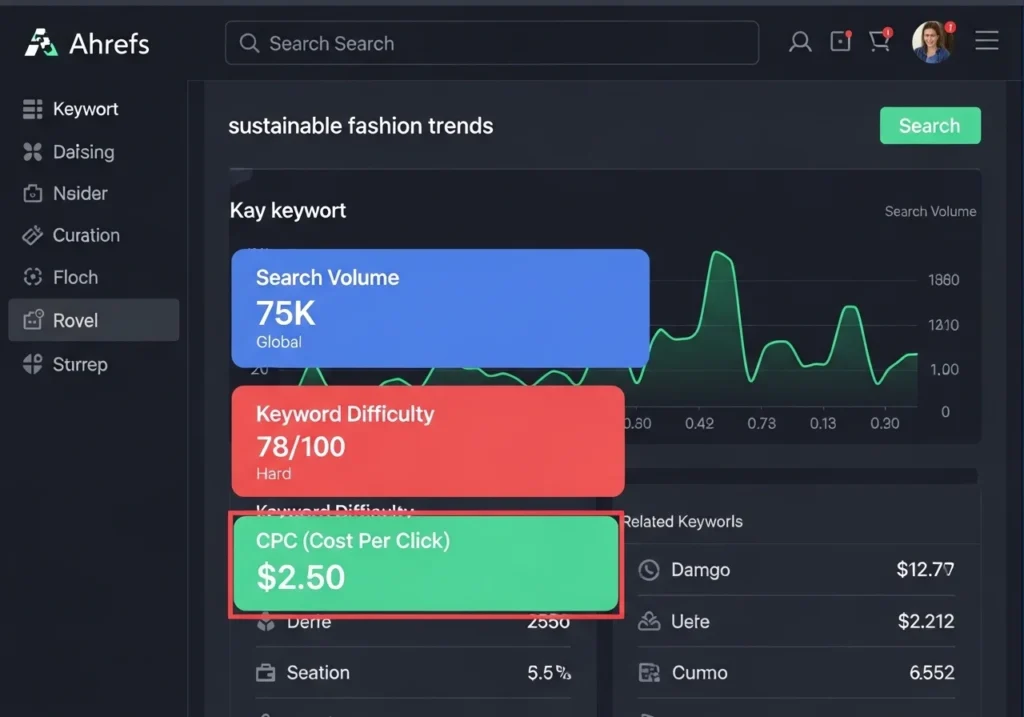
- Search Volume: How many people search for a term monthly
- Keyword Difficulty: how hard it is to rank for that term
- Search Intent: What the user actually wants to find
- Trend Data: Is interest growing or declining over time
- CPC (Cost Per Click): how valuable advertisers think
the keyword is - Related Keywords: other terms your audience uses
Without this data, you’re guessing. With it, you’re making
informed decisions that save time and generate real results.
Why Is Keyword Research Important for SEO?
This is the question that changes how people approach content forever.
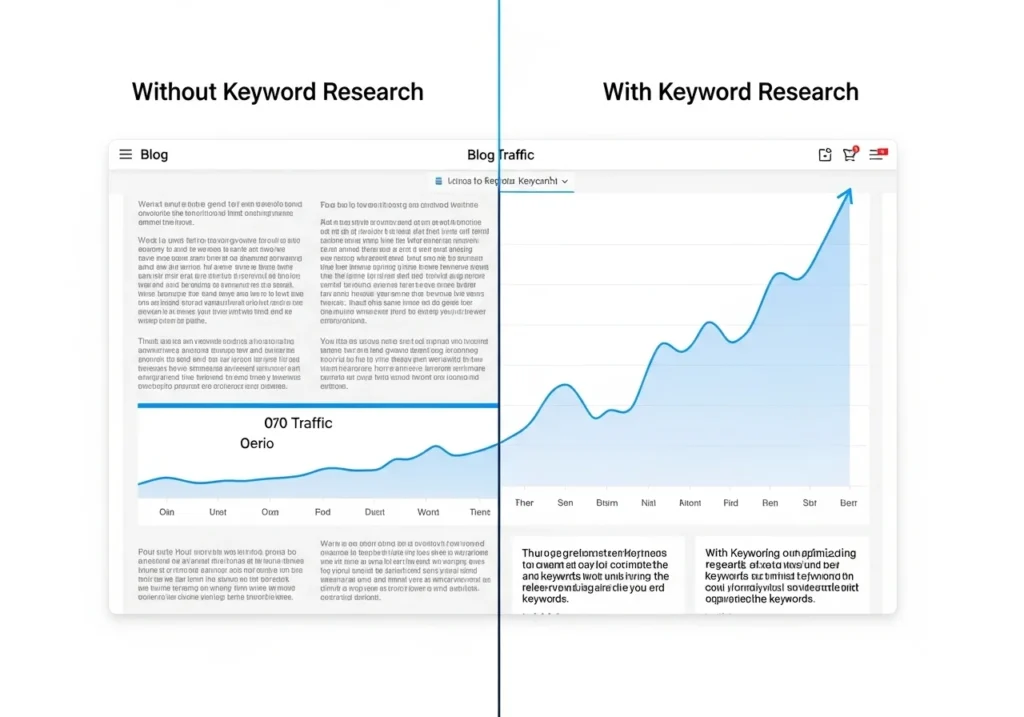
The importance of keyword research in SEO cannot be overstated.
It’s not just a nice-to-have; it’s the difference between a
website that grows organically and one that sits on Page 5
collecting digital dust.
6 Reasons Keyword Research Is Nonnegotiable
1. It tells you what your audience actually wants.
You might think you know what your readers want. Keyword
Research proves it.
People are brutally honest in search bars. They type their
real questions, fears, and needs. This data is pure gold for
content creators and marketers.
2. It Drives Targeted, High-Intent Traffic
Not all traffic is equal. Someone searching “buy running shoes for flat feet” is far more likely to make a purchase than
someone searching “shoes.”
Keyword research helps you find these high-intent queries and
Build content designed to convert, not just attract random visitors.
3. It Saves You From Wasting Time on Content Nobody Reads
Imagine spending 10 hours writing a perfect blog post that
gets zero searches per month. It happens more than you’d think.
Keyword research ensures every piece of content you create
has an actual audience waiting for it.
4. It Helps You Beat Your Competitors
By analyzing what keywords your competitors rank for, you
can find their weaknesses topics they haven’t covered,
questions they haven’t answered, and opportunities they’ve missed.
5. It Guides Your Entire Content Strategy
Keyword research isn’t just for blog posts. It shapes:
- Website page structure
- Product descriptions
- Video titles on YouTube
- Social media captions
- Email subject lines
6. It Directly Impacts Your Google Rankings
Google’s algorithm matches search queries to relevant content.
If your page doesn’t use the right keywords in the right places,
Google simply won’t know to show it for those searches.
Types of Keywords You Need to Know
Not all keywords work the same way. Understanding these types
will make your strategy sharper and smarter.
Short-Tail vs. Long-Tail Keywords
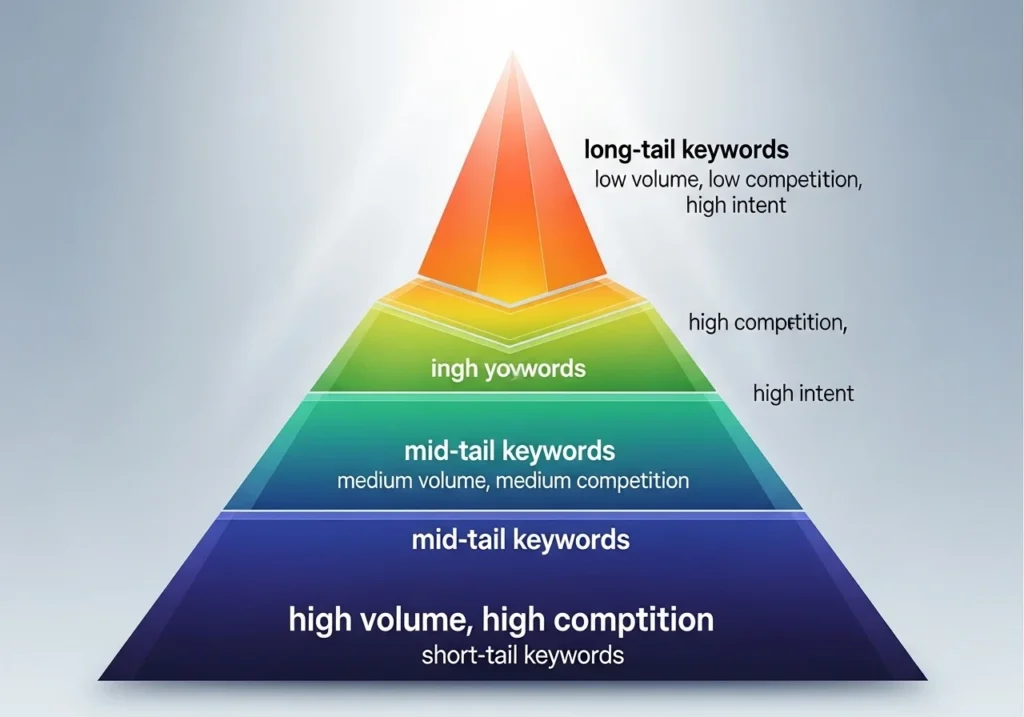
| Type | Example | Search Volume | Competition | Conversion |
|---|---|---|---|---|
| Short-tail | “SEO” | Very High | Very High | Low |
| Mid-tail | “SEO tips for beginners” | Medium | Medium | Medium |
| Long-tail | “how to do keyword research for a new blog” | Low | Low | High |
The sweet spot for most websites? Long-tail keywords.
They have lower competition, more specific intent, and visitors
who find them are usually ready to take action. New websites
especially should focus here first.
Other Keyword Types Worth Knowing
- LSI Keywords (Latent Semantic Index) related terms that
support your main keyword (e.g., “search engine optimization”
alongside “SEO”) - Branded Keywords include a brand name
(e.g., “Nike running shoes”) - Geo-targeted Keywords include a location
(e.g., “SEO agency in Dubai”) - Question Keywords start with who, what, where, why, how—great for featured snippets
- Transactional Keywords signal buying intent
(e.g., “buy,” “discount,” “best price”)
How to Do Keyword Research for SEO: Step by Step
Let’s get practical. Here’s a clear, repeatable process you can
Follow for any website, niche, or content type.
Start with a seed keyword.
A seed keyword is a broad topic related to your niche.
It’s your starting point, not your final target.
Examples:
- Niche: Fitness Seed keyword: “weight loss”
- Niche: Tech blog Seed keyword: “Python programming”
- Niche: Food blog Seed keyword: “vegan recipes”
Write down 5 to 10 seed keywords before opening any tool.
Use keyword research tools.
Plug your seed keywords into research tools to find real searches.
data. Here are the best options:
Free Tools:
- Google Keyword Planner: direct data from Google itself
- Ubersuggest beginner-friendly with solid free features
- Google Search (Autocomplete): type your seed keyword
and watch suggestions appear - AnswerThePublic find question based keywords visually
- Google “People Also Ask” real questions real people ask
Paid Tools (Worth It):
- Ahrefs the most comprehensive keyword and backlink tool
- SEMrush great for competitor keyword analysis
- Moz Keyword Explorer trusted difficulty scores
Analyze Search Intent
This is the step most beginners skip and it’s why their
Content doesn’t rank.
Search intent = the real reason behind a search query.
Google categorizes intent into four types:
| Intent Type | What User Wants | Example Query |
|---|---|---|
| Informational | Learn something | “What is keyword research?” |
| Navigational | Find a specific site | “Ahrefs login” |
| Commercial | Compare before buying | “best SEO tools 2026” |
| Transactional | Buy or sign up | “Buy an Ahrefs subscription.” |
Check Keyword Difficulty and Search Volume
Once you have a list of keywords, filter them using two key metrics:
- Search Volume: Aim for 100–10,000 searches/month for new
sites. High-volume keywords are too competitive to win early. - Keyword Difficulty (KD): For new websites, target KD
under 30. For established sites, you can go higher.
The ideal keyword formula:
Decent Search Volume + Low Difficulty + Clear Intent
= High-opportunity keyword
Spy on Your Competitors
Go to Ahrefs, SEMrush, or Ubersuggest. Enter a competitor’s URL.
See exactly which keywords are bringing them traffic.
Look for:
- Keywords they rank for that you don’t
- Topics they rank for with weak, thin content
- Questions they haven’t answered in their content
This is called a content gap analysis and it’s one of the
fastest ways to find keyword opportunities others have missed.
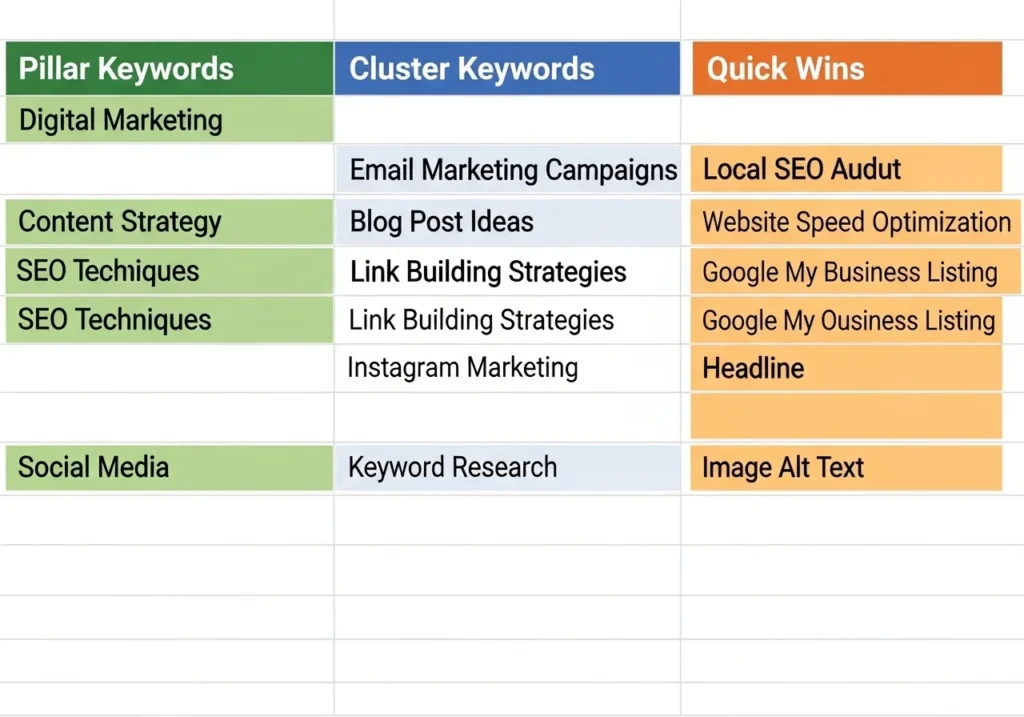
Build Your Keyword List and Prioritize
Organize your keywords into groups:
- Pillar keywords: broad, high-volume, long-term targets
- Cluster related, lower-volume, easier-to-rank keywords
- Quick wins, low competition, immediate opportunity
This becomes your content calendar. Write one piece of content
per keyword cluster. Over time, your site builds authority
across the whole topic, and Google rewards that.
Where to Use Keywords After Your Research
Finding keywords is step one. Using them correctly is step two.
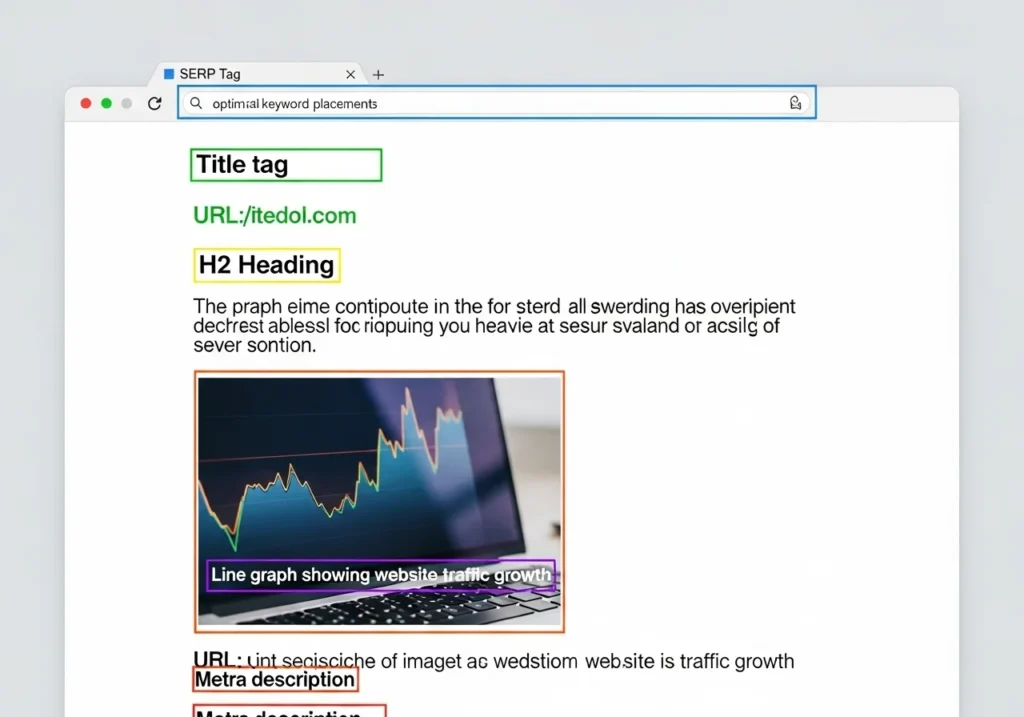
The Right Places to Use Your Target Keyword
- Title Tag (H1) include your main keyword naturally
- URL Slug short and keyword-rich
(e.g.,/keyword-research-seo) - Meta Description mention the keyword once, naturally
- The first 100 Words signal relevance to Google early
- H2 and H3 Headings use variations, not exact repeats
- Image alt text describes images with relevant keywords
- Throughout the Content naturally, every 200–300 words
- Anchor Text for Internal Links: keyword-rich but varied
What NOT to Do
- Keyword stuffing: repeating a keyword unnaturally
makes your content unreadable and gets penalized - Ignoring LSI keywords, use related terms to build
topical depth - Using exact-match keywords only natural language
variations actually help rankings - Targeting one keyword per post and stopping support
it with 3 to 5 related secondary keywords
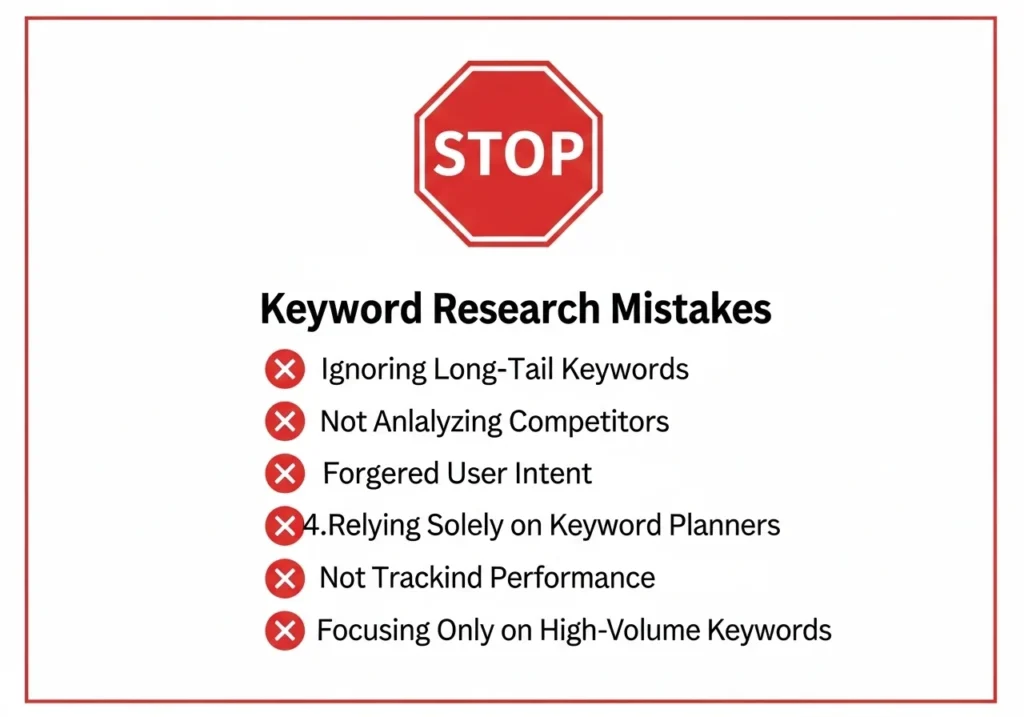
Common Keyword Research Mistakes to Avoid
Even experienced marketers make these. Learn them now and skip
the frustrating trial-and-error phase.
- Targeting keywords that are too competitive too early
new sites can’t beat domain authority 80+ sites overnight - Ignoring search intent writing an informational post
A transactional keyword won’t rank - Only targeting short-tail keywords; these are crowded
and hard to convert - Never updating your keyword research trends shift,
search behavior changes, and so should your strategy - Forgetting local keywords if you serve a local market,
geo-targeted terms are lower competition and higher intent - Skipping question keywords “how to,” “what is,” and
“why does” queries often trigger featured snippets
Conclusion
Keyword research for SEO isn’t a one-time task; it’s an
ongoing strategy that powers everything you publish online.
Here’s what you covered in this guide:
- What keyword research is and how it works
- Why the importance of keyword research in SEO is undeniable
- The different types of keywords and when to use them
- A 6-step process to research keywords like a professional
- Where to place keywords for maximum SEO impact
- The most common mistakes and how to avoid them
The websites that dominate Google aren’t lucky. They’re strategic.
They research before they write. They understand their audience
before they create.
Start your keyword research today. Even 30 minutes with a free tool like Ubersuggest can completely transform your content strategy. Your next page 1 ranking begins with one well-chosen keyword.
Frequently Asked Questions (FAQs)
What is keyword research in SEO?
Keyword research in SEO is the process of discovering the words and
phrases people use in search engines, then using that data to create
content that ranks for those queries. It helps you understand audiences.
demand, competition levels, and search intent before creating content.
Why is keyword research important for SEO?
Keyword research is important because it ensures your content targets
real search queries with actual traffic potential. Without it, you risk
creating content nobody searches for. It guides your content strategy.
improves rankings, drives targeted traffic, and ultimately leads to
more conversions and revenue.
How often should I do keyword research?
You should do keyword research before creating any new content and
Review your existing keyword strategy every 3 to 6 months. Search
trends change, new competitors emerge, and Google updates can shift
Which keywords have the best opportunity over time?
What are the best free keyword research tools?
The best free keyword research tools include Google Keyword Planner
(most accurate volume data), Ubersuggest (beginner-friendly),
AnswerThePublic (great for question keywords), and Google Autocomplete (instant real-world suggestions directly from Google).
What is the difference between short-tail and long-tail keywords?
Short-tail keywords are broad, 1- to 2-word phrases with very high
search volume and competition (e.g., “SEO”). Long-tail keywords
are specific, 3+ word phrases with lower volume but much lower
competition and higher conversion rates (e.g., “how to do keyword
research for a new blog”). Beginners should focus on long tail first.