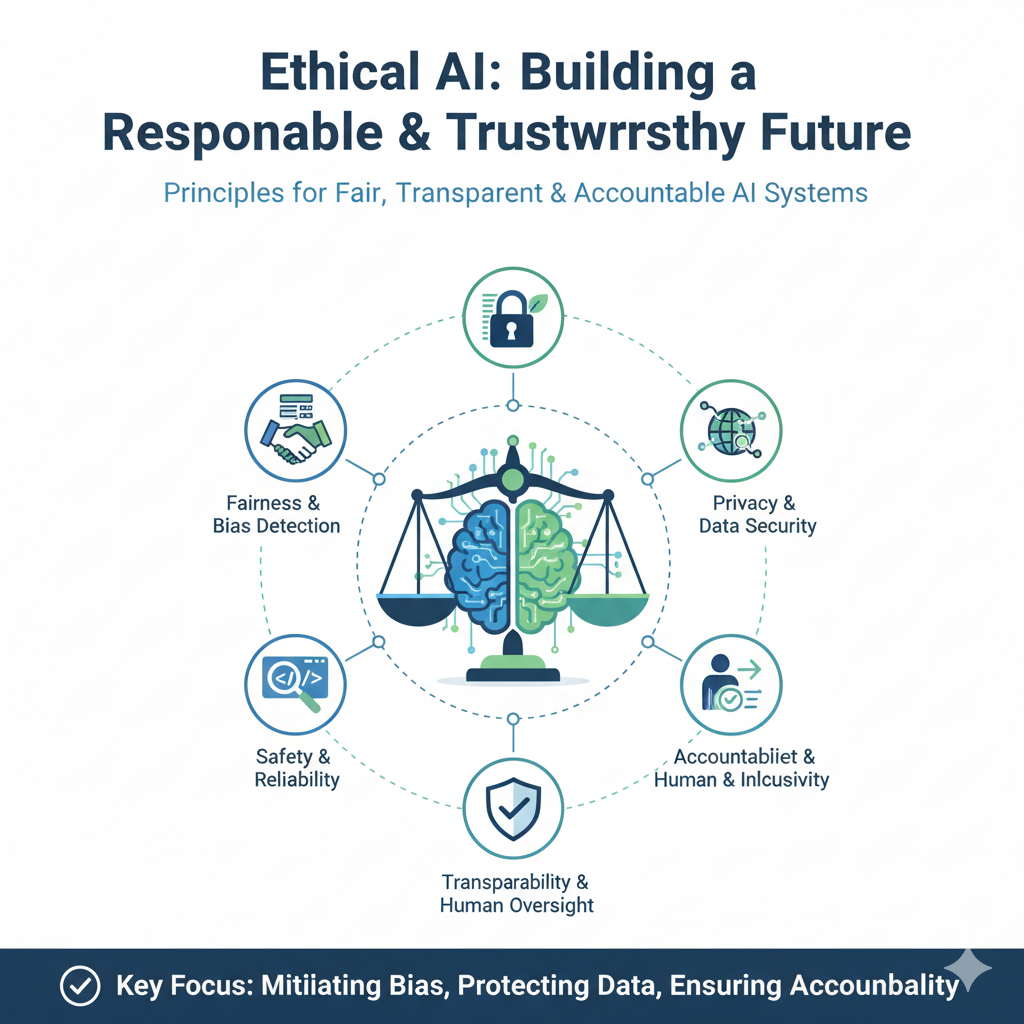
Discover how Ethical AI is shaping our technological future. This guide explores 8 key areas where responsible AI practices are creating fairer, more transparent, and accountable technology that benefits all of humanity. Learn why Ethical AI matters for business innovation and social progress.
Introduction: From “Can We?” to “Should We?” – The Rise of a New Paradigm
The first wave of artificial intelligence was driven by a singular, powerful question: “Can we build it?” The results have been breathtaking, with AI systems now capable of composing symphonies, diagnosing diseases, and driving cars. However, as these technologies weave themselves into the very fabric of human society, a more profound and urgent question has emerged: “Should we build it, and if so, how?” This pivotal shift marks the ascent of Ethical AI from a niche concern to a foundational principle that is actively reshaping the trajectory of technological development.
Ethical AI is not a single product or a checkbox for compliance. It is a multidisciplinary framework for designing, developing, and deploying artificial intelligence that is aligned with human values, rights, and societal well-being. It encompasses principles like fairness, accountability, transparency, privacy, and beneficence. In 2024 and beyond, Ethical AI is no longer an optional accessory; it is the essential guardrail and steering mechanism for our collective technological future. This article explores eight critical ways the principles of Ethical AI are fundamentally shaping the technology we create and how we interact with it, ensuring that innovation serves humanity, and not the other way around.
1. Mitigating Algorithmic Bias and Promoting Fairness
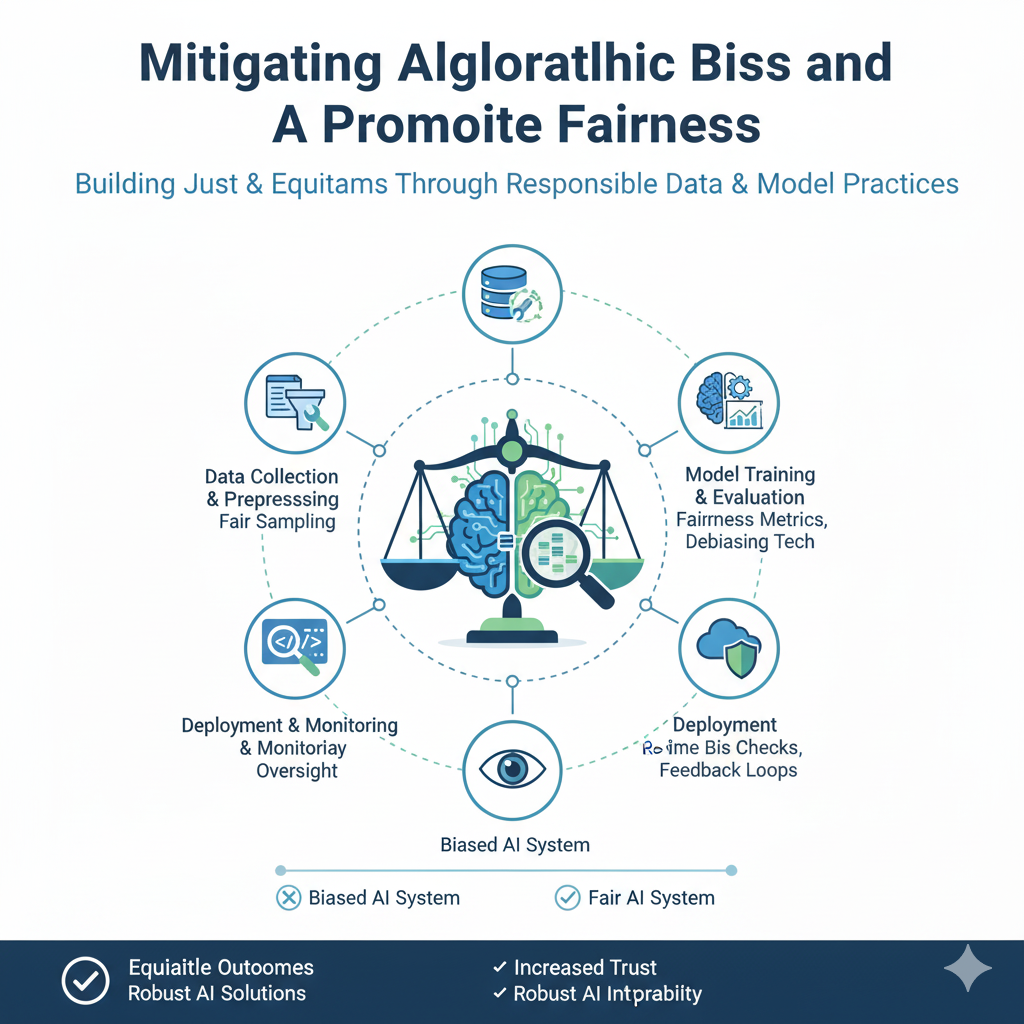
The Challenge: Traditional AI models can perpetuate and even amplify societal biases present in their training data. A hiring algorithm trained on historical data from a male-dominated industry might unfairly penalize female candidates. A loan-approval model might systematically disadvantage certain demographic groups. This creates a future of automated inequality.
How Ethical AI is Shaping the Future:
Ethical AI proactively addresses this by embedding fairness as a non-negotiable requirement throughout the AI lifecycle.
- Technical Interventions: Engineers are now employing sophisticated techniques like pre-processing (cleaning and re-weighting training data to remove biases), in-processing (incorporating fairness constraints directly into the model’s objective function), and post-processing (adjusting model outputs to ensure equitable results across groups).
- Diverse Teams and Audits: The practice of Ethical AI mandates the formation of diverse development teams to spot potential biases that homogenous teams might miss. Furthermore, independent algorithmic audits are becoming standard practice, where third parties rigorously test models for discriminatory outcomes before they are deployed.
- Impact: The future shaped by this principle is one where technology provides equal opportunity. It leads to hiring tools that focus on skills, judicial risk-assessment tools that are truly impartial, and financial systems that evaluate individuals based on merit rather than background.
2. Ensuring Transparency and Explainability (XAI)
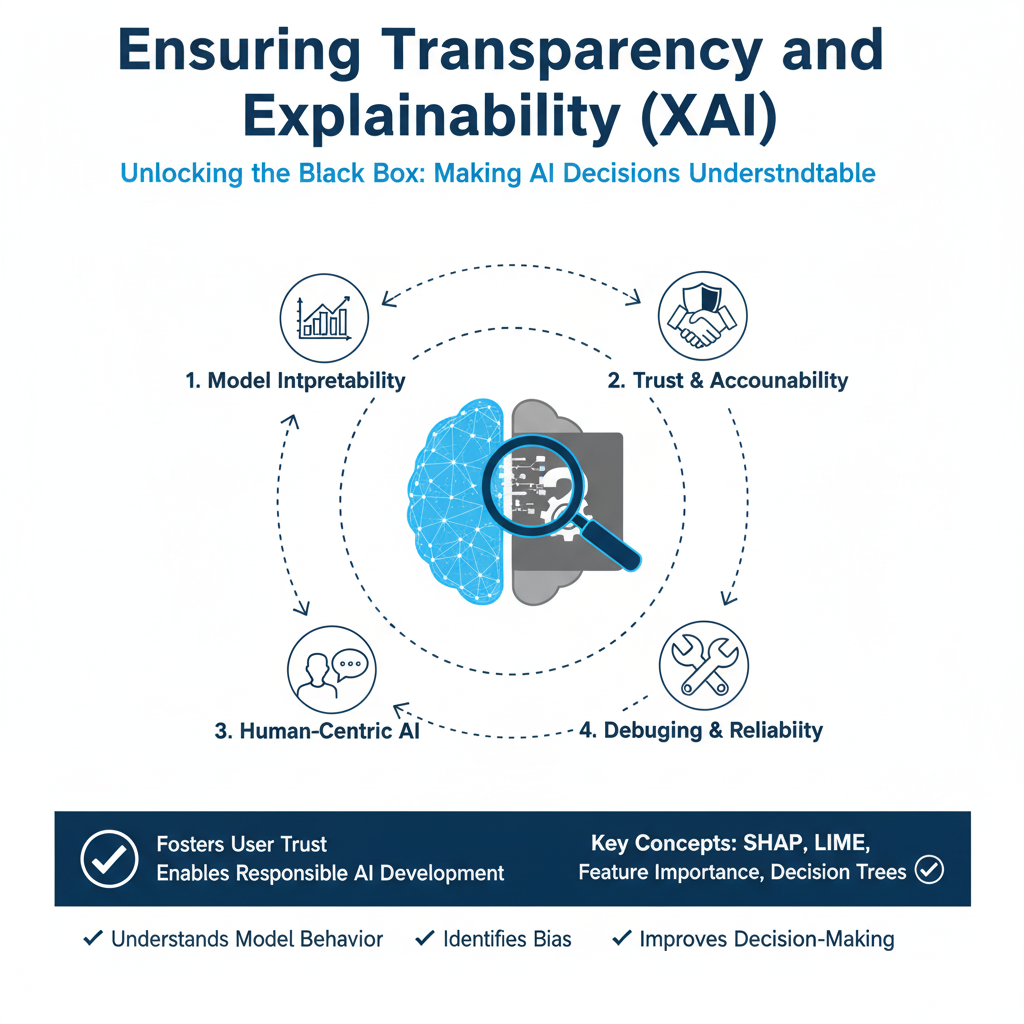
The Challenge: The “black box” problem of complex AI models, particularly deep learning systems, has been a major source of distrust. When an AI denies a loan application or a medical diagnosis, stakeholders have a right to know “why?” Without explanations, accountability is impossible.
How Ethical AI is Shaping the Future:
Ethical AI demands a move away from opaque systems toward transparent and explainable AI (XAI).
- Development of XAI Techniques: There is a concentrated research and development effort into creating models and tools that can explain their reasoning. This includes generating counterfactual explanations (“Your loan was denied because your income is below $X. It would have been approved if it were above $Y.”) and using simpler, interpretable models where high-stakes decisions are made.
- “Right to Explanation”: The principles of Ethical AI are driving legislation and corporate policies that establish a user’s “right to an explanation” for consequential automated decisions. This is shaping the design of AI systems to inherently include logging and explanation-generating capabilities.
- Impact: The future will see a rise in “glass box” AI, especially in critical fields like healthcare, finance, and criminal justice. This builds trust, enables humans to better understand and oversee AI recommendations, and allows for the correction of errors, making technology more reliable and accountable.
3. Upholding Privacy and Data Governance
The Challenge: AI’s hunger for data often conflicts with the fundamental human right to privacy. Indiscriminate data collection and the potential for re-identification from anonymized datasets pose significant risks.

How Ethical AI is Shaping the Future:
Ethical AI reframes the relationship between data and innovation, advocating for privacy by design.
- Federated Learning and Differential Privacy: New technological paradigms are emerging directly from Ethical AI concerns. Federated learning allows AI models to be trained across decentralized devices (like millions of smartphones) without the raw data ever leaving the user’s device. Differential privacy adds a calculated amount of statistical noise to datasets, making it impossible to identify any single individual while still enabling accurate aggregate analysis.
- Data Minimization and Purpose Limitation: The Ethical AI framework encourages companies to collect only the data that is strictly necessary for a specified, legitimate purpose, rather than hoarding data for unknown future use. This minimizes the “attack surface” for data breaches and respects user autonomy.
- Impact: The future shaped by these principles is one where we can benefit from personalized AI services without surrendering our personal information. It enables secure medical research on sensitive patient data and builds consumer trust by demonstrating respect for their digital boundaries.
4. Establishing Robust Accountability and Legal Frameworks
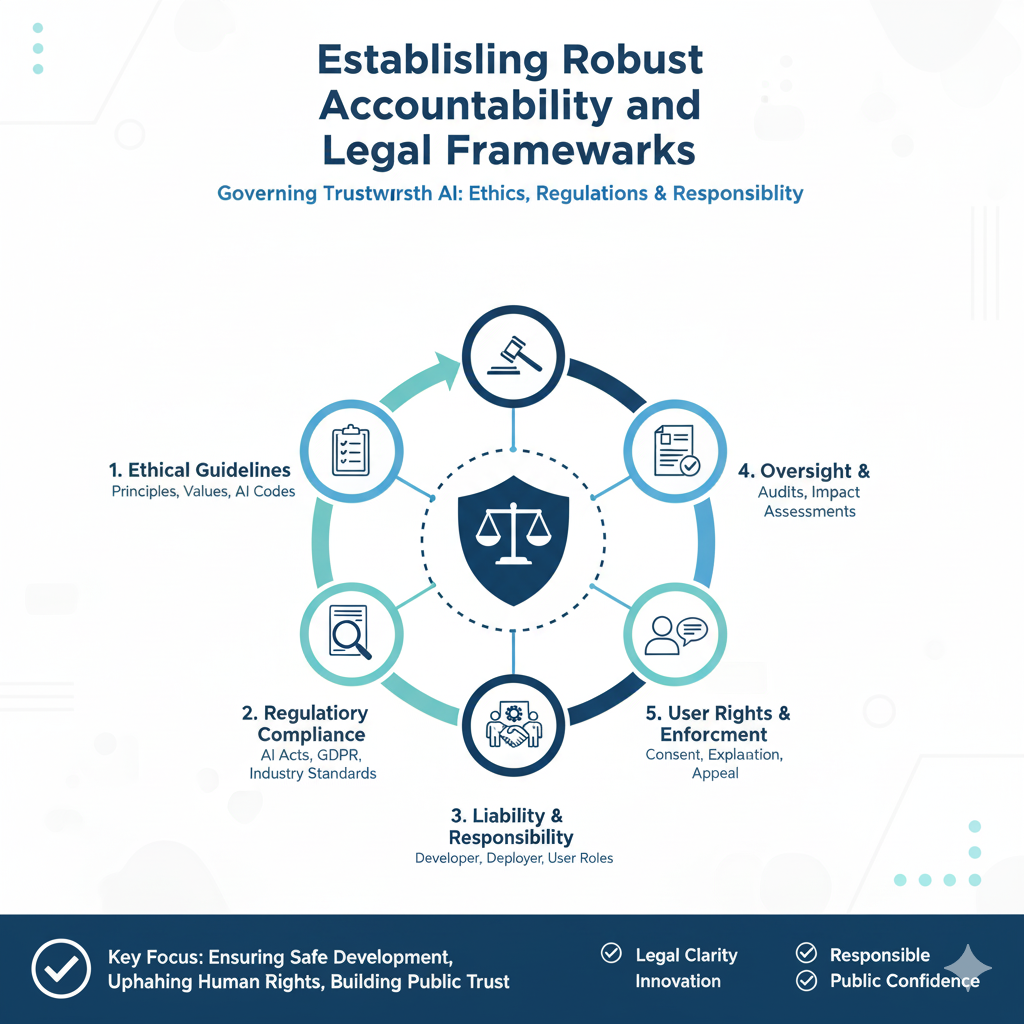
The Challenge: When an autonomous vehicle causes an accident or a rogue trading algorithm triggers a market crash, who is liable? The traditional chain of responsibility breaks down with autonomous systems.
How Ethical AI is Shaping the Future:
Ethical AI is forcing the creation of new legal and corporate structures to ensure clear accountability.
- Human-in-the-Loop (HITL) and Oversight: A key tenet of Ethical AI is maintaining meaningful human control, especially for high-stakes decisions. This is shaping system design to include mandatory human oversight points, where a human operator must review and approve an AI’s recommended action before it is executed.
- AI Auditing and Certification: Just as financial statements are audited, the future will see the rise of a new profession: AI auditors. These professionals will certify that AI systems comply with ethical guidelines and regulatory standards. Companies will be held accountable for the performance of their AI, driving a culture of responsibility.
- Impact: This is creating a future where responsibility for AI is clearly assigned. It protects consumers, encourages companies to build safer and more reliable systems, and provides a legal pathway for redress when things go wrong, thereby stabilizing the integration of AI into society.
5. Prioritizing Safety, Security, and Robustness
The Challenge: AI systems can be vulnerable to adversarial attacks—tiny, maliciously crafted perturbations to input data that can cause the system to fail catastrophically (e.g., a stop sign misread as a speed limit sign). Ensuring AI behaves predictably, even in novel situations, is a monumental task.
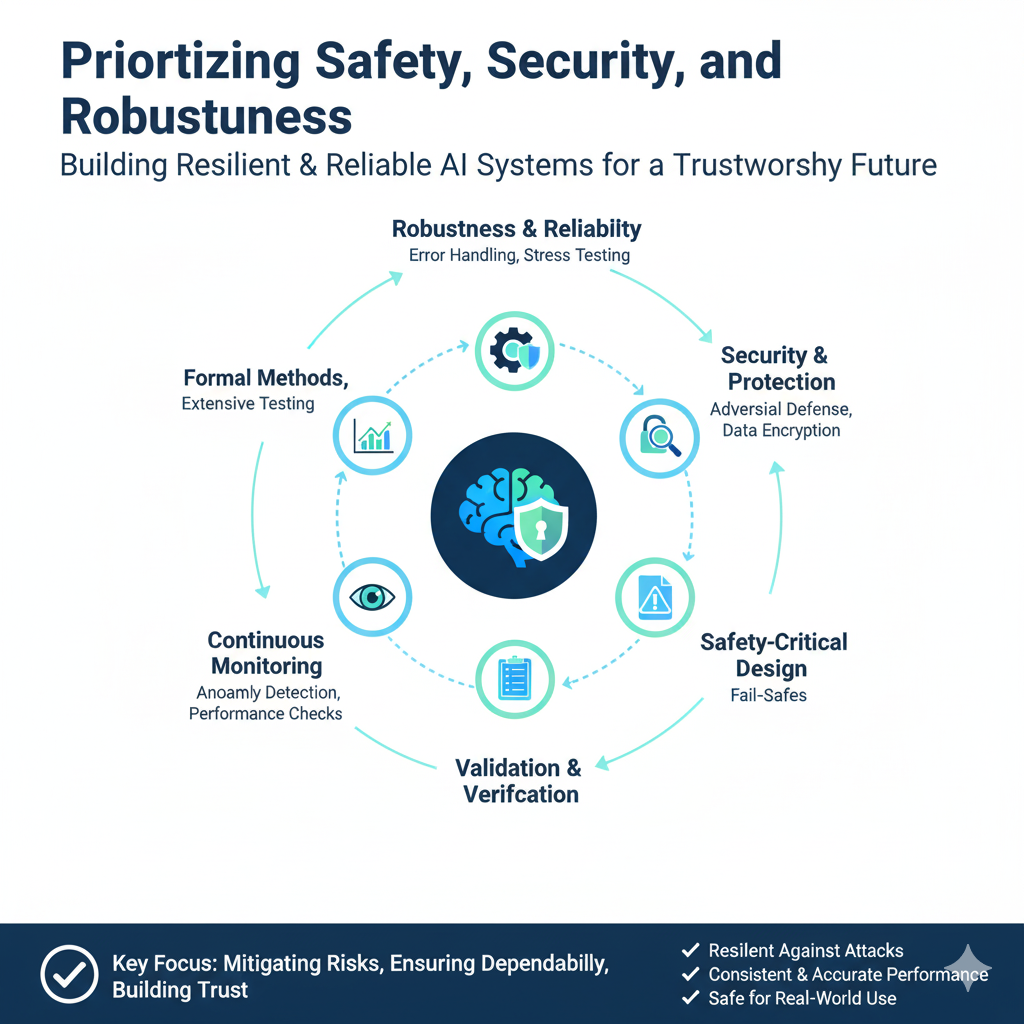
How Ethical AI is Shaping the Future:
Ethical AI mandates that safety is not an afterthought but a primary design constraint.
- Adversarial Testing and Robust Training: Developers are now proactively “red-teaming” their AI models, deliberately trying to fool them with adversarial examples to find and fix weaknesses. Models are then trained on these adversarial examples to become more robust.
- Fail-Safes and Value Alignment Research: For critical systems, Ethical AI principles require the implementation of fail-safes and kill switches. Simultaneously, long-term research into AI value alignment—ensuring that highly advanced AI systems have goals aligned with human values—is being taken seriously and funded, shaping the very long-term trajectory of AI development.
- Impact: This leads to the creation of AI that is not only powerful but also reliable and secure. It is essential for safely deploying AI in real-world environments like autonomous transportation, critical infrastructure, and healthcare, ensuring these systems are resilient against both error and malice.
6. Fostering Sustainable and Environmentally Conscious AI
The Challenge: Training large AI models consumes massive amounts of energy, contributing to a significant carbon footprint. The race for bigger models has an often-overlooked environmental cost.
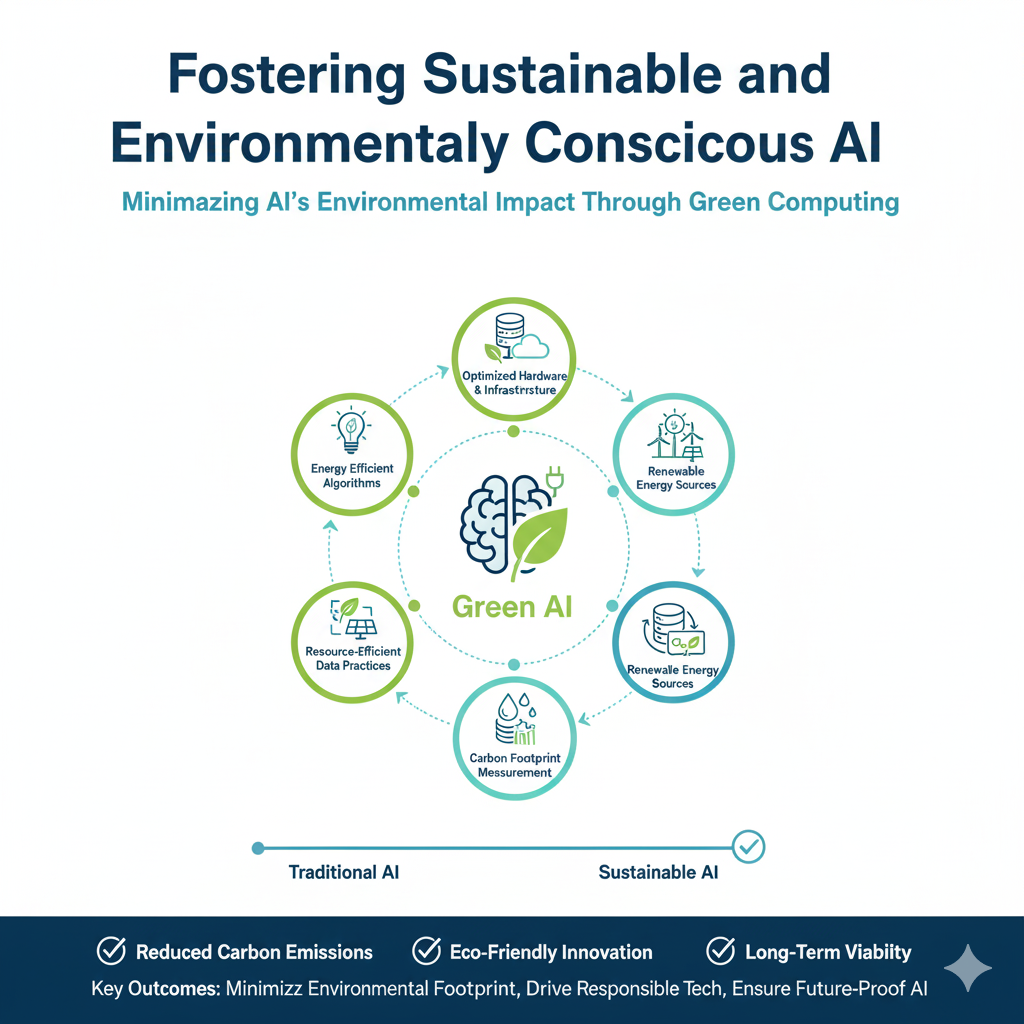
How Ethical AI is Shaping the Future:
Ethical AI broadens the definition of “harm” to include environmental impact, promoting green AI practices.
- Model Efficiency and Optimization: There is a growing focus on creating more computationally efficient models—achieving the same or better performance with fewer parameters and less energy. Techniques like model pruning, quantization, and knowledge distillation are becoming standard practice.
- Carbon-Aware Computing: Ethical AI advocates for running large-scale AI training jobs in data centers powered by renewable energy and at times of day when green energy is most abundant. The carbon footprint of training a model is starting to be reported alongside its performance metrics.
- Impact: The future of AI is becoming greener. This shift ensures that the pursuit of technological progress does not come at an untenable cost to the planet, aligning the AI industry with global climate goals and promoting sustainable innovation.
7. Enhancing Human Agency and Promoting Well-Being
The Challenge: There is a risk that AI systems could increasingly automate human decision-making, leading to a loss of human skills, autonomy, and a sense of agency. AI-driven social media algorithms have also been criticized for harming mental well-being.
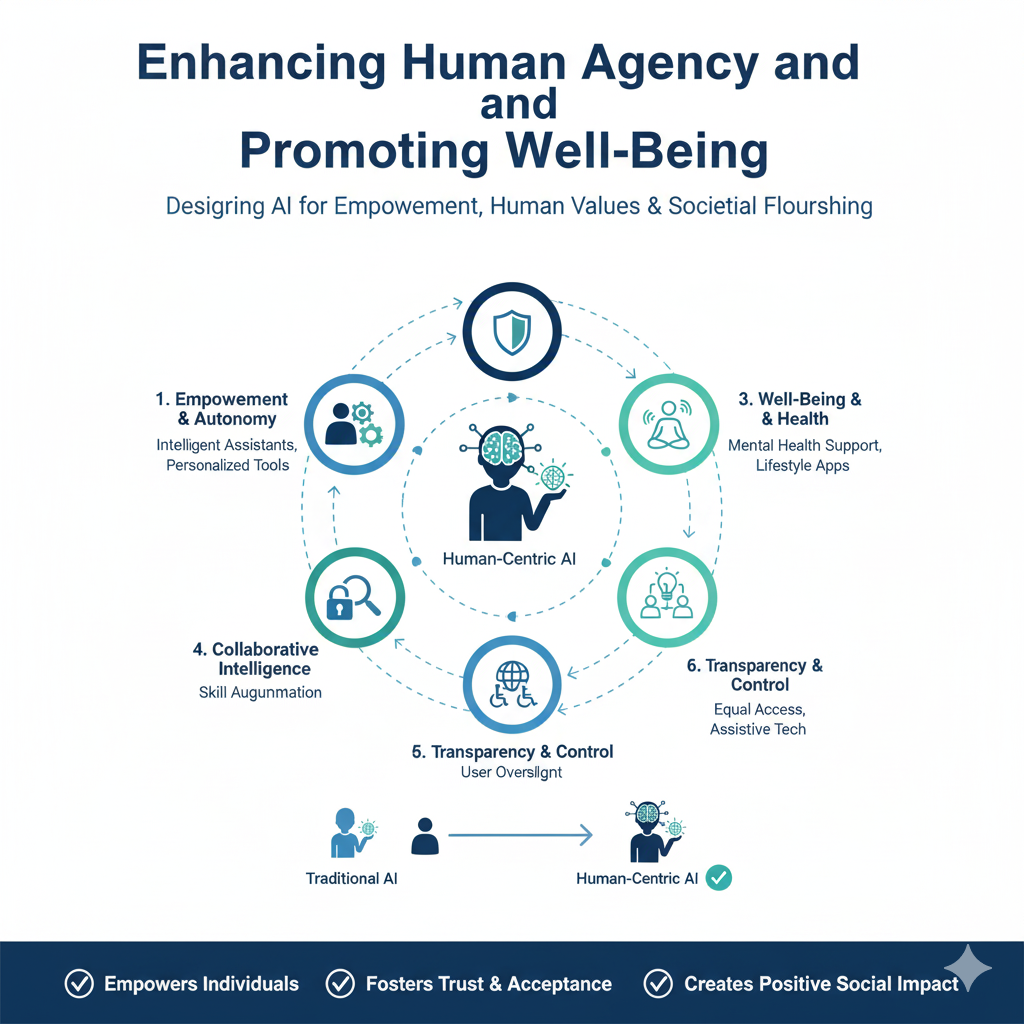
How Ethical AI is Shaping the Future:
Ethical AI champions a human-centric approach where technology augments human capabilities rather than replaces them.
- Design for Augmentation: The focus is shifting from full automation to creating collaborative AI that acts as a tool for experts. For instance, a doctor uses an AI to analyze medical scans, but the final diagnosis and patient interaction remain firmly in the doctor’s hands.
- Combating Misinformation and Protecting Mental Health: Platforms are being pressured by Ethical AI principles to redesign their algorithms to prioritize user well-being over pure engagement. This means deprioritizing hate speech, misinformation, and content that promotes anxiety or depression, shaping a healthier digital public square.
- Impact: The future is one of human-AI collaboration, where technology empowers people to be more creative, productive, and informed without undermining their autonomy or mental health. It fosters a positive relationship between humans and the intelligent tools they create.
8. Building Global Cooperation and Inclusive Governance
The Challenge: AI is a global technology, but its development and governance have been fragmented, risking a “race to the bottom” in standards and the exacerbation of global inequalities.

How Ethical AI is Shaping the Future:
Ethical AI provides a common language and a set of universal principles that can foster international collaboration.
- International Standards and Frameworks: Organizations like UNESCO and the OECD are developing global recommendations on Ethical AI. Nations are beginning to align their AI strategies around shared principles of human rights and inclusivity, shaping a more coordinated global approach.
- Inclusive Development for the Global South: Ethical AI emphasizes that the benefits of AI must be distributed globally. This is driving initiatives to build AI capacity in the Global South, develop AI solutions for local challenges (e.g., crop disease detection, local language translation), and ensure that diverse cultural perspectives are embedded in AI systems from the start.
- Impact: This fosters a future where AI serves all of humanity, not just a privileged few. It helps prevent geopolitical AI conflicts, ensures a diversity of thought in AI development, and leverages global talent to solve the world’s most pressing problems, from climate change to pandemic preparedness.
Conclusion:
The Deeper Significance: Ethical AI as the Engine of Trust and Sustainable Innovation
The assertion that “Ethical AI is not a constraint on innovation; it is its most vital catalyst for long-term, sustainable success” challenges a common but short-sighted view that ethics slows down development. To understand why this is true, we must reframe our definition of “innovation.” True, lasting innovation is not merely about being first to market with a powerful new algorithm; it is about creating technology that endures, is widely adopted, and becomes a seamless, trusted part of the societal infrastructure. Ethical AI is the discipline that makes this possible.
From Technical Debt to Ethical Debt:
In software engineering, “technical debt” refers to the future cost incurred by choosing an easy, quick solution now instead of a better, slower approach. Similarly, developing AI without an ethical framework creates “ethical debt.” A company might rapidly deploy a biased hiring tool, but the eventual cost—in legal battles, reputational damage, public backlash, and loss of user trust—can be catastrophic, potentially destroying the company and setting the entire industry back.
Ethical AI is the practice of paying down this debt proactively. By “systematically addressing bias, ensuring transparency, protecting privacy, and upholding human values,” we are not building slower; we are building more wisely. We are investing in a foundation of trust, which is the single most valuable currency in the digital age. A robust and trustworthy foundation is what allows for confident scaling and widespread adoption—the very hallmarks of sustainable success.
The Proactive and Comprehensive Nature of Ethical AI:
The conclusion correctly identifies Ethical AI as a “proactive and comprehensive force.” This is a crucial distinction. It is not a mere filter applied to a finished product, like a content moderator cleaning up after a toxic algorithm. Instead, it shapes the process from the very beginning:
- In the Code: It influences the choice of datasets, the design of the model architecture (e.g., opting for more interpretable models in high-stakes scenarios), and the implementation of privacy-preserving techniques like federated learning.
- In Our Legislatures: The principles of Ethical AI are being codified into law, such as the EU’s AI Act, which creates a regulatory environment based on risk. This shapes the market, rewarding those who built ethically from the start and penalizing those who ignored these concerns.
- In Global Cooperation: As a “common language,” Ethical AI provides a neutral ground for nations with different political systems to find consensus on issues like autonomous weapons, data sovereignty, and climate AI. This prevents a destructive “race to the bottom” and ensures that AI advancements can be harnessed to solve global challenges.
The Moral Compass and the Practice of Stewardship:
The metaphor of a “moral compass” is apt because the landscape of AI development is fraught with complex, uncharted dilemmas. The sheer power of AI—to manipulate information, automate decisions, and shape human behavior—means that purely technical or profit-driven guidance is insufficient. We need a North Star grounded in human dignity and well-being.
This is where Ethical AI transforms from a technical checklist into a practice of “stewardship.” Stewardship implies a responsibility to care for something of value on behalf of others. In this case, we are stewards of a powerful technological force that will shape future generations. Wielding this power “with wisdom, responsibility, and an unwavering commitment to the betterment of humanity” is the ultimate calling of Ethical AI.
In essence, the conclusion argues that the choice is not between powerful AI and ethical AI. The only viable future is one where they are one and the same. Ethical AI is the critical discipline that ensures the incredible potential of artificial intelligence is not squandered through shortsightedness or misuse, but is instead harnessed to create a future that is not only technologically advanced, but also just, equitable, and profoundly human.